
Fridtjof Nansen: Polar Explorer and Humanitarian
Fridtjof Nansen was an explorer and oceanographer who, in 1888, led a team on crosscountry skis that made the first trek across Greenland and, in 1895, traveled closer to the North Pole than any previous explorer. He also developed new types of equipment, techniques, and clothing that enabled further progress in polar exploration. After retiring from exploration, he became a diplomat and humanitarian who was awarded the Nobel Peace Prize in 1922.
Fridtjof Nansen was born on October 10, 1861, in the Norwegian town of Store Froen, near the city of Kristiania (now called Oslo). His father was a wealthy attorney as well as a devoutly religious man with strong moral convictions. His mother was an athletic woman who encouraged Fridtjof and his brothers and sisters to pursue outdoor activities and adventures in the forests, country fields, and streams near their home. As a youth, Fridtjof became a skilled skier, skater, swimmer, and hunter. In elementary and high school, he did well in both science and art. In 1881, he entered the University of Oslo, where he majored in zoology.
While still a university student in 1882, Nansen joined the crew of the seal- and whalehunting vessel Viking for a four-and-a-half-month expedition along the icy east coast of Greenland. During the trip, he recorded his observations of seals, whales, bears, and other wild animals, which he later used as the basis for a book, and he fell in love with the rugged, hostile arctic environment. After returning from this trip, Nansen began working as a zoological curator at the Bergen Museum in Norway, where he conducted scientific research for the next six years. In 1888, he obtained his doctorate degree from the University of Oslo by writing and defending a dissertation on the central nervous systems of lower vertebrates, including sea squirts and hagfish.
In October 1888, Nansen accomplished the unprecedented feat of crossing the interior of Greenland from the uninhabited east coast to the inhabited west coast. He led a group of six explorers on cross-country skis on the trip, which took approximately two months. During the trip, the team survived temperatures as low as -49° F (-45° C) as they recorded previously unknown information about the interior of this frozen land. Upon returning to Norway, Nansen spent the next four years as curator of the University of Oslo’s Zootomical Institute. He also wrote the books The First Crossing of Greenland (1890) and Eskimo Life (1891). In his books and research papers, Nansen often incorporated his own illustrations. In September 1889, Nansen married Eva Sars, a singer and the daughter of a marine zoologist. The couple had five children together.
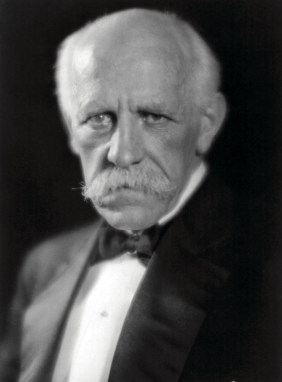
Fridtjof Nansen (1861-1930) was a Norwegian explorer, scientist, and diplomat. During a series of voyages to the Arctic in the 1880s, Nansen researched the planetary origins and patterns of ocean currents. Nansen was also awarded the Nobel Peace Prize in 1922 for his diplomatic and humanitarian work (Library of Congress).
Nansen began planning a long voyage to the North Pole—a spot where no human had ever been—in the early 1890s. In September 1893, Nansen purposefully lodged his sturdy, specially constructed ship, the Fram, into an ice pack off Siberia, based on his previous observations that the ocean current would carry the ice and ship westward toward the pole. As they approached within 400 miles (640 kilometers) of the pole in March 1895, Nansen and a companion from the Fram left the ship and set out for the pole with sleds, sled dogs, kayaks, and about 100 days of rations. After traveling for twenty-three days across 140 miles (225 kilometers) of sea ice, they reached a point farther north (86°14' latitude) than anyone before them. However, they had to turn back because of the extreme difficulty of the harsh, frigid conditions, and they rejoined the crew of the Fram at Tromso (on the coast of northern Norway) in August 1896. Although they failed to reach the North Pole, Nansen and his crew collected a great deal of data on polar oceanography, biology, and meteorology. In 1897, Nansen obtained a research professorship at the University of Oslo, where he published numerous papers. He also published the results of the Fram expedition in six volumes between 1900 and 1906. In 1908, he was appointed a professor of oceanography at Oslo.
As Nansen continued to be involved in oceanographic research and exploration during the early twentieth century, he also became increasingly involved in political and diplomatic issues. He served as the newly independent Norway’s first ambassador to the UK from 1905 to 1908. During the end of the First World War (1914-18), he negotiated an agreement for the United States to provide food relief to neutral Norway. At the Paris Peace Conference of 1919, he lobbied as a Norwegian representative for the recognition of the rights of small nations by the new League of Nations. He served as a Norwegian delegate to the League of Nations from 1920 to 1930. While in that position, Nansen advanced several humanitarian causes. He worked to repatriate 450,000 prisoners of war. He administered the League’s refugee program, ensuring that hundreds of thousands of refugees from several countries were cared for and resettled. He directed relief for millions of Russians who were ill and dying in a severe famine. He arranged an exchange of 1.2 million Greek refugees for 500,000 Turkish refugees after a war between those nations. Additionally, he established an office to resettle Armenian refugees after a genocide campaign in Turkey—although he was unsuccessful in his attempts to persuade the international community to create an independent Armenian state.
Nansen was awarded the Nobel Peace Prize in 1922 for his humanitarian work. He died at home on May 13, 1930, from heart failure. His burial took place on May 17, which is Norway’s Constitution Day.
FURTHER READING: Bazilchuk, Nancy. 2013. “Frozen in the Ice—Polar Research Then and Now.” ScienceNordic. http:// sciencenordic.com/frozen-ice-polar-research-then-and-now. Accessed October 24, 2016.
The Fram Museum. 2016. “Fridtjof Nansen (1861-1930).” http://www.frammuseum.no/Polar -Heroes/Main-Heroes/Fridtjof-Nansen.aspx. Accessed October 24, 2016.
The Nansen-Amundsen Year 2011. 2011. “Fridtjof Nansen.” http://www.nansenamundsen.no/en/ nansen. Accessed October 24, 2016.
Nansen, Fridtjof. 2008 (reprint of 1897 edition). Farthest North: The Epic Adventure of a Visionary Explorer. New York: Skyhorse Publishing.
Nobel Media. 2016. “Fridtjof Nansen-Biographical.” http://www.nobelprize.org/nobel_prizes/ peace/laureates/1922/nansen-bio.html. Accessed October 24, 2016.
Date added: 2026-02-14; views: 370;