
Black Smoker Chimneys: Formation, Ecology, and Geological Significance of Deep-Sea Hydrothermal Vents
What Are Black Smoker Chimneys? Black smoker chimneys are towering hydrothermal vent structures found along active mid-ocean ridges, approximately two miles (three kilometers) below sea level. They were first documented in 1979 by deep-submersible vehicles exploring the Galapagos Rift and are now known to be common features along global spreading centers, including the Mid-Atlantic Ridge. These formations are central to understanding seafloor geology, unique ecosystems, and even the origins of life. Their study provides critical insights into Earth's internal heat and chemical exchange processes between the crust and the ocean.
Formation and Hydrothermal Processes. The formation of black smoker hydrothermal vents begins when cold seawater infiltrates fractures in the oceanic crust near spreading ridges. This water descends, is heated to several hundred degrees Celsius by underlying magma chambers, and becomes a supercritical fluid. This hot, pressurized fluid reacts with the surrounding basalt, leaching minerals and elements like metals and sulfides in a process called water-rock interaction. The now metal-rich, superheated fluid rises rapidly back to the seafloor through the hydrothermal circulation system due to its buoyancy, where it is expelled as a jet.
Chemistry and Plume Dynamics. Vent fluid is characteristically rich in dissolved hydrogen sulfide (H₂S), methane, and reduced metals such as iron, manganese, copper, and zinc. Upon eruption, fluids with temperatures exceeding 680°F (360°C) instantly mix with near-freezing seawater. This causes rapid precipitation of fine-grained metal sulfide and sulfate minerals, including pyrite (FeS₂) and anhydrite (CaSO₄), which construct the chimney structure. The buoyant, particle-laden fluid forms a distinct plume, appearing "black" due to suspended iron monosulfides. These plumes can rise 0.6 miles (1 km) and disperse over 25 miles (40 km), carrying chemical and thermal anomalies detectable far from the source.
Mineral Precipitation and Seafloor Deposits. The precipitation from plumes and direct chimney growth concentrates economically significant metals on the seafloor. Manganese may remain suspended for weeks, while other metals precipitate rapidly as sulfides like chalcopyrite (CuFeS₂) and sphalerite (ZnS), or as oxides and hydroxides like hematite (Fe₂O₃) and goethite (FeOOH). Related white smoker vents, typically found peripheral to main black smoker complexes, emit lower-temperature fluids (260–300°C) and precipitate lighter-colored minerals such as silica, barite, and zinc sulfides, forming distinct zones within larger vent fields.
Mound Structure and Internal Anatomy. Active vent systems form substantial mounds, often 160–650 feet (50–200 meters) in diameter and over 65 feet (20 meters) high. Central areas host clusters of active black smoker chimneys depositing iron-copper sulfides, surrounded by zones of white smokers depositing iron-zinc sulfides. Drilling of mounds, such as the Trans-Atlantic Geotraverse (TAG) hydrothermal mound on the Mid-Atlantic Ridge, reveals a complex internal stratigraphy. The TAG mound is capped by sulfide chimneys, underlain by massive pyrite breccia, zones of anhydrite-pyrite and silica-pyrite, and deeply silicified and chloritized basaltic host rock, with the entire mound containing enrichments in copper, zinc, and minor gold.
Unique Chemosynthetic Ecosystems. These hydrothermal mounds support extraordinary ecosystems independent of sunlight, based entirely on chemosynthesis. Thermophilic (heat-loving) and thermotolerant bacteria that oxidize hydrogen sulfide form the base of the food web. They sustain dense communities of specialized organisms, including giant tube worms (Riftia pachyptila), giant clams, blind crabs, and unique fish species. This biological community derives its energy from the Earth's internal geothermal heat and chemical potential, presenting a profound model for potential extraterrestrial life and offering clues about Earth's earliest biological systems.
Ancient Analogues: Volcanogenic Massive Sulfide Deposits. Modern seafloor hydrothermal systems are direct analogues for ancient volcanogenic massive sulfide (VMS) deposits preserved in ophiolite complexes on land. These fossil systems, found in sequences like the Bay of Islands (Newfoundland), Troodos (Cyprus), and Semail (Oman) ophiolites, share nearly identical mineralogy and texture. Remarkably, well-preserved fossil black and white smoker chimneys have been identified within 2.5-billion-year-old rocks in the North China craton. This provides tangible evidence that processes identical to modern seafloor hydrothermal venting were active in the Archean Eon.
Implications for the Origin of Life. The discovery of ancient black smoker analogues fuels the hypothesis that life may have originated in deep-sea hydrothermal environments. The physical and chemical conditions at Archean mid-ocean ridges—including thermal gradients, catalytic mineral surfaces (like iron sulfides), and rich supplies of reductants and nutrients—could have driven the abiotic synthesis of organic molecules and early metabolic pathways. Iron-sulfide precipitates, common around vents, may have provided compartmentalized reaction chambers for prebiotic chemistry. Thus, black smoker systems offer a compelling window into the potential environmental context for life's emergence on early Earth and possibly other worlds.
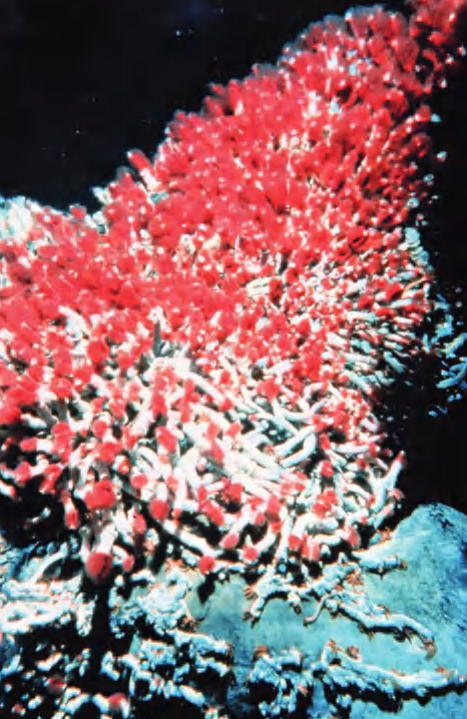
Visual Reference: Black Smoker Chimney Ecosystem. Figure: Black smoker chimney from the East Pacific Rise showing tube worms feeding at base of the chimney (Science Source/Photo Researchers, Inc.). This image captures the dynamic interface between extreme geologic processes and thriving biological communities, showcasing giant tube worms anchored to the mineral substrate, sustained by the chemosynthetic energy emerging from the vent.
Date added: 2026-07-14; views: 153;