
Earthworms as Ecosystem Engineers: Shaping Soil Structure and Function
Soil structure is the physical foundation of a healthy ecosystem, defined by the arrangement of particles and pores. Figure 2.11 provides a stark visual example of poor structure, showing a vertically oriented thin section with a massive structure. This condition is evidenced by a severe lack of pore space and pore connectivity, where the minimal white areas represent the few isolated pores. Such compacted soil severely restricts root growth, water movement, and habitat for soil organisms, creating an inhospitable environment for biological activity.
In direct contrast, earthworms are renowned as powerful ecosystem engineers that actively combat soil degradation by enhancing porosity. They achieve this through two primary mechanisms: burrowing to create tunnels and ingesting soil to produce casts. Due to their low nutrient assimilation efficiency, earthworms must process large volumes of soil, which leads to the formation of significant macropores and stable aggregates (Fig. 2.12). Their burrowing activity directly creates large, tubular pores known as galleries, which are critical for soil aeration and water infiltration.
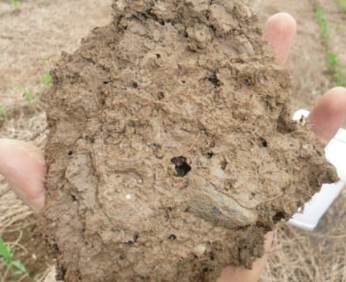
Fig. 2.12: Soil structure and porosity created by soil fauna
The impact of earthworms on soil hydrology is profound and varies by their ecological group. Anecic species, such as the common nightcrawler, create permanent, vertical burrows that can extend over two meters deep. These burrows act as major conduits for rapid water drainage during heavy rainfall, minimizing surface runoff and erosion. Long after the earthworm dies, these structures persist, providing preferential pathways for water, gases, and even plant roots, which find nutrient-rich linings on the burrow walls (Fig. 2.14).
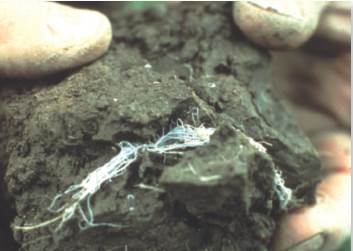
Fig. 2.14: Plant roots growing preferentially though an old earthworm burrow
Conversely, endogeic species inhabit temporary, horizontally-oriented burrow systems within the topsoil. Unlike anecic earthworms, they backfill their tunnels with their casts, constantly reworking the soil matrix. This horizontal burrowing significantly increases overall porosity and enhances drainage in the root zone. Interestingly, research shows no direct link between earthworm density and burrow number; a few active individuals in a cultivated field can create a burrow network as extensive as that under a meadow with a much higher population.
The production of earthworm casts is another critical mechanism of soil structuring. When deposited within the soil profile, casts create a stable granular structure that improves water retention (Fig. 2.13). Casts deposited on the surface form structures known as middens, which are mixed with organic residues (Figs. 2.15). These middens increase surface roughness, enhancing resistance to weathering and reducing soil erosion. Cast production is immense, with annual estimates in temperate meadows reaching 240 tonnes per hectare when including subsurface deposits.
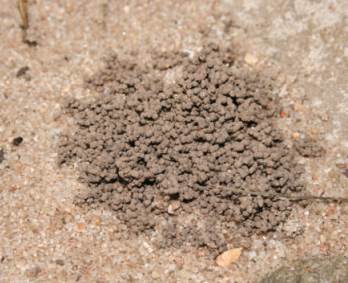
Fig. 2.13: Granular structure caused by earthworm casts on the surface of a sandy soil
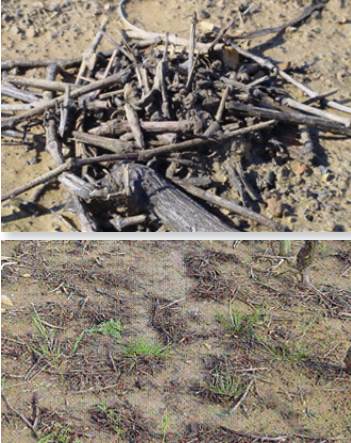
Fig. 2.15: Earthworm middens, showing one close up (top) and many distributed over the soil surface (bottom)
The long-term cumulative effect of this bioturbation is the gradual formation of new topsoil. In temperate regions, earthworm activity over a five-year period can generate a topsoil layer between 5 and 25 cm thick. However, the effects are context-dependent; in some tropical conditions, certain earthworm species, like Millsonia anomala, can have a compacting effect on soil structure, demonstrating that their engineering impact is not universally positive and depends on the species and environment.
Beyond earthworms, other fauna like ants and termites are also classified as ecosystem engineers. They construct extensive burrow networks and nests that similarly enhance soil porosity and heterogeneity. Other organisms, including insect larvae, isopods, and gastropods, also contribute to soil structuring, though to a lesser extent. The collective biological impact of roots and fauna is most pronounced in the top 30 cm of soil, typically producing rounded aggregates, whereas physical forces like tillage create more angular structures.
Agricultural management practices have a dominant influence on soil structure. Long-term conventional tillage is frequently associated with soil degradation, including a decline in organic matter and aggregate stability. This leads to the formation of surface crusts, increased runoff, and higher erosion risks. In contrast, alternative systems like minimum tillage and ripper sub-soiling have been shown to improve soil structural quality by reducing disturbance and maintaining organic matter.
A major consequence of agricultural intensification is soil compaction, a significant form of environmental degradation. Compaction is driven by natural forces and, more critically, by man-made forces from heavy machinery and tillage implements. As farm equipment has increased in size and weight, subsoil compaction has become a pervasive problem. This compaction reduces porosity, limits root growth, and impedes water movement, presenting a major challenge to agricultural sustainability that is not easily solved by tire technology alone.
The benefits of investing in and improving soil structure are substantial, particularly in agricultural settings. These advantages create a positive feedback loop for ecosystem health and crop productivity. Key benefits include a significantly reduced risk of erosion due to greater soil aggregate strength and decreased overland flow. Furthermore, improved soil structure facilitates enhanced root penetration, allowing plants better access to soil moisture and nutrients. It also promotes improved seedling emergence by reducing surface crusting. Finally, the optimization of pore spaces leads to greater water infiltration, improved water retention, and increased water availability for plants throughout the growing season.
Date added: 2025-12-15; views: 522;