
The Role of Soil Microorganisms in Plant Nutrition and Soil Structure
Soil Microorganisms and Nutrient Availability. Soil microorganisms are fundamental drivers of nutrient cycling, significantly influencing the bioavailability of essential plant macronutrients and micronutrients. Beyond nitrogen, these organisms affect the dynamics of phosphorus (P), potassium (K), magnesium (Mg), calcium (Ca), and trace elements like zinc (Zn), iron (Fe), and copper (Cu). A key group in this process is the arbuscular mycorrhizal fungi (AMF), which form symbiotic relationships with a majority of terrestrial plants. This symbiosis is a critical component of the soil-plant ecosystem, directly enhancing a plant's access to otherwise inaccessible nutrient pools in the soil.
The Critical Function of Arbuscular Mycorrhizal Fungi. Arbuscular mycorrhizal fungi play a particularly significant role in the P nutrition of host plants. They extend a network of microscopic hyphae into the soil, vastly increasing the root system's absorptive surface area and accessing phosphorus beyond the root depletion zone. This enhanced uptake often leads to increased P use efficiency, which can be directly associated with improved plant growth and higher crop yields. Conversely, agricultural practices that disrupt the colonization by AMF, such as certain tillage methods or excessive phosphorus fertilization, can result in significantly reduced phosphorus uptake and diminished plant performance.
Beyond Phosphorus: The Multifunctional Role of AMF.Although phosphorus uptake is a primary benefit, the AMF symbiosis extends to other nutrients. Evidence indicates these fungi also facilitate the uptake of macronutrients like nitrogen and magnesium, as well as micronutrients such as zinc and copper. Some research suggests that AMF may enhance plant acquisition of nitrogen from complex organic sources, a process that is not fully understood. However, the precise mechanisms of multi-nutrient transport and the potential for nutrient competition within these symbiotic networks remain active areas of scientific investigation, highlighting the complexity of these biological interactions.
Microbial-Mediated Mineral Weathering.The process of mineral weathering is another crucial pathway through which inorganic nutrients are released into the soil ecosystem. Primary minerals contain inorganic nutrients like Mg, K, Ca, Fe, and P, which are locked in a crystalline structure. Soil microorganisms, including specific bacteria and fungi, accelerate their release by excreting low-molecular-weight organic acids that act as potent biological weathering agents. Furthermore, fungi contribute to the physical degradation of mineral particles through the mechanical pressure exerted by their growing hyphae (see also Section 4.2).
The Future of Biofertilization.Advancements in understanding the mechanisms of biological weathering open promising avenues for sustainable agriculture. The potential exists to harness efficient mineral-weathering microorganisms as a form of advanced biofertilisation. By leveraging these natural processes, it may be possible to reduce the current heavy reliance on synthetic fertilizers. This shift could lead to a substantial reduction in both the economic costs of crop production and its associated environmental footprint, promoting a more closed-loop nutrient cycle.
Soil Biota and the Formation of Soil Structure.A good soil structure is vital for agricultural productivity, as it facilitates seed germination, improves water holding capacity to mitigate drought, and enhances infiltration to prevent waterlogging. This structure also provides better aeration and confers resistance against physical degradation like erosion and compaction. The spatial arrangement of soil particles, their aggregates, and the pore spaces between them defines this physical architecture, which is shaped by both physiochemical processes and the dynamic activity of soil life.
How Organisms Build and Modify Soil Architecture.During the decomposition of organic matter, soil microorganisms produce sticky extracellular polymeric substances that act as binding agents, gluing soil particles together into stable aggregates. Concurrently, larger organisms, collectively known as soil engineers, physically reshape the soil environment. Earthworms, ants, and termites excavate burrows and channels, forming macropores that significantly enhance water infiltration and gas exchange (Fig. 3.28). The activity of earthworms is especially notable, as their casts form aggregates that are more stable and enriched in organic matter than the surrounding soil.
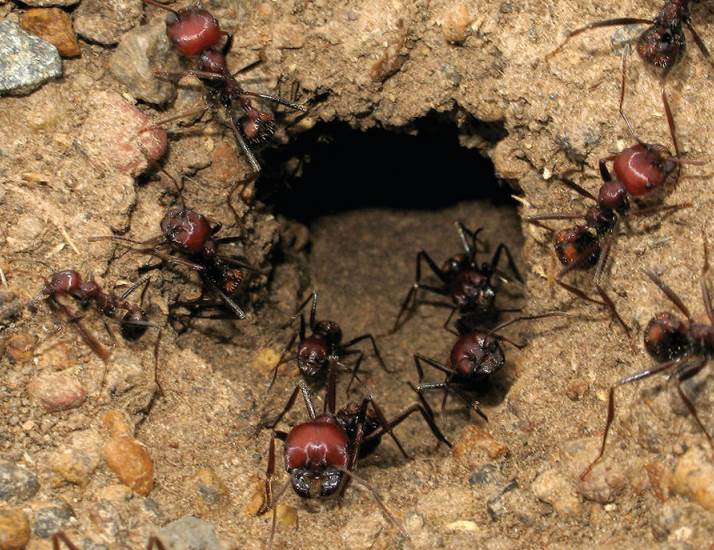
Fig. 3.28: Harvester ants, Messor cephalotes
Hydrological Regulation and Erosion Control.The macropores created by soil-dwelling macrofauna are critical for regulating hydrological processes. These biopores on the soil surface direct rainwater flow deep into the soil profile, facilitating rapid infiltration. This process is essential for preventing surface sheet erosion and for recharging moisture in deeper soil layers. Research has shown, for instance, that in fields with retained crop residues and mulch, increased termite tunneling activity directly improves soil porosity, which in turn reduces surface runoff and enhances water storage.
The Impact of Tillage on Soil Ecosystem Engineers.Conventional tillage practices have a profoundly disruptive effect on this biologically built architecture. The mechanical disturbance destroys macropores and degrades soil aggregates, making the soil more vulnerable to erosion, compaction, and waterlogging. Furthermore, tillage damages the habitat of soil organisms, leading to population declines and a consequent loss of their beneficial ecosystem services. In contrast, no-till or minimal tillage practices protect this habitat, generally promoting the activity of soil engineering organisms and helping to maintain and improve the soil's physical characteristics over time.
Date added: 2025-12-15; views: 591;