
Urban Soils: Characteristics, Degradation, and Ecosystem Services
Over half of the global population resides in urban areas, a figure that exceeds 80% in Europe. The definition of these urban areas encompasses all artificial surfaces, including industrial zones, commercial districts, and transport infrastructure. A survey from the year 2000 quantified the extent of this development, finding that the urban fabric covered 180,000 km² within the EU, corresponding to 7.6% of the EU25 territory (Fig. 3.31). This significant land cover change has profound implications for the soil beneath.
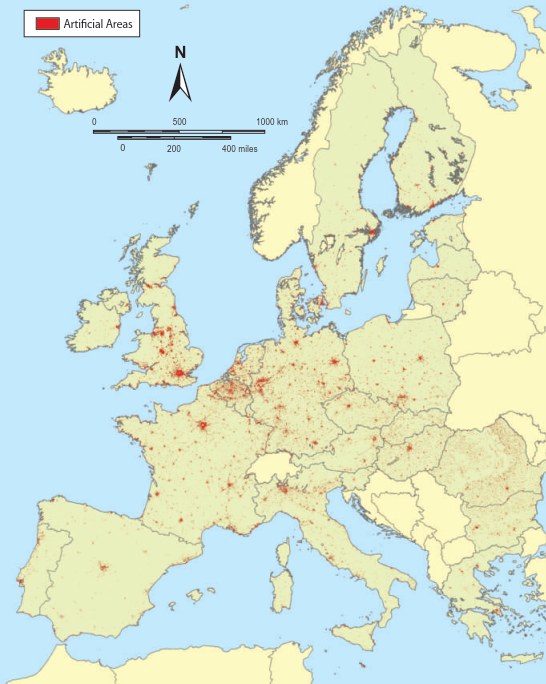
Fig. 3.31: A map showing the artificial areas, including urban areas, highways, railways, airports and industrial and commercial districts. The map was produced using CORINE data; Land cover provided by EEA for the year 2000
The soils within these urban environments are profoundly influenced by anthropogenic activities, which typically lead to a higher degree of contamination and degradation compared to surrounding non-urban areas (Fig. 3.32). When not entirely sealed by asphalt or concrete, urban soils are particularly susceptible to processes like compaction. However, this is not universally true, as soils within urban parks or other green spaces can sometimes exhibit better structure and higher organic matter content than their intensively managed agricultural counterparts.
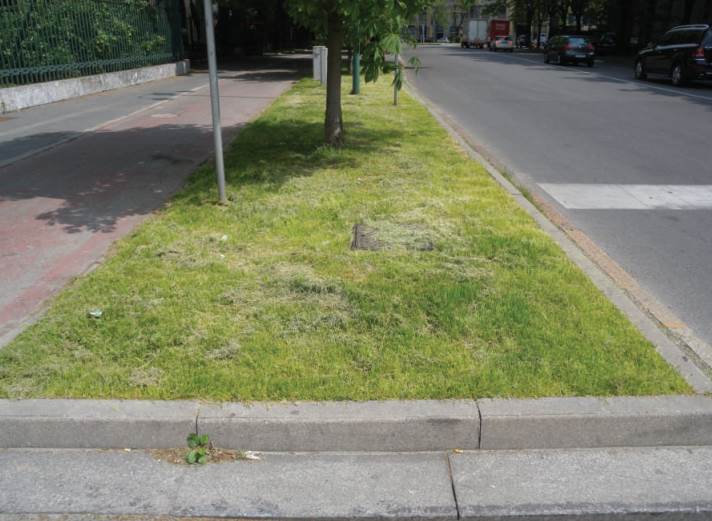
Fig. 3.32: Soil in a road side verge. Soil is common throughout the urban environment in situations such as this
The major sources of pollution in these settings are diverse, including industrial emissions, traffic, the burning of fossil fuels, and wastes from residential and commercial activities. This results in the continuous accumulation of contaminants from both localized and diffuse sources. Typical pollutants of urban soils include heavy metals (e.g., copper, lead, zinc), recalcitrant organic compounds like PAHs and chloro-organic compounds, and sometimes radionuclides. Furthermore, the atmospheric deposition, or through-fall, of nitrogen is generally higher in urban environments.
Soil sealing and compaction, consequences of construction and physical pressure from vehicles and pedestrians, can render soil incapable of supporting plant life or providing a habitat for subterranean organisms. This physical degradation severely reduces the permeability of soil to water and air, increasing the likelihood of urban flooding due to diminished water infiltration. Research from the USA characterizes urban soils as being 1-2 °C warmer, 50% drier, and 1.5 times denser, with lower organic carbon than similar rural soils, alongside doubled concentrations of certain heavy metals.
These altered soil characteristics exert a strong influence on soil biota and the essential ecological processes they mediate. The abundance and diversity of soil organisms, as well as the food web structure, are often negatively impacted. Interestingly, some organisms like earthworms can be more abundant in urban settings, and species diversity can be enhanced by invasive species and diverse microhabitats. A common process is biotic homogenisation, where the same common species are found in geographically separate urban soils, as seen in earthworm communities across North American and European cities.
The effect on ecosystem functioning is complex, with studies showing contrasting results. Some urban soils demonstrate higher rates of N-mineralisation, nitrification, and soil respiration, while others show the opposite. These apparent inconsistencies are attributed to the immense variety of environmental conditions, soil factors, and vegetation cover found within the heterogeneous urban environment.
The urban landscape is a complex mosaic of different land uses and ecosystems. These can be categorized, in decreasing order of human pressure, as: small residual soil patches with high compaction (e.g., road medians, railway margins) (Figs. 3.33, 3.37); small, intensively used urban parks (Fig. 3.34); larger corridors along transport routes; allotments (Fig. 3.35); private gardens and lawns (Fig. 3.36); sports fields; archaeological sites; marginal lands; wetlands; coastal areas; river corridors; and large extensive urban parks. Each presents a vastly different potential habitat for soil organisms.
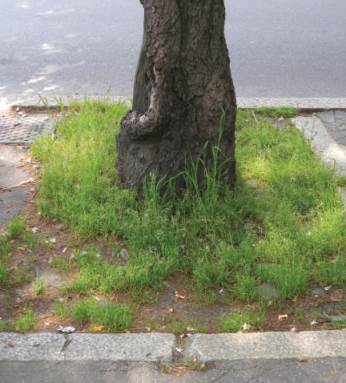
Fig. 3.33: Some urban soils exist as small isolated patches, such as those supporting trees. These soils can become highly compacted due to pedestrians walking on them repeatedly
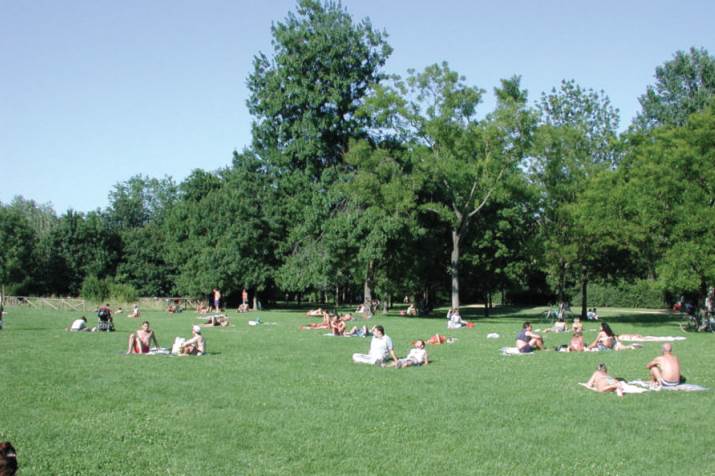
Fig. 3.34: An urban park in the Italian city of Bologna
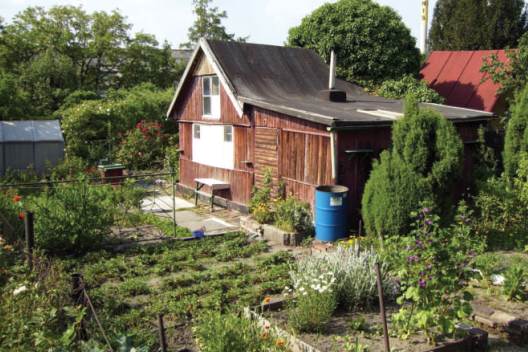
Fig. 3.35: An allotment plot in Prague, Czech Republic
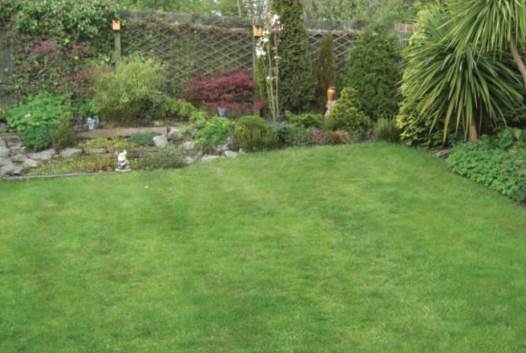
Fig. 3.36: An urban garden in Bexhill

Fig. 3.37: A series of urban soils found in Milan, Italy
Despite the pressures, urban settlements, with their diverse land uses, can function as biodiversity hot spots and reservoirs. For instance, a quarter of Finland's rarest plant species are found in Helsinki, and the species density of soil invertebrates in London's gardens rivals that of natural ecosystems. Even brownfield sites in industrial towns present opportunities for ecological restoration and the creation of new biodiversity centers. However, urban areas can also be points of introduction for invasive alien species, necessitating careful management of urban green areas.
Soil Ecosystem Services in Urban Areas. Many soil ecosystem services are critically important in urban settings. A prime example is water cycle regulation, which is often a critical issue in flood-prone towns. The high proportion of sealed and compacted surfaces increases the frequency of urban flooding. In this context, preserving the hydrological properties of the remaining unsealed soils is a vital mitigation strategy. Enhancing these functions requires a holistic understanding of the roles of soil biota and their symbiotic relationships with the vegetation cover.
Date added: 2025-12-15; views: 456;