
Cold Desert Soil Biodiversity: Life in Arctic, Antarctic, and Permafrost Ecosystems
The Global Extent of Cold Environments. The coldest terrestrial environments on Earth are located at high latitudes and high altitudes, encompassing the Polar Regions and alpine areas, which cover a significant proportion of the planet's land surface. These regions are experiencing some of the most rapid biodiversity changes due to global climate warming (see Section 5.1.3). Polar landscapes are characterized by tundra, bare soil, rock, and persistent ice or snow cover. Tundra vegetation, dominated by lichens, mosses, grasses, and dwarf shrubs, is defined by its association with cold annual temperatures, short growing seasons, frequent freeze-thaw cycles, and the presence of permafrost, or permanently frozen ground. This ecosystem, while harsh, forms a critical habitat for a specialized community of soil organisms.
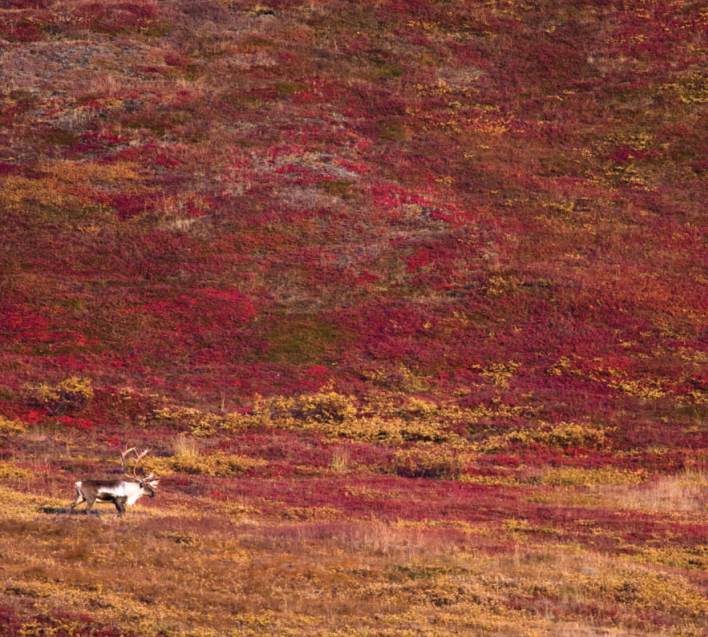
Fig. 3.41: Autumn tundra near Red Dog Mine, Alaska
Arctic Tundra: A Surprisingly Diverse Cold Soil Ecosystem. The plant community in the Arctic tundra is relatively productive compared to other extreme environments, supporting a high input of organic matter into the soil food web (Fig. 3.42). Consequently, despite average annual temperatures often below -10°C, Arctic soils sustain remarkable biodiversity, including over 700 mite species, 400 species of collembolans (springtails), 500 nematode species, and 70 species of enchytraeids and earthworms. However, the local species richness and density at any given site are typically low compared to temperate soils. For example, high-Arctic studies found only 6-7 species of oribatid mites and 4-6 species of collembolans associated with different plant species. In contrast, nematode communities are generally more diverse, with 29 species recorded in a sub-alpine heath in Swedish Lapland, though this is still far below non-extreme ecosystems. The application of new molecular tools continues to reveal that the true diversity of soil flora and fauna is likely substantially greater than traditional counts suggest.
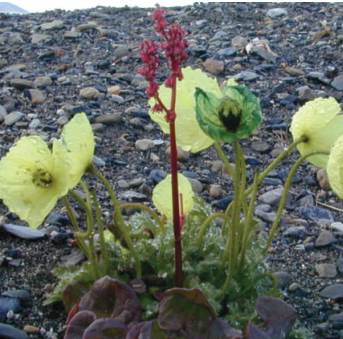
Fig. 3.42: Life flourishing on a Hyperskeletic Leptosol in Northern Canada in the form of the Arctic Poppy (Papaver radicadum) – one of the hardiest plants on the planet. Even these poor soils are an important component of the Earth's environment
Microbial Life and Antarctic Extremes. The diversity of microbial communities in the Arctic is profound, with molecular methods indicating a high richness of novel organisms. One study of Siberian tundra soils, where temperatures plunge below -40°C, identified 43 unique genetic sequences related to Proteobacteria and Fibrobacter groups. Further research demonstrates that Arctic tundra soils can host over 2000 bacterial phylotypes, a high proportion of which may be endemic. In stark contrast, continental Antarctica presents a more severe environment, resulting in lower terrestrial diversity. Colonization is limited by the Southern Ocean's isolation, leading to a high degree of endemism among species that survived past glaciation events. With most of the continent covered by ice and mean annual temperatures below 0°C, it hosts one of the most extreme soil environments on Earth.
The Unique Biota of Antarctic Soils. The constraints of the Antarctic climate are evident above ground, where only two vascular plant species exist in maritime regions and none in continental areas. Despite this, Antarctic soils support a unique fauna, including at least 225 mite species, 85 collembolan species, 49 nematode species, and numerous tardigrades and rotifers, with approximately 170 free-living endemic species. Microbial communities are also diverse and highly endemic; for instance, 35 species of microfungi were found in the Windmill Island region and 28 taxa in Victoria Land. Cyanobacterial communities are widely distributed, with 15 taxa identified at Cierva Point. As in hot deserts, soil organisms are unevenly distributed, forming biotic hotspots in vegetated soils or beneath bird nests and moss beds, while the most extreme areas remain sparsely populated.
The McMurdo Dry Valleys: A Limit for Life. The McMurdo Dry Valleys of Antarctica (Fig. 3.43) represent one of the most challenging environments for life, with average annual temperatures of -20°C and low precipitation. Soils here have very low nutrient availability, high salt concentrations, and frequent freeze-thaw events. Vast expanses of dry soil are dominated by a single nematode species, Scottnema lindsayae, a microbial feeder that is often the only larger soil animal present. This species is responsible for an estimated 6-7% of soil organic carbon turnover, indicating that climate-induced population changes could critically impact ecosystem processes. In slightly wetter microhabitats, diversity increases, with nematode genera like Plectus and Eudorylaimus co-occurring with tardigrades, rotifers, and microarthropods.
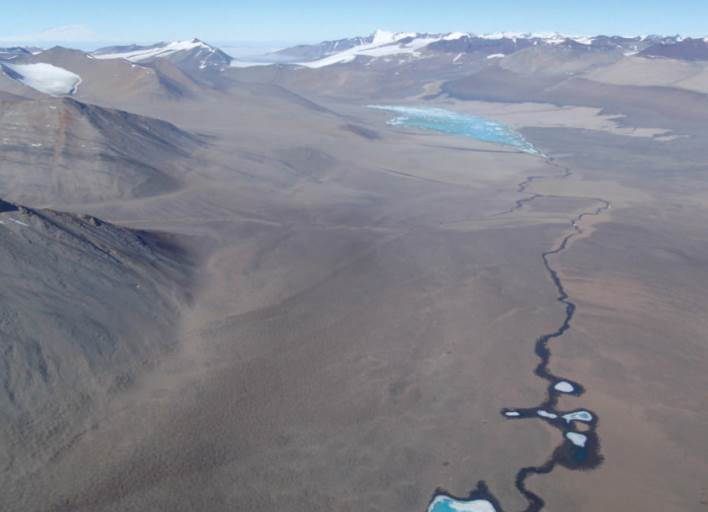
Fig. 3.43: View of Wright Valley in McMurdo Dry Valleys in Antarctica. The lake in the far distance is Lake Vanda and the river that flows toward it is the Onyx, the largest river in Antarctica. The dry soils in this valley are characteristic of the extreme polar desert of the dry valleys of Antarctica
The Hidden World of Permafrost. A defining feature of cold environments is the permafrost layer—ground that remains frozen for over two consecutive years. Covering a vast land area, permafrost presents adverse conditions including extreme cold and physical stress from freezing and thawing. Contrary to being sterile, permafrost microbial communities are highly diverse. More than 30 bacterial genera have been isolated from Arctic permafrost on Ellesmere Island, and nearly 50 strains were found in a sample from the Qinghai-Tibet Plateau. Astoundingly, some of these microbes remain active at temperatures as low as -39°C. These findings demonstrate that polar soil environments host resilient and unique communities, with far greater biodiversity than previously assumed, even in the most extreme cold deserts on Earth.
Date added: 2025-12-15; views: 492;