
Hot Desert Soil Biodiversity: Microbes, Fauna, and Ecosystem Function
Hot deserts are distributed across various continents, from the Sahara in Africa to the Sonoran in North America (Fig. 3.39 and 3.40). Soil organisms in these regions face a trifecta of challenges: extreme diurnal temperature fluctuations, severe water scarcity due to high evaporation and low precipitation, and, in some cases, elevated salt concentrations. These abiotic factors create a stringent environmental filter that shapes a unique and specialized biological community. Globally, each desert tends to host distinct species assemblages, though a comprehensive estimate of total biodiversity remains elusive due to limited research in many vast, unexplored areas. Species distribution is further influenced by localized variables including soil chemistry, physical structure, and sporadic precipitation patterns. Consequently, soil biodiversity is highly variable, but is generally lowest in dry, barren soils with high mineral content, leading to likely widespread underestimates of its true scope.
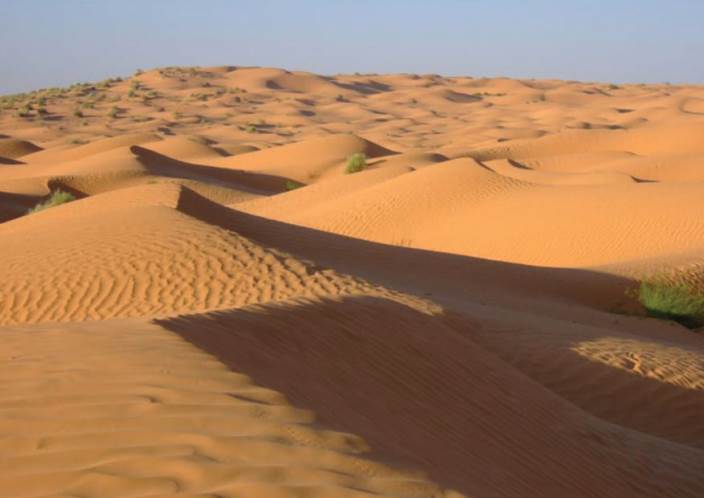
Fig. 3.40: Sand dunes with sparse plant growth in the Tunisian Sahara near Ksar Ghilane
Within the soil fauna of hot deserts, termites and ants often emerge as the most abundant macro-animals, functioning as vital ecosystem engineers. These organisms significantly alter the physical structure of the soil through their nesting and foraging activities, which can influence water infiltration and nutrient distribution. However, the species richness of both groups is typically lower than in more mesic ecosystems, with communities dominated by a few highly desert-adapted species. In these mineral-rich, low-organic-matter soils, termites and ants assume a functional role analogous to that of earthworms and enchytraeids in temperate systems, primarily driving the decomposition of scarce organic resources. While earthworms and enchytraeids can be present and influence litter decomposition in some desert microhabitats, their overall impact is diminished compared to their function in organic-rich soils.
The most numerically abundant soil animals in deserts are typically microarthropods and nematodes. The microarthropod community is often dominated by oribatid mites, which can constitute over 50% of the total population, alongside other mite groups, springtails (Collembola), and other small arthropods. Despite their abundance, the species richness of these groups is markedly low compared to temperate or tropical soils. For instance, a study of North American deserts found only 9 to 17 nematode taxa, a stark contrast to the hundreds often found in temperate grasslands. This pattern of low diversity is consistent in other deserts; a survey in the Chihuahuan Desert found 26 mite and 4 springtail species under shrubs, while arid South Australian ecosystems recorded a maximum of just 23 mite and 6 springtail species. This contrasts sharply with the hundreds of species commonly found in more vegetated ecosystems.
In the most extreme hyper-arid deserts, vascular plants are entirely absent due to the relentless lack of available water, and soils appear barren and lifeless. Yet, life persists primarily in the form of microorganisms. For example, sand dunes in the pre-Saharan desert of Tataouine, Tunisia, receiving a mere 115 mm of annual rain, were found to host over 90 different microbial taxa from more than 10 bacterial groups and the archaeal group Crenarchaeota. The Yungay region of the Atacama Desert, one of the driest places on Earth, supports no plants or invertebrates in its core areas. Here, life demonstrates remarkable adaptation, with cyanobacteria colonizing the undersides of quartz rocks. The quartz acts as a protective shield, allowing light penetration for photosynthesis while trapping higher soil moisture, creating a critical microhabitat. However, these communities are sparse, with only a few bacterial species found in the driest zones (<2 mm annual precipitation), underscoring the environment's extreme harshness.
In summary, while the small-scale, local diversity of organisms in hot desert soils is very limited compared to "normal" soils, the global below-ground diversity across all deserts is substantial and uniquely adapted. Our knowledge of this biodiversity and its precise influence on ecosystem function, such as nutrient cycling and erosion prevention, remains critically limited. Given that many human populations live in or near desert regions and rely on the ecosystem services they provide, understanding how these fragile biological communities respond to climate change is paramount for developing effective land management and conservation strategies. This makes the study of desert soil ecology not just a scientific curiosity, but a necessity for sustainable coexistence.
Date added: 2025-12-15; views: 451;