
Soil Biodiversity and Ecosystem Function: The Role of Organisms in Soil Health
The Critical Role of Soil Organisms in Global Processes. Soil organisms are fundamental to soil functioning, driving a suite of critical processes that deliver essential ecosystem goods and services (See Fig. 4.1). These biological actors perform functions with impacts at a global scale, such as sequestering or releasing carbon, thereby directly influencing the global climate. These activities, which often result from complex interactions between diverse organisms within an ecosystem, are formally termed ecosystem functions. The remarkable variety of life below ground is a vast biological engine, and effective ecological functioning—crucial for the future of our civilization—depends entirely upon this soil biota. In essence, the life within the earth drives the life on Earth, underpinning processes upon which our survival depends.
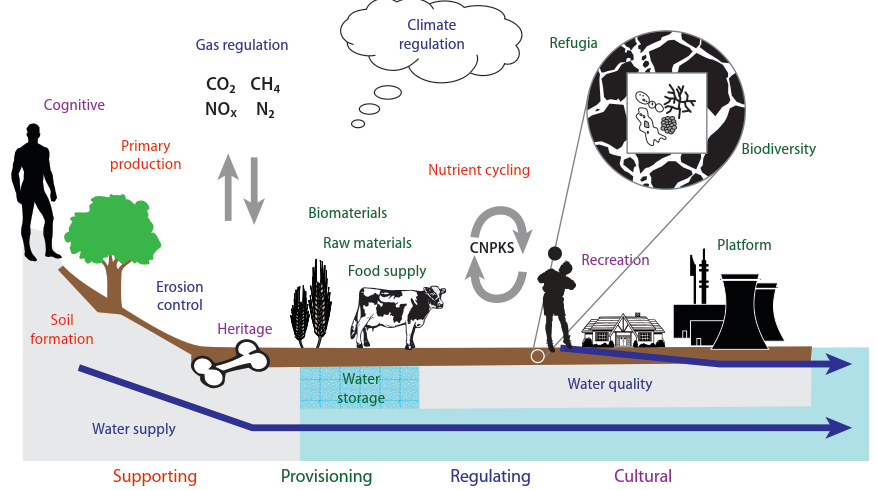
Fig. 4.1: A schematic description of the functions performed by soil. From Haygarth and Ritz, Land Use Policy 2009
The Importance of Biodiversity for Soil Function. The relationship between biodiversity and ecosystem function is complex and not fully understood, even in more easily studied above-ground environments. The exceptional complexity of below-ground communities presents a significant challenge to our comprehension. Three primary mechanisms underpin the connection between biodiversity and soil function: repertoire, interactions, and redundancy. First, the repertoire of biological capabilities dictates that for any process to occur, the organisms capable of performing it must be present; a diverse system possesses a wider suite of potential abilities. Second, organism interactions create a complex network; greater diversity allows for more interactions, which can enhance a system's adaptability to change and resilience to disturbance.
Third, and critically important, is the concept of redundancy. In an ecological context, redundancy is a positive attribute, referring to the presence of multiple organisms that can perform the same function. The more entities capable of a task in a particular soil, the more likely it is that the process will continue unaffected if some are lost; the remaining organisms can fill the functional gap (Figure 4.2 and 4.3). This principle provides a biological insurance policy for the ecosystem. Theoretical and experimental evidence confirms that soils with greater biodiversity are more resistant to environmental disturbances and more resilient, showing a greater capacity to recover following stress.
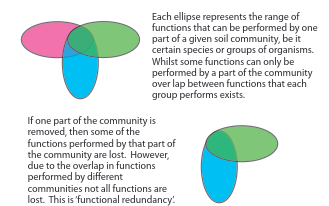
Fig. 4.2: A schematic representation of functional redundancy
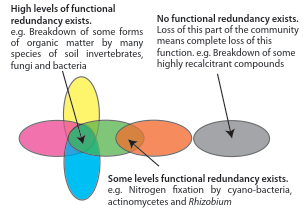
Fig. 4.3: A Schematic representation showing different levels of functional redundancy for different examples of ecosystem functions
Biodiversity, Community Structure, and Functional Diversity. While species richness is important, effective soil functioning also requires an appropriate range of properties, or functional traits, to be present within the biological community. This has led scientists to argue that functional diversity may be a more appropriate measure of a soil's biotic status than taxononomic diversity (the simple count of species). The main argument is that ecosystem functioning depends on whether the community has the necessary repertoire of capabilities, which relates directly to the traits of the organisms rather than their taxonomic classification. This is especially true for microbes like bacteria, where the link between taxonomy and function is often weak.
Furthermore, soil communities are structured through trophic levels, commonly described as food webs. These webs illustrate the patterns of feeding interdependencies and show how energy is transferred through the system. This structure has profound functional implications, as the cycling of key nutrients—essential for soil fertility and other ecosystem services important to humans (see Table 4.1)—is driven by these complex interactions. The stability and efficiency of these food webs are directly influenced by the diversity of organisms within them.
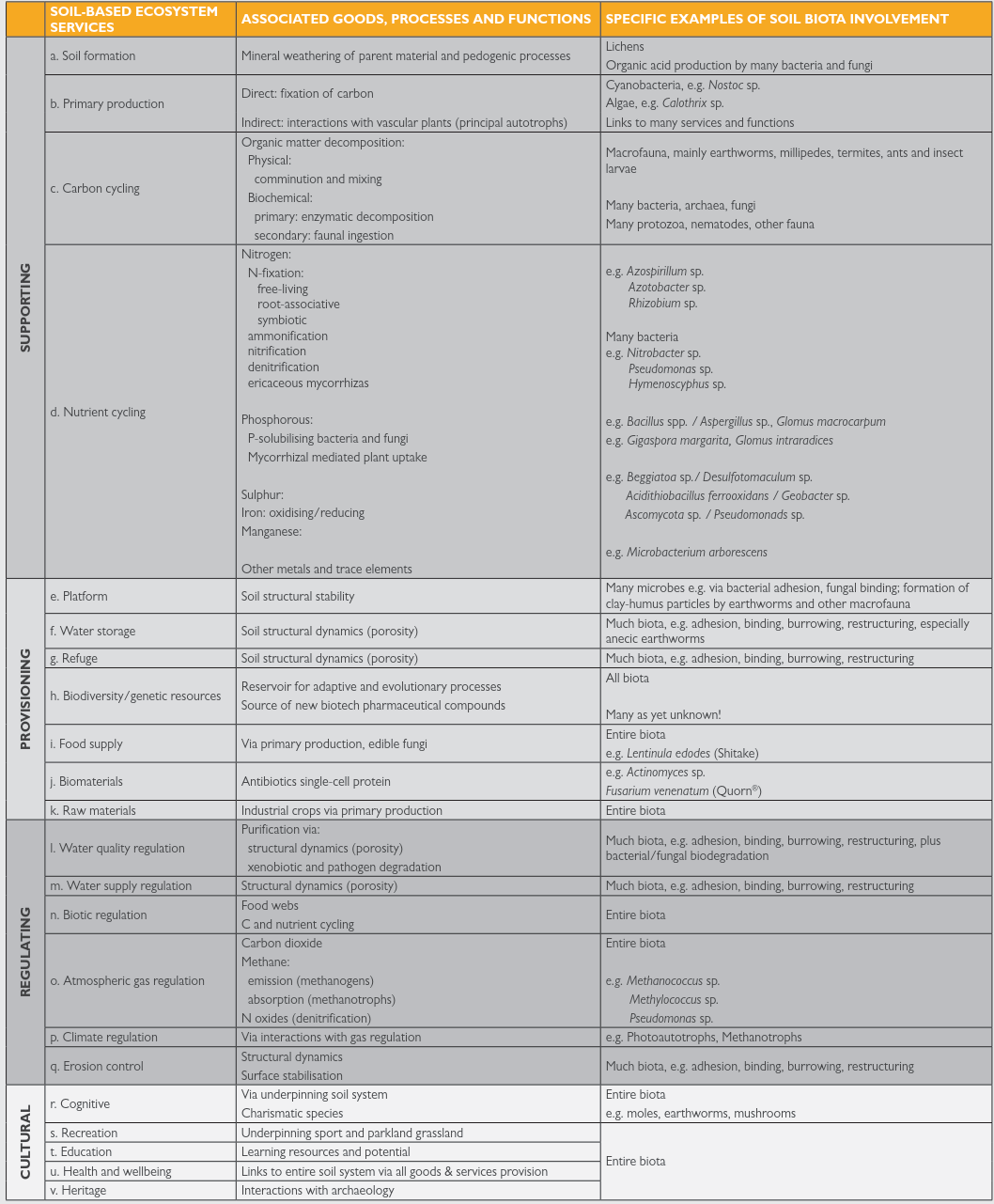
Table. 4.1: A list of the ecosystem services along with example organisms which provide the services. From Haygarth and Ritz (2009)
Broad vs. Narrow Processes and the Insurance Principle. Ecosystem functions can be categorized as either broad or narrow processes. Broad processes are carried out by a large number of species or groups, making them relatively robust. In contrast, narrow processes are performed by only a few species or specific groups, rendering them more vulnerable to ecological disturbances. This distinction led to the formulation of the insurance principle, which is linked to the concept of functional redundancy. This theory posits that an ecosystem function may not be affected by the loss of a single species if other, functionally similar species can perform the same role (Figure 4.2 and 4.3). Here, redundancy is not negative but represents a critical safeguard, ensuring that essential processes continue even when parts of the community are lost, thereby securing the long-term stability and health of the soil ecosystem.
Date added: 2025-12-15; views: 478;