
Harnessing Soil Biodiversity for Pest Control, Pollination, and Sustainable Agriculture
The Challenge of Pests in Agricultural Systems. Modern agricultural systems, often characterized by reduced plant diversity through monoculture, can create favorable conditions for the proliferation of pests and diseases. Improper agricultural practices exacerbate this issue, leading to significant quantitative and qualitative damage to crops. However, a healthy soil ecosystem, supported by a diverse and active soil community, provides a powerful line of defense. A rich consortium of soil organisms, including bacteria, fungi, viruses, protozoa, and invertebrates, naturally suppresses soil-borne pathogens through mechanisms such as competition, antibiosis, parasitism, and by inducing systemic resistance in plants (see also Section 4.4).
Key Organisms in Biological Control.Several organisms are renowned for their role in the biological control of pests and diseases. The fungus Trichoderma harzianum is a common soil-dwelling antagonist that coils its hyphae around pathogenic fungi, releasing cell wall-degrading enzymes to limit their growth. Similarly, 'nematode-trapping fungi' like Drechslerra anchonia produce specialized structures to capture, penetrate, and digest nematodes. Among bacteria, Pseudomonas species effectively colonize the rhizosphere, protecting plants by competing for nutrients like iron, producing antibiotics, and enhancing overall plant health. Furthermore, entomopathogenic nematodes from genera like Steinernema are specifically pathogenic to insect pests, providing natural insect control.
The Phenomenon of Disease-Suppressive Soils.Certain soils, known as suppressive soils, possess inherent properties that inhibit soil-borne diseases, attracting significant research interest. These soils can suppress well-known pathogens such as Fusarium oxysporum, Gaeumannomyces graminis, and Rhizoctonia solani. Plants grown in these environments develop minimal or no disease symptoms even when pathogens are present. This soil suppressiveness is attributed to a combination of specific physicochemical characteristics and, critically, the activity of a beneficial soil biota that controls pathogens. This biological control aligns with Integrated Pest Management (IPM) principles, which leverage biodiversity and natural enemies to reduce pests, acknowledging that below-ground processes positively impact above-ground health.
The Critical Link Between Soil and Pollinators.Insect pollinators are indispensable to global food security, responsible for the reproduction of two-thirds of the world's crop species and contributing to 35% of global food production. The economic value of this service, primarily from bees, was estimated at ?153 billion in 2005 for key world crops (See Section 3.6). Many of these crucial pollinators have life cycles intrinsically linked to the soil ecosystem. For instance, in early spring, small mounds of earth or tumuli appear, signifying the excavation work of ground-nesting bees (Figure 3.29). The immature stages of many pollinating insects, including flies, wasps, and bees, develop within the soil.
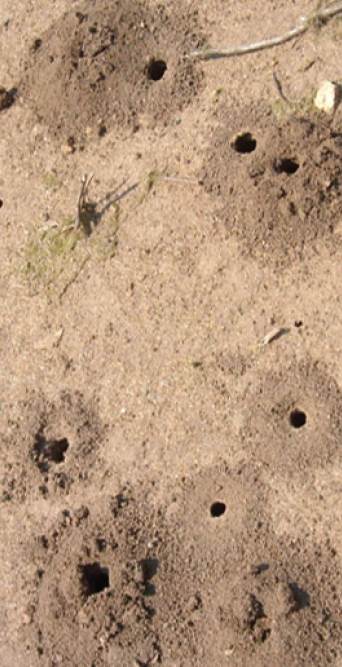
Fig. 3.29: Surface openings of underground nests made by soil nesting bees, showing tumuli formed at the soil surface
Soil Preferences and Management for Ground-Nesting Bees. Soil-nesting bees, which include both solitary and social species like bumble bees, are among the most effective crop pollinators. A prime example is the squash bee (Peponapis pruinosa), a specialist pollinator of cucurbits that nests directly in the ground (Fig. 3.30). These bees typically colonize agricultural fields, preferring bare, moderately moist sandy or loamy soils with warm surface temperatures; they generally avoid hard, compacted soils. Management strategies are emerging to conserve these vital insects, such as using strip tillage to minimize nest disturbance. Protecting existing aggregations is also crucial, as demonstrated by a 1.5-hectare protected nesting bed in Washington State that has sustainably produced millions of bees for over 50 years.
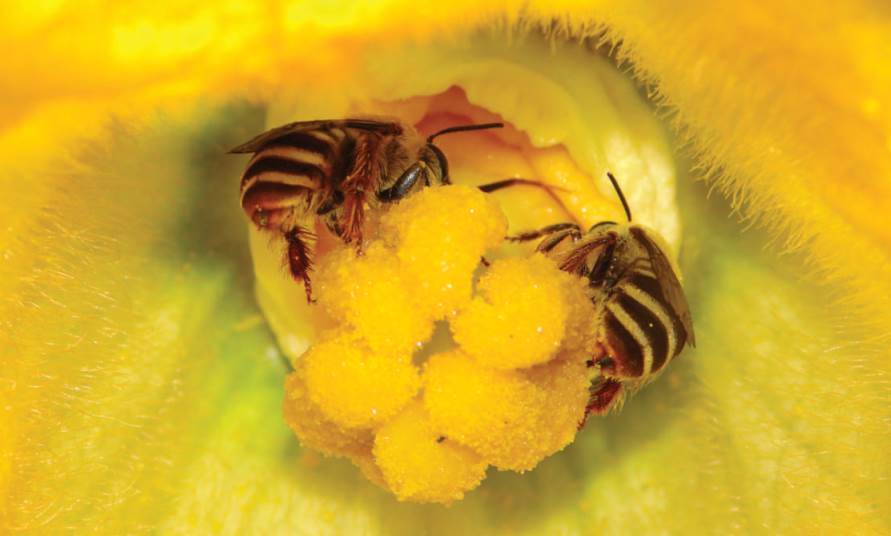
Fig. 3.30: Squash bee, Peponapis pruinosa
Other Soil-Dependent Pollinators and Agricultural Impacts.The connection between soil and pollination extends beyond bees. The small flies essential for pollinating cacao, a crop with 90% global dependence on pollinators, reproduce in decaying organic matter like discarded cacao pods on the soil surface. Similarly, nitulid beetles, key pollinators of Atemoya or custard apple, lay their eggs on decaying plant material. Despite their importance, these soil-associated pollinators are rarely explicitly managed. Agricultural practices significantly impact them; tillage can destroy entry tunnels, flood irrigation during nesting can damage larvae, and livestock trampling can compact soil and destroy nests, though some bees surprisingly prefer disturbed sites like livestock corrals.
The Need for a Sustainable Agricultural Shift.The dramatic increases in agricultural production over the last century have relied on massive inputs, with a seven-fold rise in nitrogen and a 3.5-fold increase in phosphorus fertilizer use since 1950. We are now reaching the limits of this model, facing constraints on resource availability, soil and water quality deterioration, and significant greenhouse gas emissions. The real challenge is to encourage practices that leverage existing ecosystem services to boost production while simultaneously reducing environmental impact. Methods like mixed cropping and using nitrogen-fixing crops can foster a thriving soil biota, enhance production, and prevent nutrient leaching.
Managing Soil Biodiversity for Long-Term Benefits.Central to sustainable agriculture are practices that cultivate and promote a diverse soil biota. Farming methods that increase soil biodiversity—through greater organic matter retention, reduced tillage, the adoption of Integrated Pest Management (IPM), and diverse crop rotations—create multiple benefits for farm productivity and ecosystem health. Soil organisms are fundamental to regulating soil characteristics, sustaining fertility, and breaking down toxic compounds. The next evolutionary step in agriculture requires farmers to work consciously with the soil biota and their functions, allowing us to utilize soils sustainably for the benefit of both agriculture and the global environment.
Date added: 2025-12-15; views: 552;