
Soil Macrofauna: Key Groups, Ecological Roles, and Bioindicator Potential
While a comprehensive overview of all soil organisms is beyond this atlas's scope, numerous other ecologically important groups are commonly encountered. Many belong to the soil macrofauna, organisms larger than two millimeters. This category includes permanent soil inhabitants like earthworms, groups spending only part of their life cycle below ground, and species where only immature stages are truly soil-dwelling. Despite these varied life histories, such organisms play crucial roles in soil functions and serve as valuable bioindicators of soil health.
Spiders (Araneida) are among the most recognized arachnids (Fig. XIX.I) and fulfill a predatory role analogous to carabid beetles. As highly mobile predators, they feed on diverse soil fauna including nematodes, enchytraeids, and other arthropods. Adaptations for predation include long legs, well-developed eyes, venom-injecting chelicerae, and silk glands for web-building. Larger species are often epigeic, inhabiting surface litter, while smaller species, like some Linyphiidae, live within soil pores. With up to 200 individuals per square meter and approximately 34,000 known species, their abundance and sensitivity make them promising bioindicators.
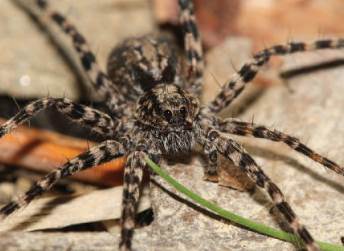
Fig. XIX.I: Some spiders, such as the majority of wolf spiders, an example of which is shown above (Acantholycosa lignaria), do not make webs but rather live in, and hunt from, burrows in the soil or shelter under rocks
Harvestmen (Opilionida) are arachnids distinguished from spiders by their segmented abdomen (Fig. XIX.II). Most species possess characteristically long legs and reside primarily on the soil surface (Fig. XIX.III), with few venturing into upper litter layers. Unlike strictly predatory spiders, harvestmen are omnivorous. Their diet includes detritus, fungi, and the excrements of other soil fauna, in addition to small prey, contributing to nutrient cycling.
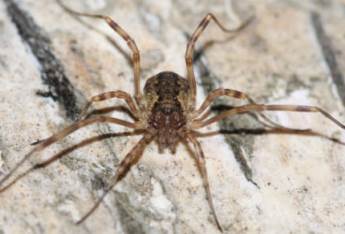
Fig. XIX.II: Although they make look similar to spiders, harvestmen, such as Oligolophus tridens are actually from a different taxonomic order
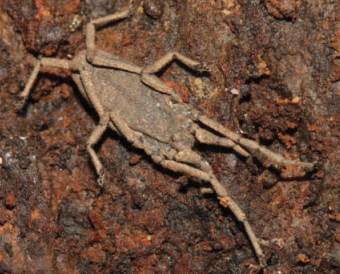
Fig. XIX.III: Harvestmen of the genus Trogulus with large and flattened body and relatively short legs, living in soil litter. They are more similar in appearance to rather large mites than classical harvestmen
Pseudoscorpions (Pseudoscorpionida) resemble miniature scorpions but lack a terminal sting and elongated abdomen (Fig. XIX.IV). These true soil inhabitants are predominantly predaceous. They are considered beneficial organisms, as they help control populations of potential pests, such as carpet beetle larvae, within the soil ecosystem.

Fig. XIX.IV: An Asian forest scorpion (Heterometrus longimanus; right). These scorpions are generally nocturnal, spending the majority of the day in cool areas such as in holes in the soil or under rocks and only coming out to hunt at night. Above shows a photo of Ischyropsalis helwigii, a species of harvestman. It should be noted that the cheliceres of this harvestmen with “pinchers” at the end are not homologous with pinchers of scorpions and pseudoscorpions. (FT) Far right shows a pseudoscorpion. Pseudoscorpions are arachnids which have pinchers that resemble those of scorpions but have a small and rounded abdomen in contrast to the segmented tail and stinger which true scorpions have
Other predatory arachnids inhabiting soil surfaces in warmer, often arid regions include scorpions (Scorpionida) and camel spiders (Solifugae). In Europe, these groups are largely confined to southern Mediterranean areas. They function as key predators in these ecosystems, contributing to the regulation of insect and other arthropod populations.
A significant portion of soil macrofauna consists of insects. The larvae of Diptera (flies), commonly called maggots (Fig. XIX.V), are particularly important. They can reach immense population densities, sometimes thousands per square meter. While not all of the roughly 120,000 fly species have soil-dwelling larvae, thousands do (e.g., Sciaridae, Chironomidae). Dipteran larvae are ecologically heterogeneous, with feeding strategies ranging from predation and parasitism to saprophagy. They are fundamental decomposers, fragmenting dead organic matter and strongly influencing decomposition processes in systems like wet meadows.
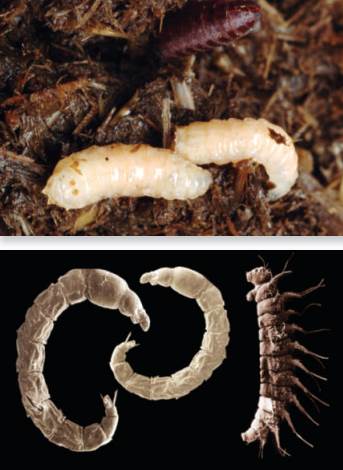
Fig. XIX.V: As well as the more well known maggots (top), soil living Diptera larvae can be as morphologically varied as the adult flies that they become. (GP) Bottom image shows the larvae of Metriocnemus sp. (2 on the left) and Forcipomia sp. (right)
The passage of organic matter through dipteran larval guts not only decomposes it but can also modify pH toward neutral or basic conditions. Their nutrient-rich faeces continue to support enzymatic activity, thereby driving fermentation in soil organic layers. Due to their high biomass, they also constitute a crucial food source for a wide range of soil predators.
Beetles (Coleoptera) are represented in soil by numerous families with diverse feeding habits (Fig. XIX.VI). Predatory staphylinid beetles (Staphylinidae) are especially numerous, including euedaphic species adapted to deep soil life. These blind, elongated beetles with reduced appendages resemble microarthropods like collembolans. Other beetle families are specialized detritivores during larval stages.
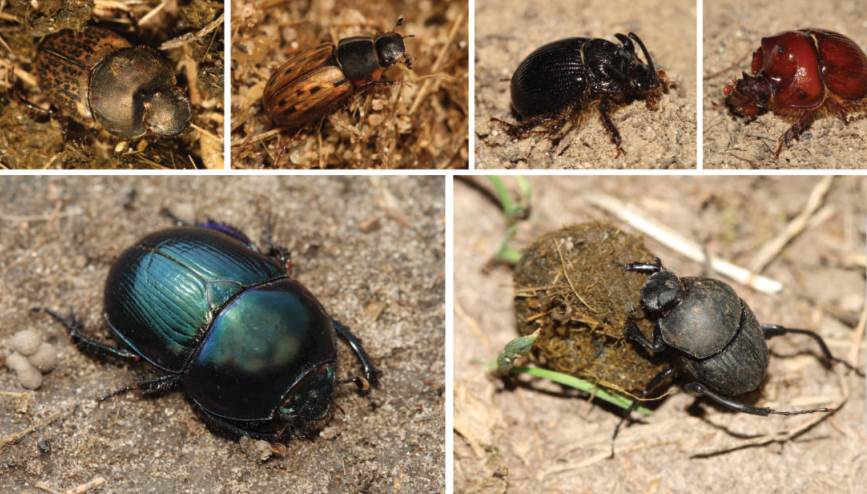
Fig. XIX.VI: A highly variable group of dung beetles use dung as food source for their larvae, processing and laying dung into the soil where it can decompose, as other organic matter in the soil, contributing to the cycling of soil nutrients. Some of the dung beetles are small and less distinct, but some may be large or variably coloured and/or having different horn- or thorn-like formations on their bodies, especially in males. The first pair of their legs is always dentated, which is an adaptation helping them to dig holes in the soil. European species from upper to bottom row and from left to right: Ontohphagus vacca, Aphodius conspurcatus, Bolboceras armiger (male), Bolbelasmus unicornis (male), Geotrupes mutator and Sisyphus schaefferi.
Notable detritivores include dung beetles (within Scarabaeoidea), which bury herbivore dung for larval consumption, recycling energy-rich organic matter. Carrion or burying beetles (Silphidae) inter small vertebrate carcasses, aiding in the decomposition of dead animals. Larvae of many families (e.g., Scarabaeidae, Elateridae, Curculionidae), known as white grubs or wireworms, inhabit soil and feed on plant roots or decaying plant material. Other insect orders like Heteroptera and Blattodea also have soil-dwelling life stages.
Gastropoda, including slugs (Fig. XIX.VII) and snails (Fig. XIX.VIII), are vital non-arthropod soil invertebrates. Snails require carbonates for shell formation, making them abundant—sometimes hundreds per square meter—and important in calcareous soils. Their shells provide a durable record, making them excellent bioindicators for both current and paleoecological studies. While many are phytophagous, many species are detritophagous.
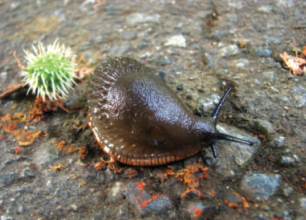
Fig. XIX.VII: A slug of the genus Ario
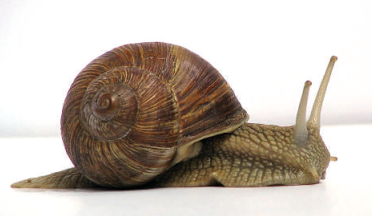
Fig. XIX.VIII: A snail of the species Helix pomatia, also known as the Grapevine snail
Gastropod excrements significantly contribute to humus formation and soil structure. Their energy-rich slime serves as a key food source for soil microorganisms. Additionally, some species act as intermediate hosts for parasites affecting birds and mammals, linking soil ecology to broader ecosystem health.
Date added: 2025-12-15; views: 646;