
Terrestrial Isopods (Oniscidea): Morphology, Ecology, and Adaptations of Woodlice
Terrestrial isopods, commonly known as woodlice, pill bugs, or sow bugs, form the monophyletic suborder Oniscidea within the order Isopoda. They are the only crustacean group fully adapted to terrestrial life, having evolved from marine ancestors. Their name originates from the Greek for "equal feet," referencing their seven pairs of similarly sized pereiopods. With over 3,600 described species—a number continuously growing, especially from tropical explorations—they represent Isopoda's most diverse suborder, occupying a vast array of global habitats.
Morphologically, woodlice are dorso-ventrally flattened and segmented, with a rigid exoskeleton composed of chitin and calcium carbonate. Their body divides into three tagmata: the cephalon (head), the pereion (thorax), and the pleon (abdomen) (Fig. XVII.I). The pereion consists of seven segments, each bearing a pair of walking legs. The pleon is shorter, comprising five segments and a terminal telson, equipped with paired, biramous pleopods. These appendages are critical for respiration and reproduction.
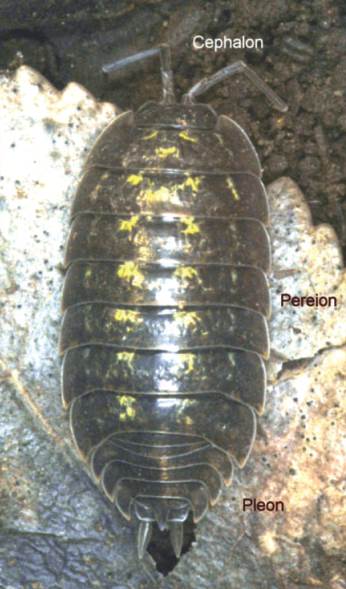
Fig. XVII.I: Adult specimen of Porcellio pumicatus from Italy showing main body parts
A key evolutionary adaptation is their respiratory system. Primitive families (e.g., Ligiidae, Trichoniscidae) retain pleopods that function as gills, requiring moist habitats. More derived groups possess pseudotracheae—specialized respiratory structures on the pleopodal exopods that act as lungs, enabling colonization of drier environments. These may be uncovered or internally invaginated (covered pleopodal lungs), reflecting an adaptation gradient toward xeric conditions.
Reproduction involves indirect sperm transfer via modified male pleopods (Fig. XVII.V), a key taxonomic character. Females brood eggs and embryos in a ventral marsupium, releasing fully formed mancas (juveniles), which eliminates dependency on free water for early development. Parental care is rare but exemplified by the desert genus Hemilepistus, which constructs and guards familial burrows (Fig. XVII.VI).
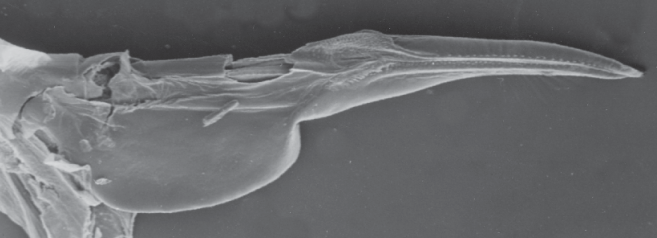
Fig. XVII.V: First male pleopodal endopod used to transfer the spermatophores into the female oviducts
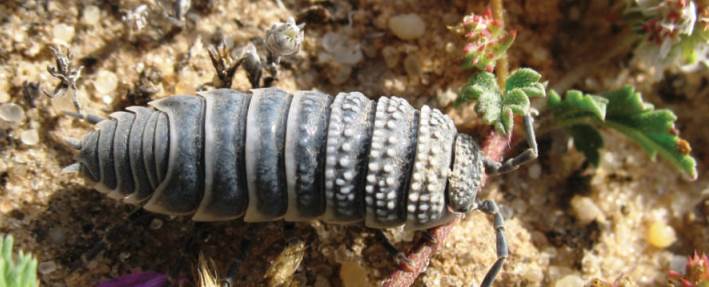
Fig. XVII.VI: Hemilepistus reaumurii, a species from sub-desert areas in northern Africa. This species is exception from other terrestrial isopods in that parents care for their young in specially constructed burrows
Ecologically, terrestrial isopods are primarily detritivores, crucial in decomposing dead plant matter and facilitating nutrient cycling. They occupy diverse niches, from forests and littoral zones to deserts and caves, with some species synanthropic (e.g., Porcellionides pruinosus). To minimize water loss, they are largely nocturnal and possess ventral water-conducting systems to recycle moisture. Their limited dispersal makes them excellent biogeographical indicators.
Defense strategies correlate with five main morphological types:
1. Runners (e.g., Ligia): Elongated, fast-moving with long legs.
2. Clingers (e.g., Porcellio): Flattened bodies to adhere tightly to substrates.
3. Spiny Forms (e.g., Polyacanthus aculeatus, Fig. XVII.VII): Conspicuous dorsal spines deter predators.
4. Creepers (e.g., Haplophthalmus): Small, ribbed bodies for navigating deep soil crevices.
5. Rollers (e.g., Armadillidium): Ability to conglobate (roll into a ball) (Fig. XVII.VIII), providing complete protection.
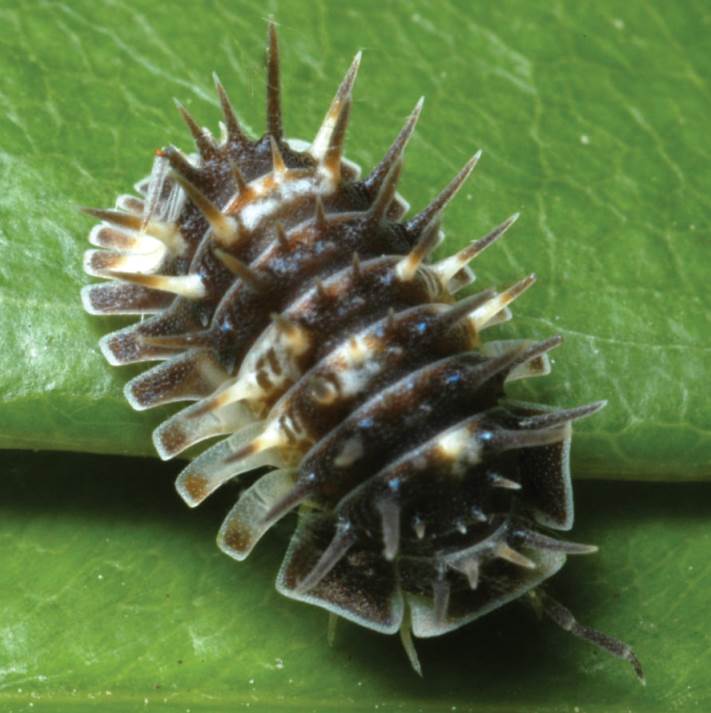
Fig. XVII.VII: Polyacanthus aculeatus, a spiny form of Armadillidae from Africa
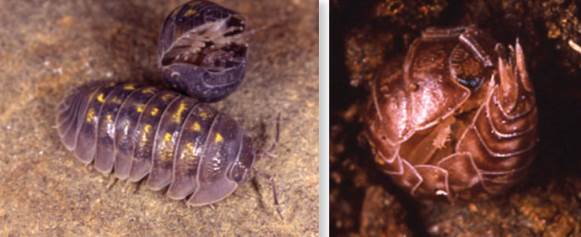
Fig. XVII.VIII: Cylisticus gracilipennis (left), a typical exoantennal “roller” and Armadillidium granulatum (right), an endoantennal “roller”, both are from the Mediterranean area
Their global distribution shows high diversity in the Mediterranean and Balkan regions, with many endemics. A limited number of species, often of Mediterranean origin, have become cosmopolitan through human activity. As integral decomposers and prey for many arthropods and vertebrates, terrestrial isopods are fundamental components of soil biodiversity and ecosystem function.
Date added: 2025-12-15; views: 551;