
Ocean Biogeochemistry: Nutrients, Organics, and Desalination
Nutrient Dynamics and Biogeochemical Cycling. Ions required for plant growth are known as nutrients; these are the fertilizers of the oceans. As on land, plants require nitrogen and phosphorus in the form of nitrate (NO₃⁻) and phosphate (PO₄³⁻) ions. A third nutrient required in the oceans is the silicate ion (SiO₄⁴⁻), which is needed to form silica (SiO₂), the hard outer wall of the single-celled plantlike organisms called diatoms and the skeletal parts of some protozoans.
These three nutrients are among the dissolved substances brought to the sea by the rivers and land runoff. Despite their importance they are present in very low concentrations (table 5.6). The concentrations of nutrient ions vary because some of these ions are closely related to the life cycles of living organisms. Nutrients are removed from the water as the plant populations grow and reproduce, temporarily reducing the amounts in solution. Later, when the populations decline, death and decay return the ions to the seawater.
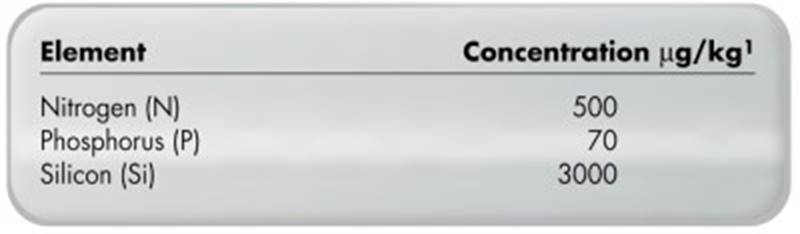
Table 5.6. Nutrients in Seawater¹. ¹Parts per billion.
Nutrients are cycled into the animal populations as the animals feed on the plants. These animals may be eaten in their turn, and eventually the nutrients are returned to the oceans by way of death and bacterial decomposition. Excretory products from these animals are also added to the seawater, broken down, and used again by a new generation of plants and animals. Nutrients are nonconservative; they do not maintain constant ratios in the way most major salt ions do. The cyclic nature of the nutrient pathways for nitrogen and phosphorus is discussed in chapter 14.
Organic Matter in Seawater. A wide variety of organic substances is present in seawater. Proteins, carbohydrates, lipids (or fats), vitamins, hormones, and their breakdown products are all present. Some are eventually reduced to their inorganic components; others are used directly by organisms and are incorporated into their systems. Another portion of the organic matter accumulates in the sediments, where over geologic time it slowly forms deposits of oil and gas.
In the areas of the ocean that are high in plant and animal life, the surface layer may take on a green-yellow color owing to the presence of organic decay products. The incorporation of soluble organics into glacial ice at the Antarctic ice shelves is related to the formation of green ice (see the box on this subject in chapter 4).
Chemical Resources and Salt Extraction. About 30% of the world’s table salt is extracted from seawater. The industrially produced energy required to remove the water is kept to a minimum in order to keep extraction costs low. In warm, dry climates seawater is allowed to flow into shallow ponds and evaporate down to a concentrated brine solution. More seawater is added, and the process is repeated several times, until a dense brine is produced. Evaporation continues until a thick, white salt deposit is left on the bottom of the pond. The sea salt is collected and refined to produce table salt. This technique has been recently used in southern France, Puerto Rico, and California (fig. 5.9).
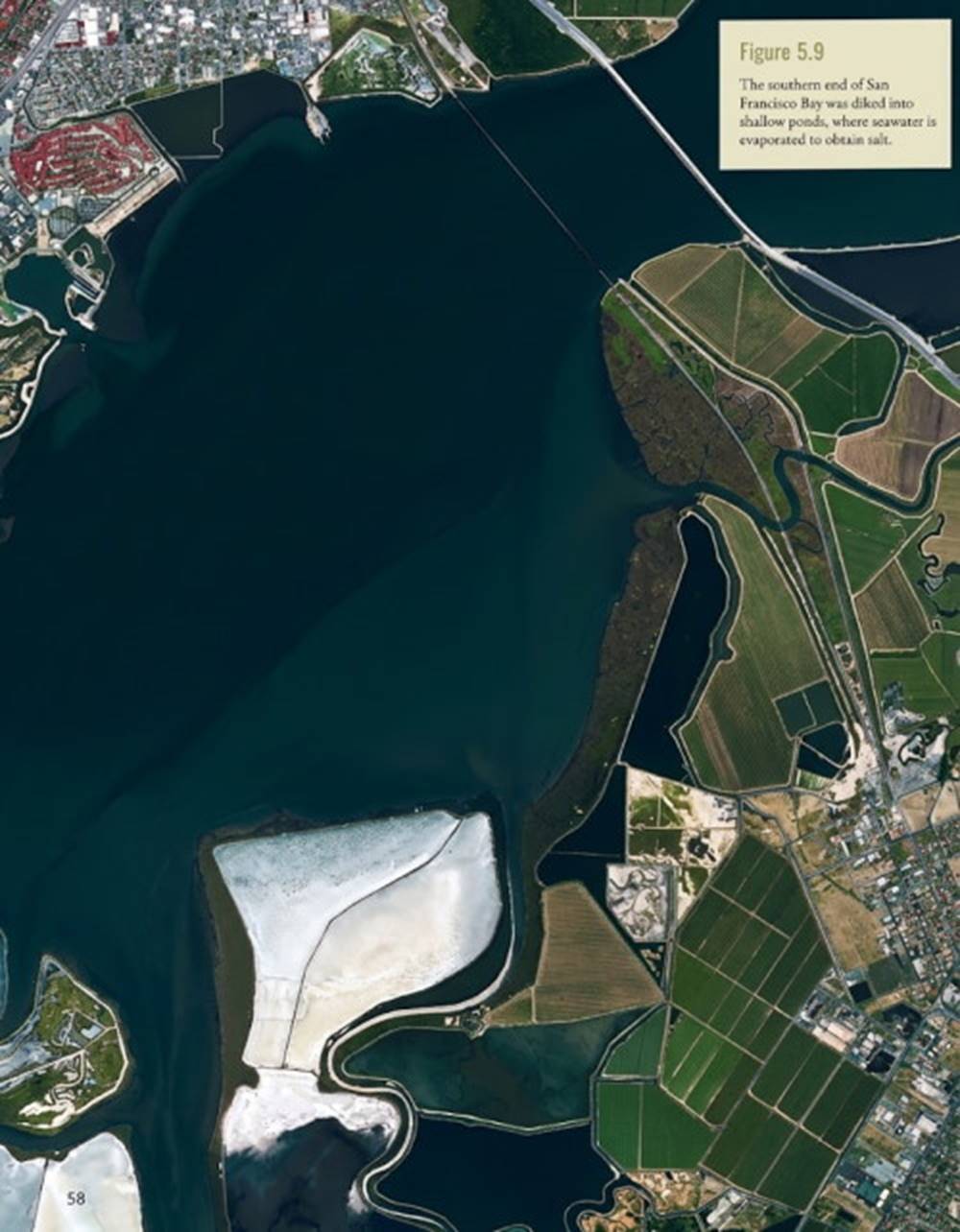
Fig. 5.9. The southern end of San Francisco Bay was diked into shallow ponds, where seawater is evaporated to obtain salt.
In cold-climate areas, salt has been recovered by freezing the seawater in similar ponds. The ice that forms is nearly fresh; the salts are concentrated in the brine beneath the ice. The brine is removed and heated to remove the last of the water. Of the world’s supply of magnesium, 60% comes from the sea, and so does 70% of the bromine.
There are vast amounts of dissolved minerals in the world’s seawater, including 10 million tons of gold and 4 billion tons of uranium, but the concentration is very low (one part per billion or less). In the case of gold, no method has been devised in which the cost of extraction does not exceed the value of the recovered element. At one time or another Japan, Germany, and the United States have expressed an interest in the extraction of uranium. Japan set up a land-based test plant in 1986 to produce 10 kg (26 lb) of uranium from seawater each year, but the operation has proved to be too expensive.
Desalination Technologies. Desalination is the process of obtaining fresh water from salt water. There are three main desalination methods:
1. processes involving a change of state of the water—liquid to solid or liquid to vapor;
2. processes requiring ion exchange columns;
3. processes using a semipermeable membrane—electrodialysis and reverse osmosis.
The simplest process involving a change of state is a solar still (fig. 5.10). In this process a pond of seawater is capped by a low plastic dome. Solar radiation penetrates the dome and evaporates the seawater. The evaporated water condenses on the underside of the dome and trickles down to be caught in a trough, where it accumulates and flows to a freshwater reservoir. The rate of production is slow, and a very large system is needed to supply the water requirements of even a small community.
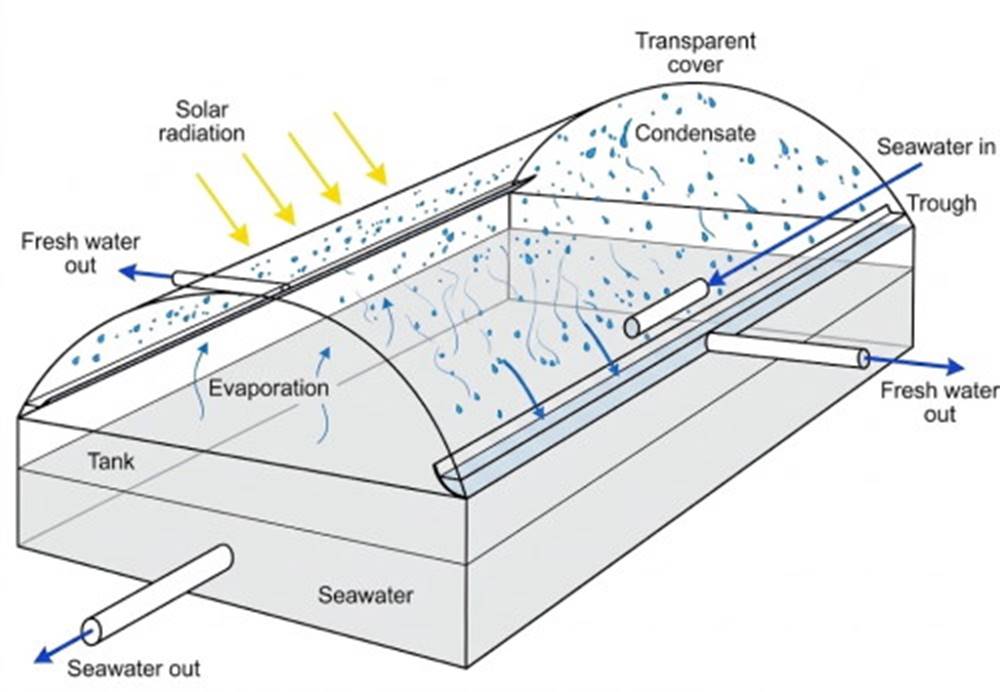
Fig. 5.10. Solar energy is used to evaporate fresh water from seawater. Solar radiation penetrates the transparent cover over the seawater contained in the tank.
When water is distilled by heating water to boiling, evaporation proceeds at a rapid rate and large quantities of fresh water are produced, but the energy requirement is high. If water is introduced to a chamber with a reduced air pressure, the boiling occurs at a much lower temperature and therefore uses less energy. Change of state by freezing can also be used to recover fresh water from seawater. The energy requirement is approximately one-sixth of that needed for evaporation, but the mechanical separation of the fresh-water ice from the salt brine remains difficult.
Columns containing ion exchange resins that extract ions from salt water work well with water of low salinity, but the resins need to be replaced periodically (fig. 5.11b). Small ion exchange units are manufactured for household use to improve drinking water quality. Electrodialysis uses an electrical field to transport ions out of solution and through semipermeable membranes; this technique also works best in low-salinity (or brackish) water (fig. 5.11a).
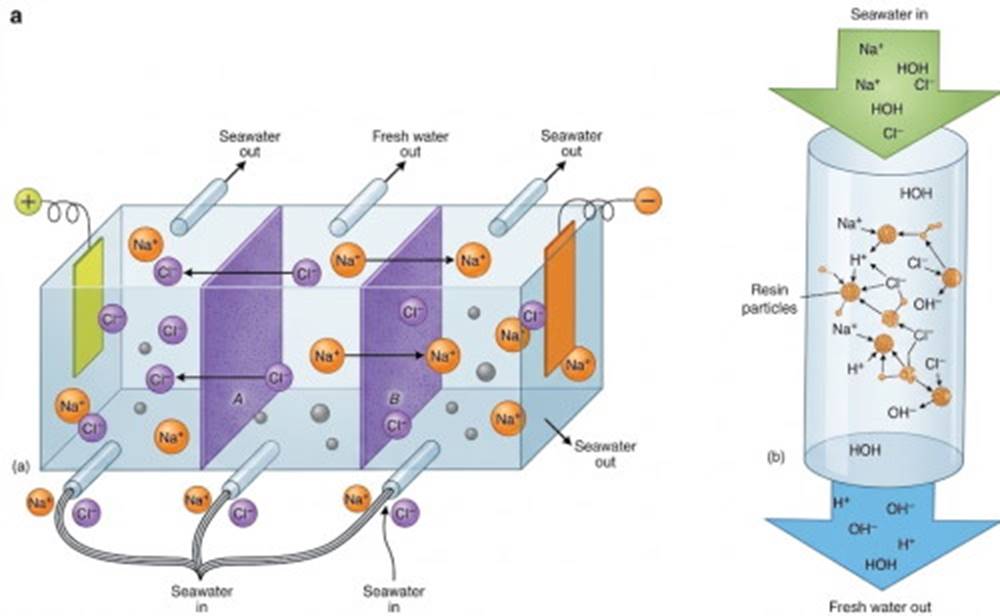
Fig. 5.11. (a) Electrodialysis. A tank is separated into three compartments by semipermeable membranes A and B. Membrane A passes only Cl⁻. Membrane B passes only Na⁺. Electrodes that are placed in the end compartments and are supplied with a direct-current voltage will cause the salt ions to migrate out of the center compartment. Fresh water is recovered from the center compartment; excess salt water is removed from each side compartment. (b) Ion-exchange column. Seawater passes through a column of resin particles that exchange H⁺ for Na⁺ and Cl⁻ for OH⁻ to produce HOH, or fresh water (H₂O).
Osmosis and Reverse Osmosis. Osmosis is the movement of water across a semipermeable membrane; the water moves from the side with the higher concentration of water molecules (or low salinity) to the side with the lower concentration of water molecules (or high salinity); this movement creates a higher pressure on the low-water concentration (or high-salinity) side of the membrane. See fig. 5.12a.
Reverse osmosis produces fresh water from seawater by applying pressure to seawater and forcing the water molecules through a semipermeable membrane, leaving behind the salt ions and other impurities (fig. 5.12b). The pressure applied to the seawater must exceed 24.5 atmospheres, or 25.84 × 10⁶ dynes/cm². A pressure of about 101.5 atmospheres, or 103 × 10⁶ dynes/cm², is required to achieve a reasonable rate of freshwater production. The energy requirement is about one-half that needed for the evaporative process.
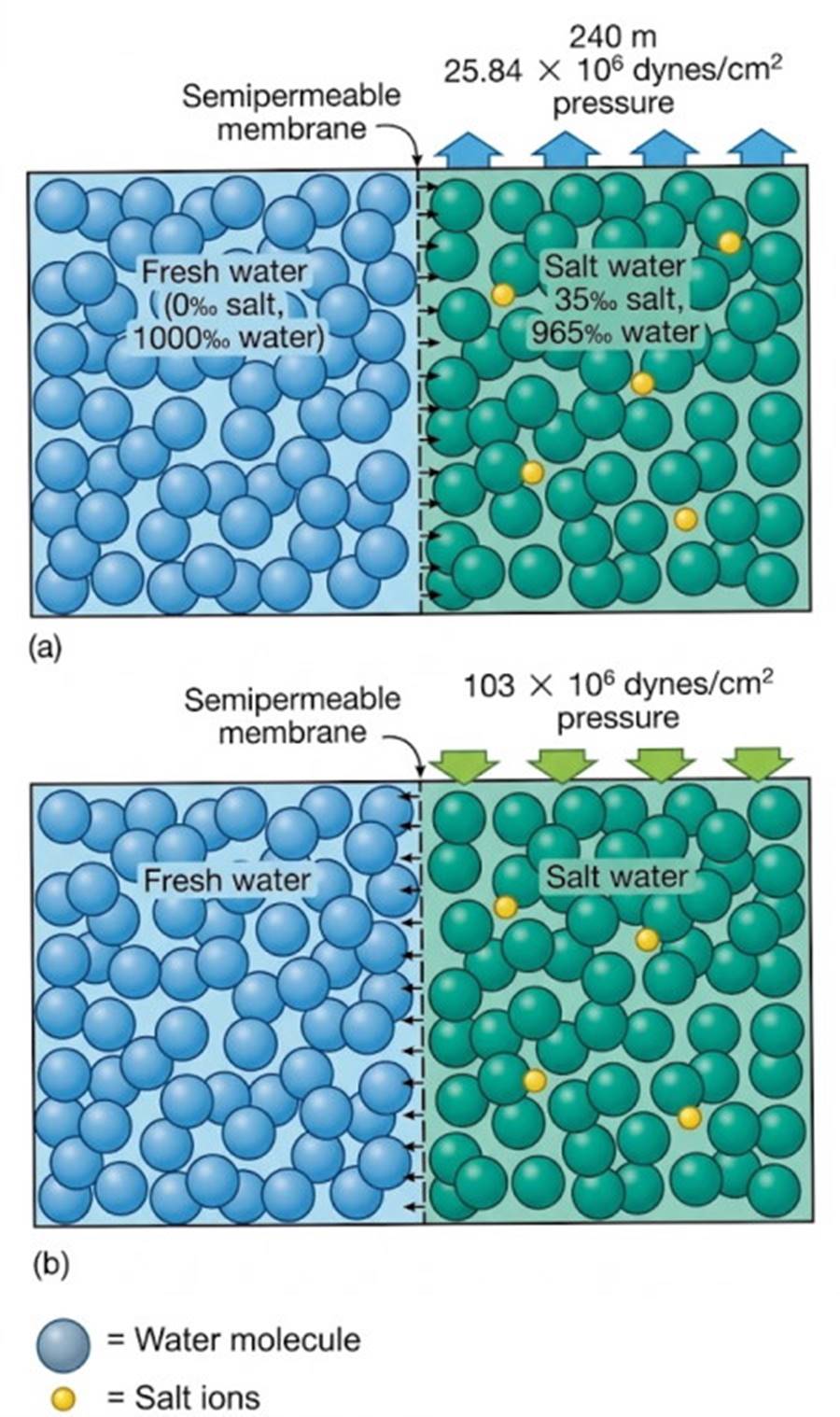
Fig. 5.12. (a) Osmosis. Water molecules move from the freshwater side to the saltwater side through a semipermeable membrane. (b) Reverse osmosis. When pressure on the salt water exceeds 25.84 × 10⁶ dynes per square centimeter, water molecules move from the saltwater side to the freshwater side of a semipermeable membrane.
Reverse osmosis is the most popular and rapidly growing form of desalination technology. As older evaporative desalination plants wear out, reverse osmosis plants are replacing them. The advantages of reverse osmosis plants include no energy requirement for heating the water entering the plant, no thermal pollution from the discharge, and removal of unwanted contaminants—including pesticides, bacteria, and some chemical compounds. High-salinity waste water returning to the coastal environment can be a disadvantage. The cost of the energy required to pump the water under pressure makes the cost of this type of desalinated water very high. In Southern California, desalinated water is about fifteen times more expensive than local groundwater and five times more expensive than water imported from the northern part of the state.
Twelve percent of the world’s desalination capacity is produced in the Americas, with most of the plants located in the Caribbean and Florida. Ninety-nine percent of Florida’s plants use reverse osmosis. Santa Barbara, California, faced with extreme drought conditions, has built the nation’s largest reverse osmosis plant, capable of producing about 26 million liters (7 million gallons) per day. To the south, twenty-six miles off the coast from Los Angeles, Santa Catalina Island is using this method to produce about one-third of its potable water needs, 5 × 10⁵ liters (132,000 gallons) per day, and is considering expansion. Reverse osmosis systems are a part of the U.S. Army’s mobile water purification units; virtually all of the drinking water supplied to U.S. troops during the Persian Gulf War came from reverse osmosis.
The 1997–98 El Niño brought a seven-month drought to the Marshall Islands. On Majuro Island (population 27,000), portable reverse osmosis plants provided four gallons of water per person per day, and a plant that produced 31,700 gallons per day was installed on Ebye Island (population 13,000). Small reverse osmosis units producing 400 liters (105 gal) of fresh water per day are available for small vessels and summer homes on islands with little fresh water. Reverse osmosis hand pumps are made to produce fresh water for drinking in emergency situations (for example, on lifeboats and rafts).
At present there are more than 7500 desalination plants in operation worldwide. The principal process used in these plants is multistage flash distillation, and the next most important process is reverse osmosis. Sixty percent of the plants are located on the Arabian Peninsula and in the Middle East. In 1997 the Saline Water Conversion Corporation of Saudi Arabia began a massive expansion of its desalination capacity with the announcement of fifteen new desalination projects. The world’s largest plant, in Saudi Arabia, produces 128 MGD (million gallons per day) of desalted water. Most flash distillation plants are associated with petroleum-powered electric plants that use high-temperature, high-pressure steam to drive their turbines. Condensate from the power plants at about 120°C is used to produce fresh water in a multistage, lower-pressure system that produces six to twenty times the amount of fresh water than would be obtained from a single-step distillation system.
In areas such as Kuwait, Saudi Arabia, Morocco, Malta, Israel, the West Indies, California, and the Florida Keys, water is a limiting factor for population and industrial growth. The greatest drawback to the production of fresh water from seawater is the high cost, which is linked to the energy required. In the Arab countries, water costs are low because fuel costs are low.
Large floating masses of naturally desalinated ice have attracted interest as sources of fresh water. The first of a series of meetings on this possibility was hosted in 1978 by Arab interests. Discussions centered on the feasibility of towing icebergs from the Antarctic to the Red Sea. Although the expense would be enormous and much of the ice would melt as it was towed into equatorial latitudes, the need for water is so great that it is believed that sufficient ice would remain after the journey to make the project worthwhile. Harvesting ice from Alaskan glaciers is done under permits from the Alaskan Department of Natural Resources; quantity and places of harvesting are limited. Most of the ice has been sold to Asia for processing into gourmet ice cubes.
Summary of Oceanographic Principles. The average salinity of ocean water is 35‰. The salinity of the surface water changes with latitude and is affected by evaporation, precipitation, and the freezing and thawing of sea ice. Soluble salts are present as ions in seawater. Positive ions are cations; negative ions are anions. Six major constituent ions make up 99% of the salt in seawater. Trace elements that are present in very small quantities are particularly important to living organisms.
Most of the positively charged ions come from the weathering and erosion of the Earth’s crust and are added to the sea by rivers. Gases from volcanic eruptions are dissolved in river water as anions. Because the average salinity of the oceans remains constant, the salt gain must be balanced by the removal of salt; input must equal output. Salts are removed as sea spray, evaporites, and insoluble precipitates, as well as by biological reactions, adsorption, chemical reactions, and uplift processes. Seawater circulating through magma chambers in the Earth’s crust deposits dissolved metals and releases other chemicals in solution. The time that salts remain in solution, known as residence time, depends on their reactivity.
The proportion of one major ion to another remains the same for all open-ocean salinities. Ratios may vary in coastal areas and in association with biological processes. Salinity is determined by measuring a sample’s electrical conductivity. Historically, salinity has been determined chemically by measuring the quantity of chloride ions in a sample.
The saturation value of gases dissolved in seawater varies with salinity, temperature, and pressure. Carbon dioxide is added to seawater at the sea surface from the atmosphere and by respiration and decay processes at all depths; it is removed at the surface by photosynthesis. Oxygen is added only at the surface from the atmosphere and the photosynthetic process; it is depleted at all depths by respiration and decay. Seawater may become supersaturated with oxygen or it may become anoxic. Carbon dioxide levels tend to change little over depth. Carbon dioxide has the additional role of buffer in keeping the pH range of ocean water between 7.5 and 8.5. Large quantities of CO₂ are absorbed by the oceans. Biological processes pump carbon as carbon dioxide into deep water, where it is fixed in the marine sediments as calcium carbonate. Atmospheric oxygen is regulated by oceanic processes. The amount of oxygen present in seawater is measured chemically and electronically. Carbon dioxide content is determined from the pH of the water.
Nutrients include the nitrates, phosphates, and silicates required for plant growth. A wide variety of organic products is also present. Salt, magnesium, and bromine are currently being commercially extracted from seawater. Direct extraction of other chemicals is neither economic nor practical at present. Fresh water is an important product of seawater. Desalination methods include change-of-state processes, movement of ions across semipermeable membranes, and ion exchange. The practicality of desalination is determined by cost and need. Reverse osmosis has become the most popular option; it is nonpolluting but costly because of its energy requirements.
Heating and Cooling the Earth's Surface: Solar Radiation & Heat Budget
The Distribution of Solar Radiation. Instantaneous solar radiation per unit area of Earth surface has its greatest intensity at the equator, moderate intensity in the middle latitudes, and least intensity at the poles. If the Earth had no atmosphere, the intensity of solar radiation available on a surface at right angles to the Sun's rays would be 2 calories per square centimeter per minute (cal/cm²/min); this value is called the solar constant. The solar constant is approached only at latitudes between 23½°N (the Tropic of Cancer) and 23½°S (the Tropic of Capricorn), because only between those latitudes does sunlight strike the Earth at a right angle. Because of the Earth's spherical shape, at all other latitudes the Earth's surface is inclined to the Sun's rays at an angle other than 90°.
Compare the angles at which the Sun's rays strike the Earth in figure 6.1. Because the Sun is so far away from the Earth, its rays are parallel when they reach the Earth. Where the rays strike the Earth at right angles, the same amount of radiant energy strikes each unit area. But as the angle at which the Sun's rays strike the Earth increases, the unit areas receive less energy. This difference is also shown in figure 6.1.
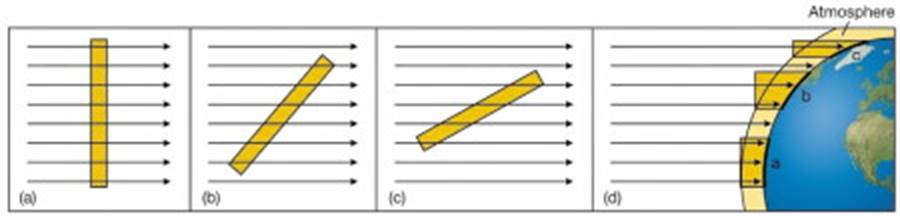
Fig. 6.1. Areas of the Earth's surface that are equal in size receive different levels of solar radiation as they become more oblique to the Sun's rays (see a, b, and c). As latitude increases, the angle between the Sun's rays and the Earth increases, and the solar radiation received on equal surface areas decreases (see d). Note also that the Sun's rays must travel an increasing distance through the atmosphere as latitude increases.
When the Sun stands directly above the equator at noon, during either the vernal or the autumnal equinox, the radiation value is about 1.6 cal/cm²/min. This value is less than the solar constant because the Earth's atmosphere stands between the Earth's surface and the incoming solar radiation, and the atmosphere both absorbs and reflects portions of the Sun's energy. Atmospheric interference causes the solar radiation per unit of surface area to decrease with increasing latitude in each hemisphere, because the greater the latitude, the longer the distance through the atmosphere the Sun's rays must travel (fig. 6.1).
The combined effects of atmospheric path length and inclination of the Earth's surface cause the Earth to receive more solar heat in the tropics, less at the temperate latitudes, and the least at the poles. The intensity of solar radiation also varies as points on the turning Earth move from darkness to light and return to darkness.
The Heat Budget. In order to maintain its long-term mean surface temperature of 16°C, the Earth must lose heat as well as gain it. On a world average, the Earth and its atmosphere must reradiate as much heat back to space as they receive from the Sun. These gains and losses in heat are represented by a heat budget. Just as incoming funds must equal outgoing funds in a balanced monetary budget, in the total Earth heat budget incoming radiation must equal outgoing radiation.
If incoming funds (or deposits) are insufficient, or if outgoing funds (or withdrawals) become too great, serious financial problems arise. In the same way, if less heat were returned to space than is gained, the Earth would become hotter, and if more heat were returned than is gained, the Earth would become colder. In both cases, the planet would change dramatically.
To follow the long-term deposits and withdrawals in the total Earth heat budget, assume that 100 units, or 100%, of solar energy are incoming to the Earth's atmosphere. Refer to figure 6.2 as you read this discussion. Thirty-one of these units are reflected back by the Earth's atmosphere and 4 units are reflected by the Earth's surface through the atmosphere to outer space; they take no part in heating the Earth or its atmosphere.
Of the remaining 65 units, 47.5 are absorbed by the Earth's surface, and 17.5 units are absorbed by the Earth's atmosphere. Balancing the budget requires the following: 65 units must be lost by reradiation of long-wave radiation back to outer space; 5.5 units must be reradiated from the Earth's surface, and 59.5 units must be reradiated from the atmosphere. The budget is balanced; incoming radiation balances outgoing radiation.
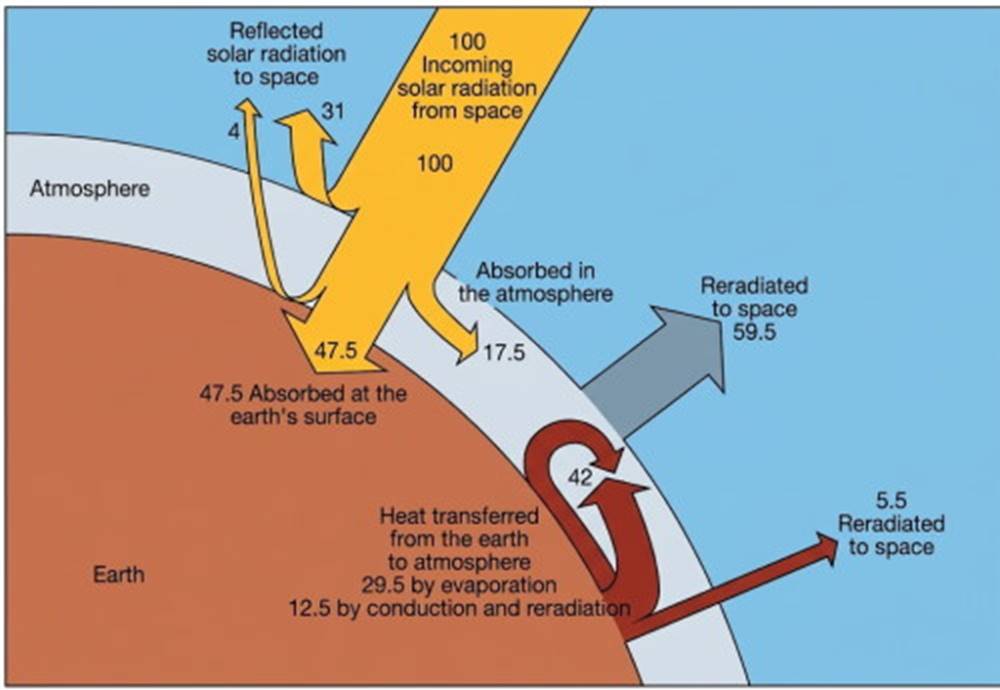
Fig. 6.2. The Earth's heat budget. Incoming solar energy is balanced by reflected and reradiated energy. The atmosphere's loss of heat is balanced by heat transferred from the Earth to the atmosphere by evaporation, conduction, and reradiation. Based on 100 units of incoming radiation, or 100% of available radiation.
Closer inspection shows that, although the Earth absorbs 47.5 units, it loses only 5.5 units to space, for a gain of 42 heat units. The atmosphere, in contrast, absorbs 17.5 units and loses 59.5 units to space, for a loss of 42 units. In these circumstances it appears that the atmosphere is cooled and the Earth is heated.
For the Earth's surface and atmosphere to maintain their near-constant average temperatures, the 42 units gained by the surface must be transferred to the atmosphere. First, 29.5 of the units are transferred by evaporation processes, which cool the Earth's surface and liberate heat when water vapor condensation occurs in the atmosphere. The remaining 12.5 units are transferred to the atmosphere by conduction and reradiation and are absorbed as heat, raising the temperature of the air. On the world average, the atmosphere is primarily heated from below by heat given off from the Earth.
Local Heat Budgets and Annual Cycles. Local Heat Budgets. If we consider the short-term heat budget of only a small local portion of the oceans, the following must be taken into consideration: total energy absorbed at the sea surface in that area, loss of energy due to evaporation, transfer of heat into and out of the area by currents, warming or cooling of the overlying atmosphere by heat from the sea surface, and heat reradiated to space from the sea surface. These processes vary with time, showing daily and seasonal variations.
Measurements made over the Earth's surface show that on the average more heat over the annual cycle is gained than lost at the equatorial latitudes, while more heat is lost than gained at the higher latitudes (fig. 6.3). Winds and ocean currents remove the excess heat accumulated in the tropics and release it at high latitudes to maintain the Earth's present surface temperature patterns. Figure 6.4 shows Northern Hemisphere summer ocean surface temperatures. North-south deflections in the lines of constant temperature indicate the displacement of surface water by currents carrying warm water from low to high latitudes and cold water from high to low latitudes, redistributing heat energy over the Earth's surface.
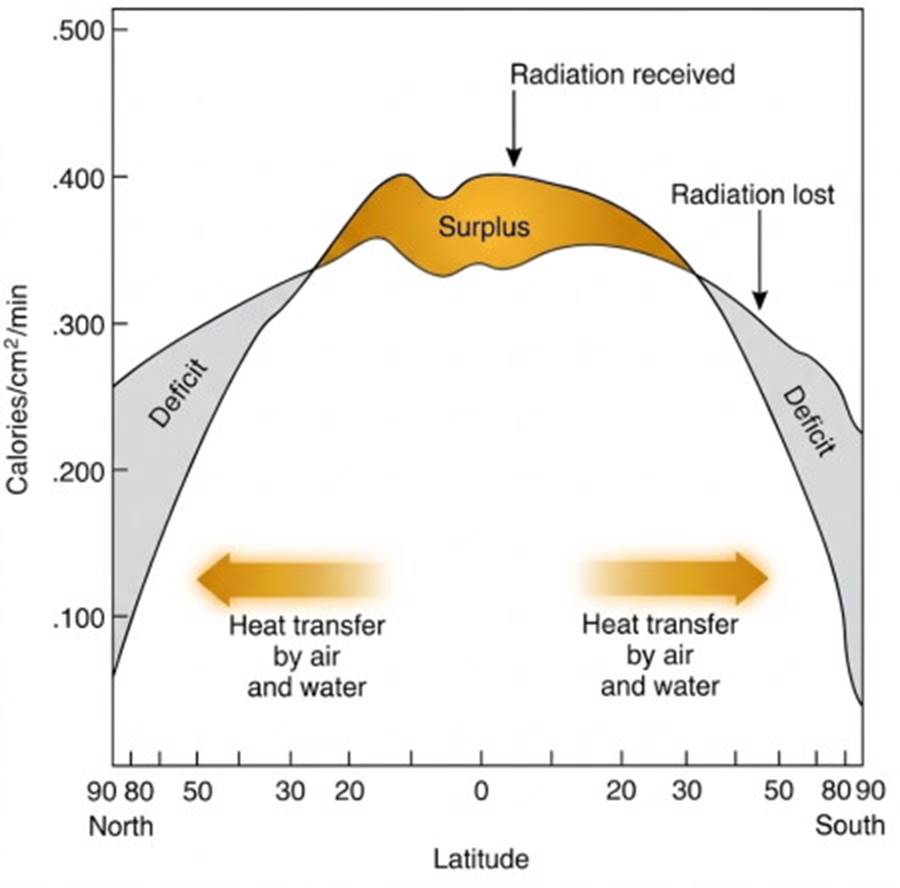
Fig. 6.3. Comparison of incoming solar radiation and outgoing long-wave radiation with latitude. A transfer of energy is required to maintain a balance. Source: NOAA Meteorological Satellite Laboratory.
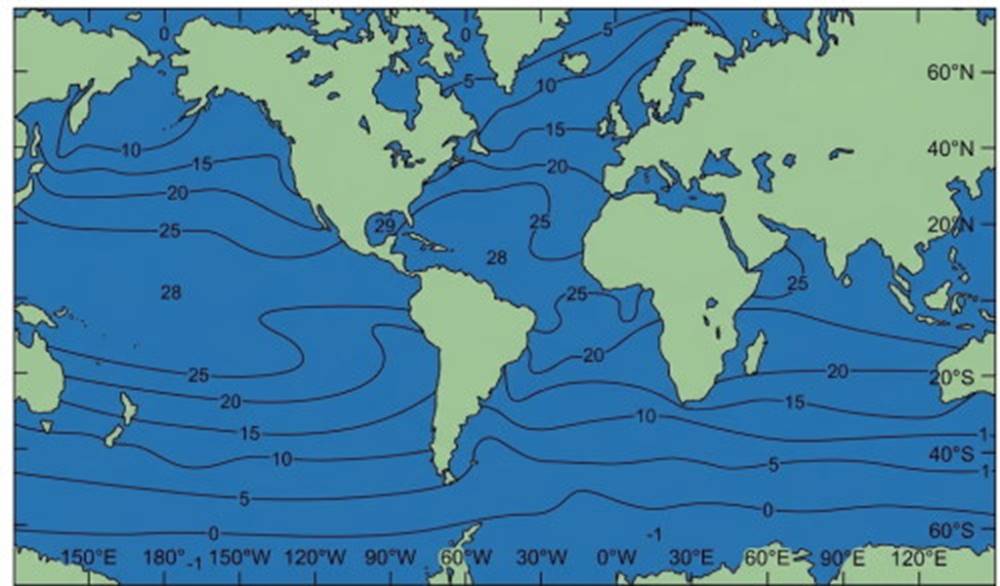
Fig. 6.4. Sea-surface temperatures during summer in the Northern Hemisphere, given in degrees Celsius.
Annual Cycles of Solar Radiation. The total Earth heat budget and the average distribution of incoming and outgoing radiant energy with latitude do not include the annual cycle of radiant energy changes related to the seasonal north-south migration of the Sun. When these variations are included, the annual cycle of seasonal variation in average daily solar radiation is most pronounced at the middle and higher latitudes. Here, the angle at which the Sun's rays strike the Earth and the length of daylight change dramatically from summer to winter. The variation is illustrated in figure 6.5.
Changes in incident radiation produce seasonal variations in land and sea surface temperatures because of heat losses or gains. The intensity of solar radiation remains fairly constant at tropical latitudes (between 23½°N and 23½°S) over the year, because the Sun's noontime rays are always received at an angle approaching 90°. During the Sun's annual migration between 23½°N and 23½°S, its rays cross the intervening latitudes twice. This twice-a-year crossing produces a small-amplitude, semiannual variation in the intensity of tropical solar radiation. The effect is most evident at the equator and can be seen in figure 6.5.
Between 23½°N and 90°N and between 23½°S and 90°S, the Sun's noontime rays always strike the Earth at an oblique angle. The long duration of daylight hours in summer at polar latitudes produces a high level of incident solar radiation averaged over the day (fig. 6.5). However, the intensity of radiation per unit surface area per minute of daylight and the annual average radiation level are much lower than those found at lower latitudes (see fig. 6.1). Refer back to chapter 1 to review the relationship of the Earth, the Sun, and the Earth's seasons.
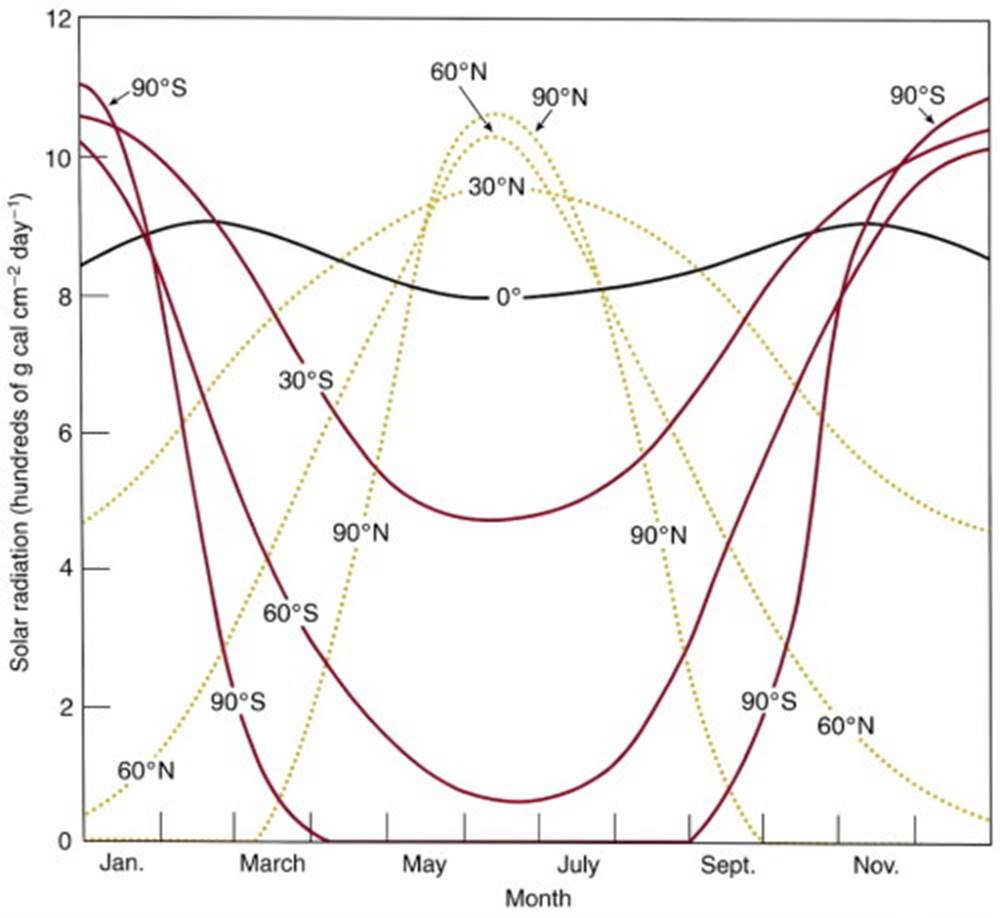
Fig. 6.5. Average daily solar radiation values at different latitudes during the year. When it is summer in the Northern Hemisphere, it is winter in the Southern Hemisphere; therefore, the higher values in the Northern Hemisphere coincide with the lower values in the Southern Hemisphere. Peak values of solar radiation at the higher latitudes occur during summer in each hemisphere as a result of more hours of sunlight.
Heat Capacity. Land and ocean areas respond differently to solar radiation. Land has a low heat capacity; it changes temperature rapidly as it gains or loses heat between day and night or summer and winter. The oceans have a high heat capacity; they absorb and release large amounts of heat at the surface with very little change in temperature. For a discussion of heat capacity, see chapter 4.
The average annual range of surface temperatures for land and ocean are given in figure 6.6. Note that the seasonal temperature ranges at high latitudes are greater for land than for the oceans and that the annual range of ocean surface temperatures is greatest at the middle latitudes. Because of the unequal distribution of land between the two hemispheres, the summer-to-winter variation in temperature for land at the middle latitudes is much greater in the Northern Hemisphere than it is in the Southern Hemisphere. Because of the lack of land in the Southern Hemisphere, the oceans, with their high heat capacity, control the annual temperature range in southern middle latitudes.
These differences between land and ocean annual surface temperatures can be seen in figure 6.7. Compare the summer (fig. 6.7a) and winter (fig. 6.7b) temperatures of landmasses and water areas at about 60°N.
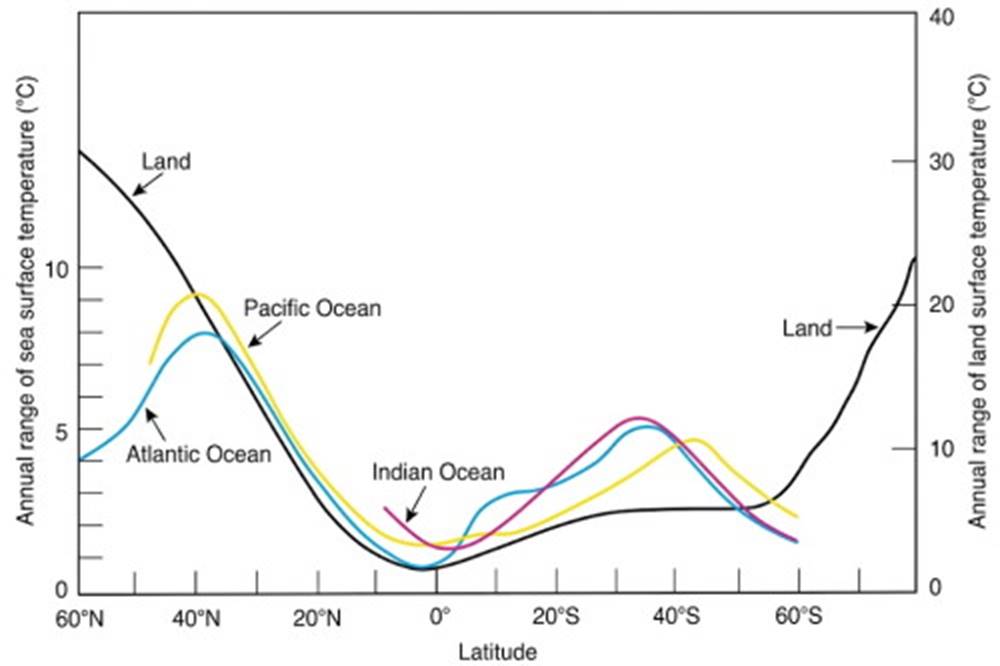
Fig. 6.6. The annual range of mid-ocean sea-surface temperatures is considerably less than the annual range of land-surface temperatures at the higher latitudes. The maximum annual range of sea-surface temperatures occurs at the middle latitudes.
Heat that is absorbed at the ocean surface in summer is mixed downward by winds, waves, and currents. In winter, heat is transferred upward toward the cooling surface. The net effect of these processes is the small annual change in mid-ocean surface temperatures: 0° to 2°C in the tropics and 5° to 8°C at the middle latitudes. The 2° to 4°C change in temperature at polar latitudes results from the formation and melting of sea ice rather than from the cooling and heating of seawater.
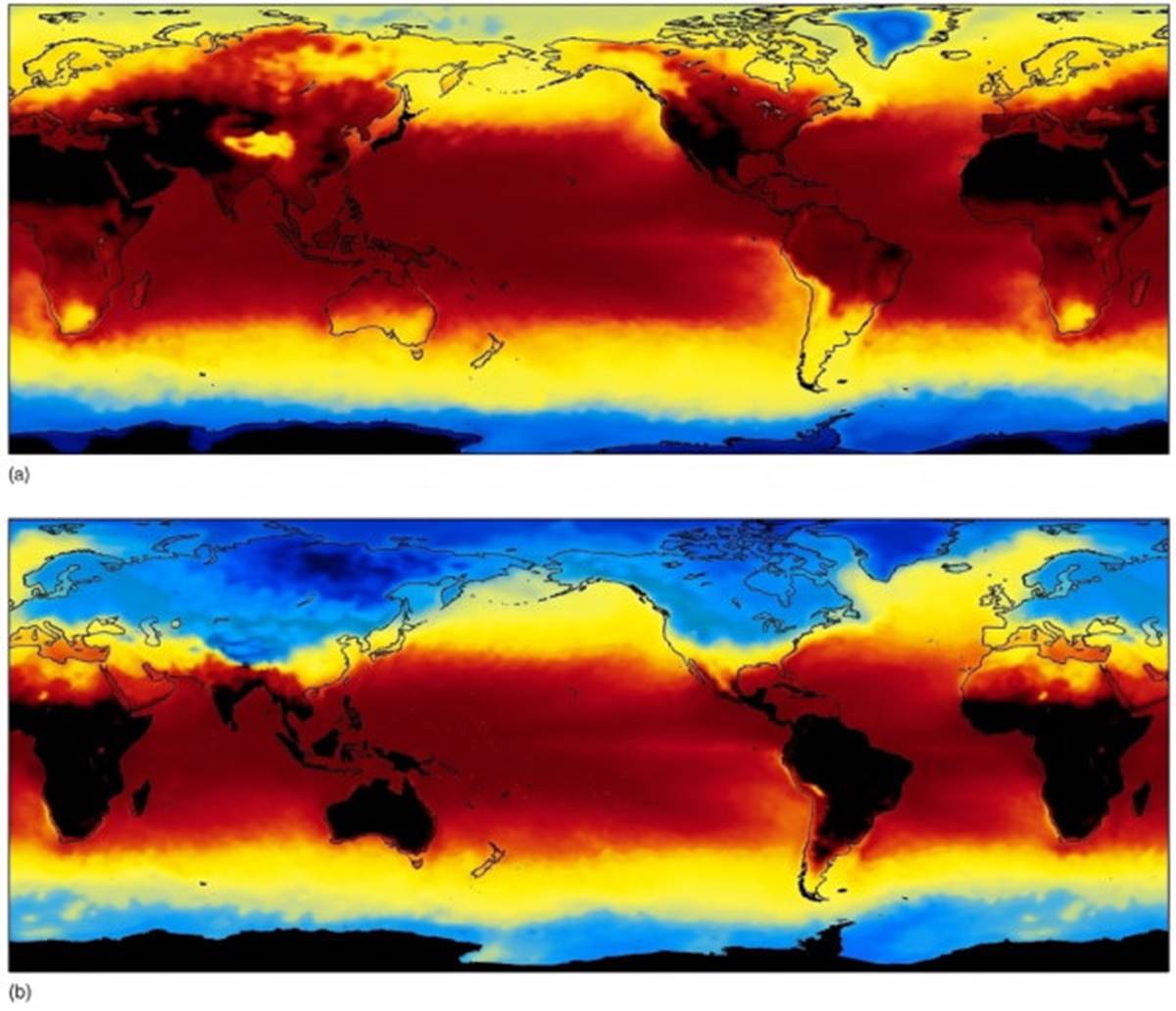
Fig. 6.7. Meteorological satellites, such as NOAA's TIROS, carry high-resolution infrared sensors that measure long-wave radiation emitted from the Earth's surface and atmosphere. This radiation is related to the Earth's surface temperatures. Green and blue indicate temperatures below 0°C; warmer temperatures are shown in red and brown. (a) July data show the Northern Hemisphere landmasses with considerably warmer temperatures, but the ocean waters do not change dramatically from winter to summer. The oceans' surface temperature distribution moves north and south with the change in seasons. North-south currents along the coasts of continents are also visible. (b) In January, Siberia and Canada show surface temperatures near -30°C; at the same time, latitudes between 30° and 50° south show warm summer temperatures.
Date added: 2026-11-09; views: 3;