
Threats to Soil Biodiversity: Agricultural Impacts, Degradation Processes, and Conservation Strategies
Soil biodiversity, the variety of living organisms within the soil, is fundamental to ecosystem health and function. Its abundance and composition are critically influenced by a wide spectrum of soil management practices. Key agricultural practices include variations in tillage, treatment of crop residues, crop rotation, and applications of pesticides, herbicides, fertilizers, manure, and soil ameliorants like lime. Furthermore, overarching production systems, such as integrated, organic, or conventional farming, significantly affect soil biota, altering overall microbial biomass and species diversity.
Soil tillage operations profoundly modify the soil environment, affecting its architecture, porosity, bulk density, and water-holding capacity. These physical changes directly influence soil communities, impacting both organism numbers (biomass) and composition (biodiversity). The specific effects are highly variable, depending on the tillage system and inherent soil characteristics. Regarding fertilization, high inputs of mineral fertilizer often reduce biodiversity, favoring bacterial-dominated decomposition pathways and opportunistic, bacterial-feeding fauna. Conversely, applying manure or other organic matter sources typically supports larger and more diverse soil communities.
Soil Organic Matter Decline. Soil organic matter (SOM) is both the primary energy source driving the soil food web and a product of soil organism activity. Its reduction is directly associated with lower soil organism abundance and diversity. A diverse SOM pool supports a wider variety of organisms by providing a greater range of substrates and nutrients. Global declines in SOM, driven by agricultural intensification and climate change, are a major contributor to broader soil degradation processes like erosion and compaction.
Land Use Change and Habitat Disruption. Land use change is a primary driver of biodiversity change, and soil communities are not exempt. Forests, both tropical and temperate, typically host the highest levels of soil biodiversity. Conversion to pasture, perennial grasslands, or arable land generally reduces this diversity. For example, cultivation is known to decrease the abundance and diversity of microarthropods like collembola and acari (mites). Urbanisation leads to even more dramatic reductions through habitat fragmentation and, ultimately, soil sealing.
Soil Sealing and Compaction. Soil sealing, the permanent covering of soil with impervious materials like concrete, disconnects the pedosphere from other ecological compartments. This process prevents water infiltration, gas diffusion, and organic matter input, creating conditions that severely reduce soil organism numbers and variety. Similarly, soil compaction from heavy machinery, especially when combined with low SOM, reduces pore space and increases bulk density. This alters habitat availability, water movement, and gas exchange, generally reducing biodiversity and modifying community composition, often promoting anaerobic conditions (Fig. 5.3).
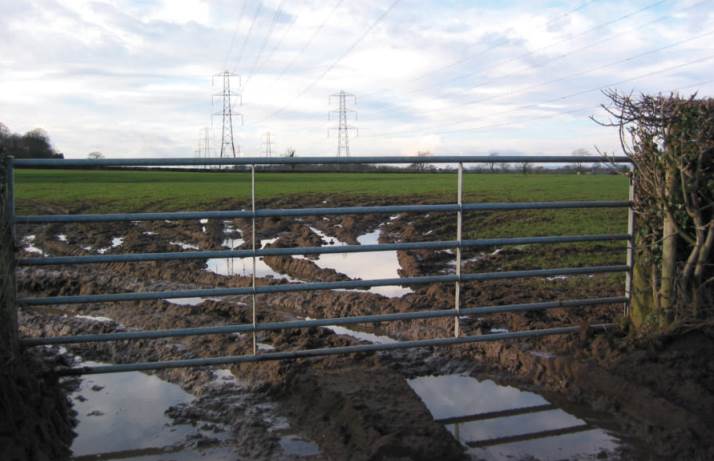
Fig. 5.3: Soil compaction reducing water infiltration at a field entrance (FV)
Soil Pollution and Salinisation. Soil pollution from man-made chemicals like pesticides, heavy metals, and hydrocarbons detrimentally affects soil biota. Pollutants range from specific biocides targeting certain groups to broad-spectrum toxins reducing overall abundance and diversity. Salinisation, the accumulation of soluble salts, deteriorates soil function and affects organisms. Laboratory and field studies show that elevated Electrical Conductivity (EC) significantly impacts Earthworms, Enchytraeids, and Collembola. While naturally saline soils host adapted halophilic microbial populations, human-induced salinisation from irrigation mismanagement poses a severe threat.
Climate Change and Desertification. Climate change, altering temperature and precipitation regimes, is a significant future threat. Predicting precise impacts remains challenging, but research in extreme environments suggests warming may increase bacteria, fungi, and nematode numbers while reducing overall biodiversity. Desertification is a cross-cutting threat integrating SOM decline, compaction, erosion, and salinisation. It leads to habitat fragmentation and vegetation loss, leaving soil vulnerable to erosion (Fig. 5.4, Fig. 5.5). Feedback mechanisms exist where reduced soil biodiversity can exacerbate degradation, such as slowing decomposition and nutrient cycling.
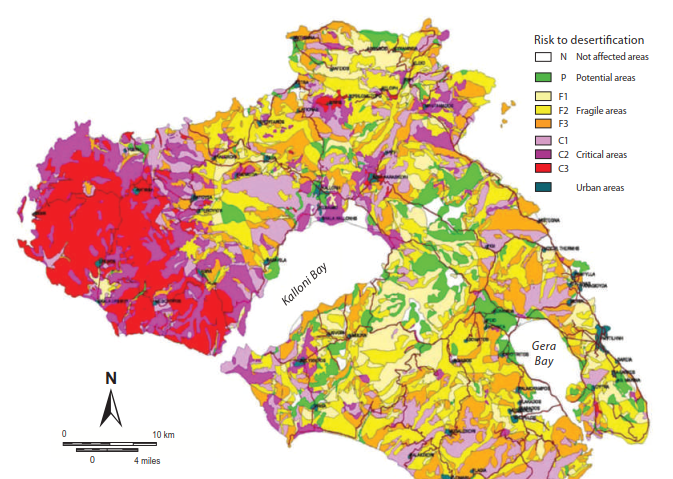
Fig. 5.4. Map of environmentally sensitive areas to desertification for the island of Lesvos, Greece. Note that the colours in the legend correspond to risk from low risk (white) to high risk (red). (After Kosmas et a/., 1999a)
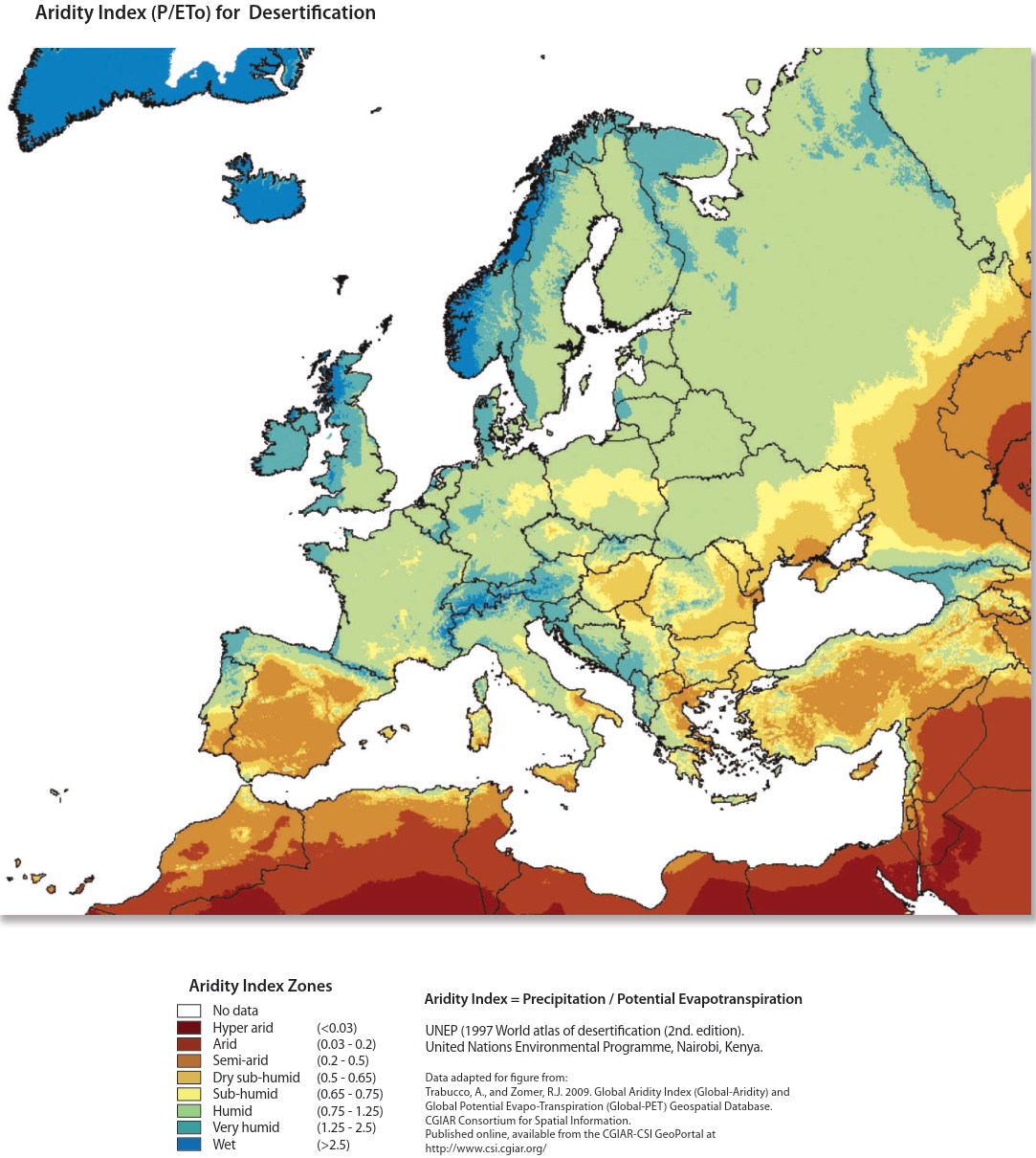
Fig. 5.5: European Aridity Index map. This has important implications both for risk of desertification and for risk of wildfires. (RH)
Fire and Genetically Modified Organisms (GMOs). Fire, whether wild or managed, affects soil biodiversity variably based on intensity. Hot wildfires can sterilize surface layers, while lower-intensity fires alter microbial community structure and function. Effects on litter-decomposing microarthropods typically show decreased abundance due to habitat loss. The cultivation of Genetically Modified Organisms (GMOs), particularly Bt crops like Bt corn that express insecticidal proteins, raises concerns. While some studies report no significant effects on groups like collembolans, the overall scarcity of data on GMO impacts on soil microarthropods and biodiversity underscores the need for further independent research.
Conclusions and Policy Integration. The threats to soil biodiversity are extensive and interlinked, encompassing intensive land exploitation, degradation processes, pollution, habitat disruption, and emerging pressures from GMOs and climate change. Protecting this diversity, which underpins ecosystem services worth trillions of dollars annually, requires urgent investigation and integrated policy. Effective conservation must be woven into broader soil protection and sustainability strategies. For the European Union, this can be advanced through the Soil Thematic Strategy and the revised EU Sustainable Development Strategy (EUSDS II), ensuring the preservation of this vital below-ground resource.
Date added: 2025-12-15; views: 559;