
Gondwana: The Southern Supercontinent – Formation, Assembly, and Geological Significance
Gondwana refers to the Late Proterozoic to Late Paleozoic supercontinent situated in the Southern Hemisphere. The name was introduced by the British-Austrian geologist Eduard Suess, who derived it from the Gondwana System of southern India, with “Gondwana” meaning “land of the Gonds,” an ancient tribe in that region. Consequently, the alternative rendition Gondwanaland is technically redundant, as it translates to “land of the land of the Gonds.” This supercontinent comprised the present-day continents and continental fragments of Africa, South America, Australia, Arabia, India, Antarctica, and numerous smaller crustal blocks, most of which amalgamated during the latest Precambrian through the closure of the Mozambique Ocean and several other intervening basins.
Most of these continental masses coalesced in the latest Precambrian as a result of collisional tectonics that consumed oceanic basins, and Gondwana persisted as a coherent supercontinent until it joined with the northern continents during the Carboniferous to form the even larger supercontinent Pangaea. Geologists have successfully matched the disparate fragments of Gondwana using alignments between belts of similar-aged deformation, metamorphism, and mineralization, as well as through the correlation of common faunal assemblages, floral provinces, and paleoclimatic belts, such as the Late Paleozoic Glossopteris flora and extensive Permo-Carboniferous glacial deposits.
The formation and subsequent breakup of Gondwana are intimately associated with one of the most remarkable explosions of new life‑forms in Earth’s history—the transition from simple, single‑celled organisms and soft‑bodied Ediacaran fauna to complex, multicelled organisms with hard parts during the Cambrian explosion. Because the assembly and dispersal of supercontinents strongly influence global climate, oceanic circulation, and the availability of diverse environmental niches, the tectonic evolution of Gondwana is directly linked to major biological innovations and extinction events, underscoring the fundamental interplay between plate tectonic processes and the evolution of life.
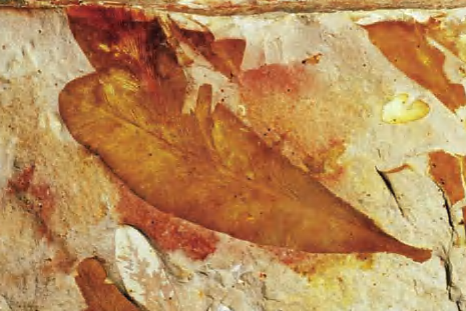
Glossopteris leaf fossil from Permian period found in Coohah, New South Wales, Australia. Glossopteris is one of the diagnostic flora used by Alfred Wegener and others to match paleoclimate and paleobiological zones across the southern continents, to re-create the former positions of these continents in the proposed supercontinent of Gondwana
Assembly of Gondwana from the Fragments of Rodinia. Since the early 1990s, a consensus has emerged that Gondwana formed near the end of the Neoproterozoic from the fragmented pieces of an older supercontinent, Rodinia, which itself had assembled near the end of the Grenville orogenic cycle (~1,100 Ma). The now‑standard model for Gondwana’s assembly begins with the separation of East Gondwana—comprising Australia, Antarctica, India, and Madagascar—from the western margin of Laurentia (the Precambrian core of North America), followed by the fan‑like aggregation of East and West Gondwana. This proposed amalgamation closed several major ocean basins, including the vast Mozambique Ocean, and effectively turned the constituents of Rodinia “inside‑out,” meaning that external or passive margins in regions such as Madagascar became collisional orogenic belts during the latest Precambrian and earliest Cambrian.
The notion of a single, short‑lived collision between East and West Gondwana is now recognized as an oversimplification, because geologic relationships indicate that at least three major ocean basins—the Pharusian Ocean, the Mozambique Ocean, and the Adamastor Ocean—closed during the protracted assembly of the supercontinent. Published geochronology demonstrates that the assembly spanned nearly 150 million years, with distinct orogenic events recorded in different sectors. For instance, an alternative two‑stage model for the closure of the Mozambique Ocean has been advanced recently, proposing an older “East African Orogeny” (~680 Ma) resulting from collision between Greater India (a composite of India, Tibet, the Seychelles, Madagascar, and Enderby Land) and the conjoined Congo and Kalahari cratons.
This event was followed by a younger “Kuunga Orogeny” (~550 Ma), which represents the collision of Australia–East Antarctica with the already amalgamated proto‑Gondwana. These diachronous collisions completed Gondwana’s assembly near the end of the Neoproterozoic, creating a vast, tectonically active mountain chain comparable in scale to the present‑day Himalayas. The resulting highlands contributed to significant climatic perturbations, including intense global cooling episodes that may have led to Neoproterozoic glaciations (so‑called “Snowball Earth” events).
Paleogeographic Evolution and Breakup. During the Early Paleozoic, Gondwana remained the largest landmass on Earth, extending from the equator to the South Pole. Its configuration strongly influenced global ocean currents and climate, with extensive ice sheets covering large parts of the supercontinent during the Ordovician and Permo‑Carboniferous. The assembly of Pangaea in the Carboniferous–Permian occurred as Gondwana collided with Laurussia (the combined Laurentia, Baltica, and Avalonia) along the Hercynian–Alleghenian orogenic belt, forming the Central Pangaean Mountains.
The breakup of Gondwana began in the Jurassic, with the separation of East and West Gondwana marked by the opening of the western Indian Ocean. Subsequently, South America and Africa rifted apart in the Cretaceous, followed by the separation of Australia and Antarctica in the Cenozoic. These rifting events were accompanied by the emplacement of large igneous provinces, such as the Karoo–Ferrar and Paraná‑Etendeka flood basalts, and they set the stage for the modern configuration of Southern Hemisphere continents.
Geological and Biological Significance. Gondwana’s geological record preserves evidence of ancient cratons, extensive orogenic belts, and sedimentary basins rich in mineral resources, including gold, diamonds, coal, and platinum‑group elements. The supercontinent’s fragmentation also played a critical role in the biogeographic distribution of organisms, explaining the presence of similar fossil assemblages—such as the Mesozoic dinosaur fauna and the seed fern Glossopteris—across now‑widely separated Southern Hemisphere landmasses.
Research and Ongoing Investigations. The international research journal Gondwana Research, launched in the 1990s, has become a primary forum where scientists working on various aspects of the Gondwana landmasses publish their findings. Contributions span topics ranging from geochronology and structural geology to paleontology, sedimentology, and paleoclimatology, all aimed at refining models of the supercontinent’s assembly, its internal dynamics, and its eventual disintegration. Ongoing research focuses on high‑precision geochronology to resolve the timing of collisional events, paleomagnetic studies to reconstruct paleogeographic positions, and geodynamic modeling to understand the driving mechanisms behind supercontinent cycles.
Further Reading: de Wit, Maarten J., Margaret Jeffry, Hugh Bergh, and Louis Nicolaysen. Geological Map of Sectors of Gondwana Reconstructed to Their Disposition at ~150 Ma. Tulsa, Okla.: American Association of Petroleum Geologists, Map Scale 1:10,000,000, 1988.
Hoffman, Paul F. “Did the Breakout of Laurentia Turn Gondwana Inside‑out?” Science 252 (1991): 1409–1412.
Kusky, Timothy M., Mohamad Abdelsalam, Robert Tucker, and Robert Stern, eds. Evolution of the East African and Related Orogens, and the Assembly of Gondwana. Precambrian Research Special Issue. Amsterdam: Elsevier, 2003.
Rogers, J. J. W., and M. Santosh. Continents and Supercontinents. Oxford: Oxford University Press, 2004.
Meert, Joseph G. “A Synopsis of Events Related to the Assembly of Eastern Gondwana.” Tectonophysics 362, no. 1–4 (2003): 1–40.
Cawood, Peter A., and Christian J. Hawkesworth. “Earth’s Middle Age.” Geology 42, no. 6 (2014): 503–506.
Date added: 2026-04-26; views: 342;