
Beach Morphology and Coastal Zones: A Comprehensive Profile
Defining the Beach and Sedimentary Dynamics. The beach includes the sand and sediment lying along the shore and the sediments carried along the shore by the nearshore waves and currents. Let us consider first the beach where we walk, sunbathe, and relax. A specific terminology for beaches and beach features has developed from the many studies of beaches around the world. These terms allow each area to be described and prevent confusion when one beach is compared with another.
A beach profile cuts through a beach perpendicular to the coast; the profile in figure 11.15 shows the major features that might appear on any beach. Use this figure while reading this section, but remember that a given beach may not have all these features, for each beach is the product of its own singular environment.
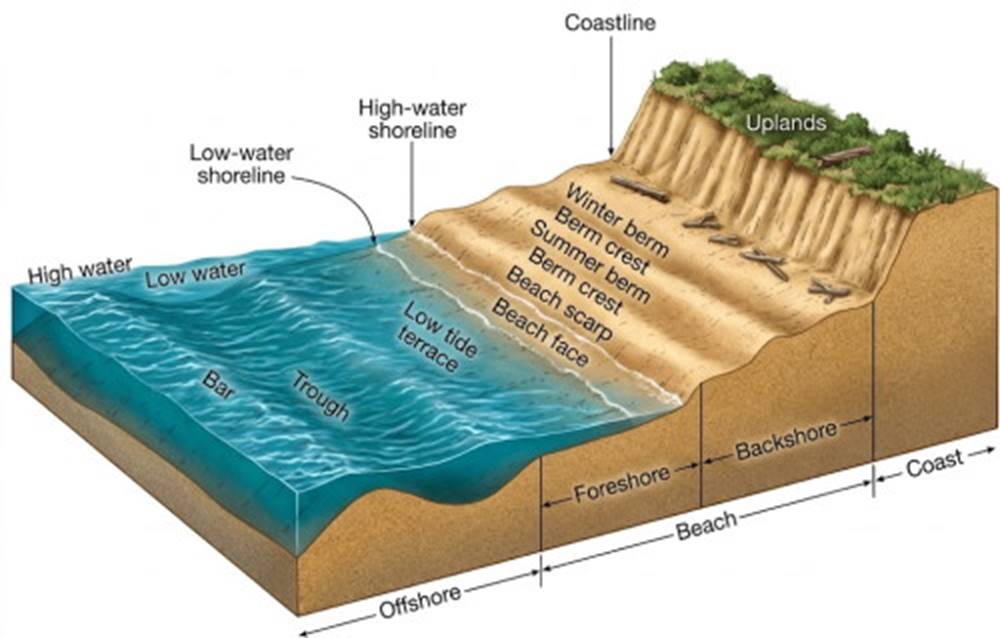
Fig. 11.15. A typical beach profile with associated features.
Longitudinal Beach Zonation: Backshore, Foreshore, and Offshore. The backshore is the dry region of a beach that is submerged only during the highest tides and the severest storms. The foreshore extends out past the low tide level, and the offshore includes the shallow-water areas seaward of the low-tide level to the limit of wave action on the sea floor.
Terraces called berms appear on beaches in the area where foreshore and backshore meet. Berms are formed by wave-deposited material and have flat tops like the top of a terrace. Berms are recognizable by their slope, or rise in elevation.
Seasonal Dynamics of Berm Formation. Some berms have a slight ridge crest that runs parallel to the beach; if there is a ridge, it is called the berm crest. When two berms are found on a beach (figs. 11.15 and 11.16a) the berm higher up the beach, or closer to the coastline, is the winter berm. It is formed during severe winter storms when the waves reach high up the beach and pile up material along the backshore. The seaward berm, the berm closer to the water, is the summer berm formed by the gentle waves of spring and summer that do not reach as far up the beach.
Once the winter berm is formed, it is not disturbed by the less intense storms during the year. The waves that produce a winter berm erase the summer berm, but after the storm season is over, a new summer berm is formed by the reduced wave action.
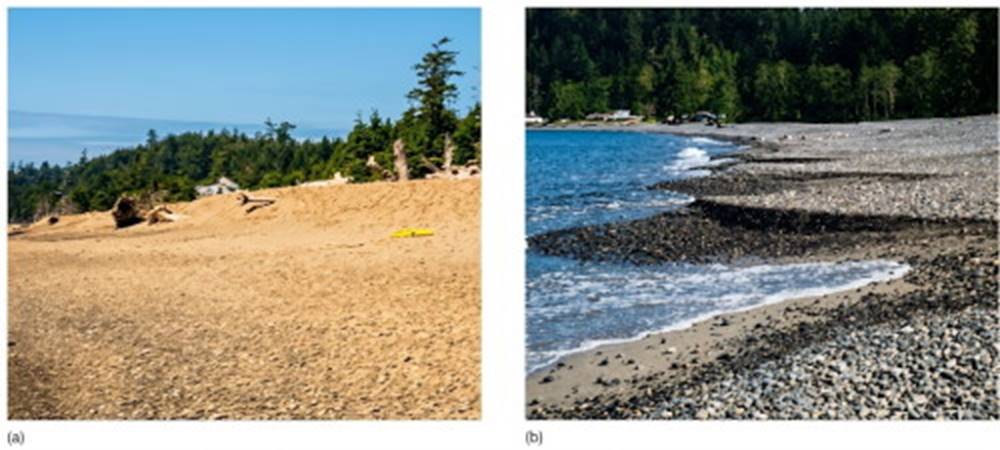
Fig. 11.16. (a) Berms on a gravel beach. The winter storm berm with drift logs is located high on the beach. The summer berm is between the winter berm and the beach face in the foreground. (b) A wave-cut scarp on a gravel beach.
Wave-Cut Scarps and Tide Levels. Between the berm and the water level there may be a wave-cut scarp at the high water level. The scarp is an abrupt change in the beach slope that is caused by the cutting action of waves at normal high tide (fig. 11.16b). Berms and scarps do not form in the foreshore, between the normal high and low tide levels, because of the wave action and the continual rise and fall of the water. The foreshore below the low tide level is often flat, forming a low tide terrace; the upper portion has a steeper slope and is known as the beach face. The slope of the beach face is related to the particle size of the loose beach material and to the wave energy.
Offshore Troughs, Bars, and Barrier Islands. Seaward of the low tide level, in the offshore region, there may be troughs and bars that run parallel to the beach. These structures change seasonally as beach sediments move seaward, enlarging the bars during winter storms, and then shoreward in summer, diminishing the bars. When a bar accumulates enough sediment to break the surface and is stabilized by vegetation, it becomes an island of the barrier coast type.
Beaches do not occur along all shores. Along rocky cliffs, there may be no exposed beach area between low and high tides. However, there may be small pocket beaches, each separated from the next by rocky headlands or cliffs (fig. 11.17).
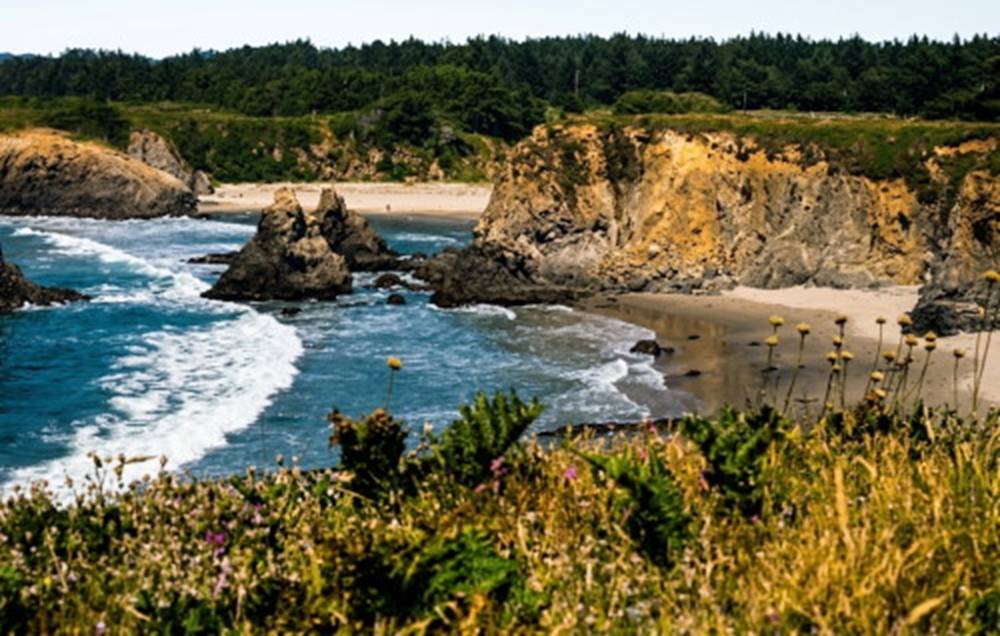
Fig. 11.17. A series of pocket beaches cut an elevated marine terrace along the California coast. The elevated terrace was at one time sea floor. Tectonic processes raised it to its present position.
Date added: 2026-11-09; views: 7;