
High-Resolution Climate Modeling: How MESACLIP Sharpens Forecasts of Extreme Weather
While indispensable for projecting global warming trends, traditional climate models often depict the future with the broad strokes of an Impressionist painting. This coarseness stems from computational necessity; to simulate centuries within a practical timeframe, models typically divide the atmosphere into large grid boxes approximately 100 kilometers wide. However, this scale leads to significant inaccuracies for patchy, localized phenomena like heat waves and extreme precipitation, which are driven by finer-scale dynamics. Consequently, critical regional risks and the intensity of specific extreme weather events have remained obscured within these generalized projections, highlighting a fundamental gap in our predictive capabilities.
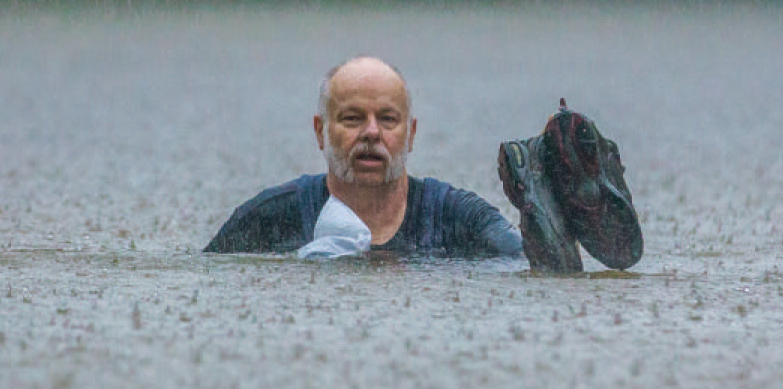
In 2019, Tropical Storm Imelda inundated Patton Village, Texas. Downpours will be more common along the Gulf Coast, according to a new, detailed climate model.
A groundbreaking high-resolution modeling initiative named MESACLIP (Model for Environmental Simulation and Analysis at Climate Scale) is now bringing Earth's climatic future into sharper focus. By simulating global atmospheric and oceanic churn at an unprecedented 25-kilometer resolution for the atmosphere and 10-kilometers for the ocean—a detail akin to weather forecasting models—this project addresses a critical scale gap. The computational endeavor, consuming 900 days on supercomputers like NCAR's Derecho, generated 4,500 simulated years and 6 petabytes of data. This massive ensemble forecast, running multiple simulations from 1900 to 2100 under different greenhouse gas emission scenarios, provides a more robust statistical view of climate variability and change.
The project's heightened detail reveals alarming, intensified risks for specific regions, surpassing traditional model projections. Published in Nature Geoscience, MESACLIP findings indicate that areas such as the U.S. Gulf Coast and coastal California may experience extreme rainfall events far more frequently than previously estimated. Under a high-emissions scenario, daily extreme precipitation over land could increase by 37% by 2100. This surge is not solely due to warmer air holding more moisture; the model identifies shifts in wind patterns that generate extensive chains of severe thunderstorms, a mechanism coarse models miss. As noted by climate scientist Doug Smith of the UK Met Office, "It’s becoming clear now that the [traditional] models are not producing the true impacts of climate change."
MESACLIP's superior fidelity stems from its ability to accurately replicate past climate conditions, thereby bolstering confidence in its future predictions. The model successfully reproduces historical records of ocean and air temperature, a challenge for many existing climate models. It also better captures fine-scale oceanic features like cold tongues and swirling eddies, which modulate atmospheric circulation. Furthermore, it accurately mimics observed extreme rainfall events and recreates systems like hurricanes and atmospheric rivers. According to project co-lead Ping Chang, an oceanographer at Texas A&M University, this precision means "We’re right for the right reasons," validating the model's physical integrity.
The impetus for MESACLIP arose nearly a decade ago from Chang's interest in how ocean eddies influence atmospheric rivers. The team utilized a computationally efficient variant of NCAR's Community Earth System Model (CESM), enabling high-resolution runs with the help of Chinese supercomputing collaborators. After initial promising results, security concerns terminated the Chinese collaboration. The project was revived through funding from the Gulf Research Program, administered by the National Academies of Sciences, Engineering, and Medicine, which sought precise sea-level rise projections for the Gulf Coast.
Beyond precipitation, MESACLIP offers new insights into other climatic puzzles. It reproduces the observed cooling in the Southern Ocean and eastern Pacific, linking it to the Antarctic ozone hole which cooled the stratosphere and intensified winds. The model also better simulates Arctic amplification, likely due to its accurate rendering of warm water flow through the Bering Strait. Additionally, it provides reassuring data on the Atlantic Meridional Overturning Circulation (AMOC), suggesting this crucial ocean current system is more resilient to collapse than some lower-resolution models forecast.
The success of MESACLIP is setting a new priority for the climate modeling community. NCAR now aims to run its latest flagship model, CESM3, at similarly high resolutions. However, as emphasized by co-lead Gokhan Danabasoglu, an oceanographer at NCAR, confirming these findings requires independent replication by other modeling centers using their own frameworks. Only through such consensus can the scientific community determine if these sharpened, often starker, forecasts represent a true reflection of our future climate reality, marking a pivotal advance from impressionistic sketches to a detailed portrait of global change.
Date added: 2026-02-14; views: 365;