
A New Non-Artemisinin Therapy Emerges Against Drug-Resistant Malaria
For nearly twenty-five years, the global fight against malaria has been predominantly reliant on a single class of treatments known as Artemisinin-based Combination Therapies (ACTs). These regimens combine the fast-acting compound artemisinin—or a derivative—with a longer-lasting "partner drug." While ACTs have been profoundly effective, their cornerstone is threatened by spreading resistance to artemisinin in Plasmodium falciparum, the deadliest malaria parasite. This resistance necessitates urgent therapeutic alternatives. The recent development of a novel drug combination offers a significant breakthrough in this ongoing battle, providing a potential new weapon against one of humanity's most persistent infectious diseases.
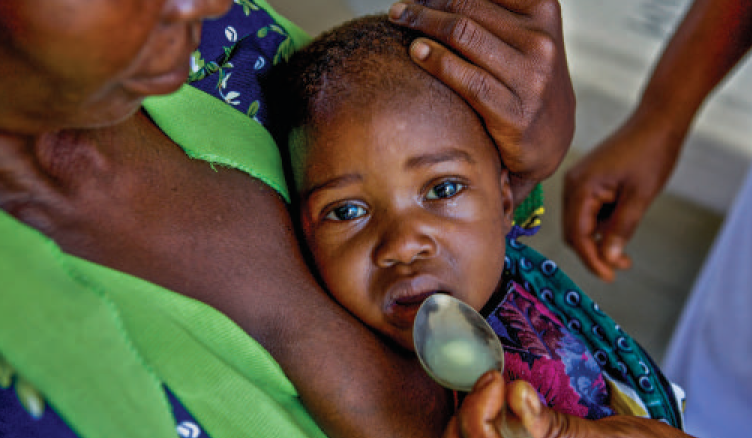
A Tanzanian child is treated for malaria with an artemisinin-based combination therapy. Malaria parasites are increasingly resistant to such drugs, and scientists have been looking for alternatives.
In an extensive clinical trial across Africa, a new antimalarial drug combination codenamed KLU156, produced by Novartis, demonstrated efficacy comparable to the most widely used ACT. The trial's results mark a pivotal advancement in malaria therapeutics. Renowned malaria researcher Dyann Wirth of the Harvard T.H. Chan School of Public Health, independent of the study, emphasized the importance of this development, noting the long-standing search for such an alternative. However, the arrival of this new drug prompts complex discussions regarding its optimal deployment strategy within public health systems.
The origin of current first-line treatments lies in traditional medicine. Artemisinin was isolated from sweet wormwood, a plant used in traditional Chinese medicine for centuries; this discovery earned Chinese pharmacologist Youyou Tu the Nobel Prize in 2015. In contrast, the novel compound ganaplacide, the key component of KLU156, was discovered via high-throughput screening of over two million compounds by Novartis scientists. According to Thierry Diagana, head of global health biomedical research at Novartis, ganaplacide effectively kills parasites by disrupting protein synthesis, though its precise mechanism of action continues to be investigated.
The KLU156 combination pairs the novel agent ganaplacide with lumefantrine, an established antimalarial that serves as the partner drug in the world's leading ACT, Coartem. This strategic pairing leverages the known profile of lumefantrine while introducing a completely new class of action against the parasite. The recent Phase III clinical trial enrolled more than 1,600 patients across 12 African nations, comparing a three-day regimen of KLU156 versus Coartem.
Presented at the American Society of Tropical Medicine and Hygiene annual meeting, the trial data showed a 99.2% cure rate for patients treated with KLU156, compared to 96.7% for those receiving the artemisinin combination. Study team member Abdoulaye Djimde from the University of Sciences, Techniques, and Technologies of Bamako hailed the non-artemisinin-based compound's efficacy and safety as a critical development. This advancement is particularly vital for Africa, which endured an estimated 246 million malaria cases and 569,000 deaths in 2023 alone, primarily among children.
An additional potential benefit of KLU156 is its impact on malaria transmission. Columbia University researcher David Fidock, not involved in the study, noted the new combination acted faster than Coartem in killing gametocytes—the sexual parasite stages mosquitoes transmit. This rapid action against gametocytes could significantly reduce community-wide transmission, though further research is required to confirm this public health benefit. However, the trial revealed a notable challenge regarding tolerability.
Approximately 20% of patients receiving KLU156 reported vomiting, a rate four times higher than the less than 5% observed in the Coartem group. This side effect contributed to a higher rate of treatment discontinuation. Cornelis Winnips, malaria program clinical head at Novartis, explained that the issue was most acute early in the trial and is linked to the drug's bitter taste when administered as a powder. He expressed confidence that improved administration instructions and taste-masking formulations could effectively manage this tolerability hurdle.
The urgency for new drugs stems from the relentless spread of artemisinin resistance. First documented in 2009 in the Thailand-Cambodia border region, this resistance is primarily conferred by mutations in a parasite protein called K13. These mutations delay parasite clearance, allowing parasites more time to potentially develop resistance to the ACT's partner drug as well. As Dyann Wirth warns, the subsequent loss of partner drug efficacy would lead to widespread treatment failure, a catastrophic scenario for malaria control.
ACTs function as a synergistic one-two punch: artemisinin rapidly reduces parasite biomass but is quickly metabolized, while the longer-lasting partner drug, like lumefantrine, eliminates remaining parasites. With weakened artemisinin effect, parasites survive longer at higher densities, increasing selective pressure on the partner drug. Promisingly, in the trial, KLU156 cleared parasites carrying the K13 mutation much faster than Coartem, thereby potentially reducing the risk of lumefantrine resistance development and protecting this vital drug component.
The strategic deployment of KLU156 will be hotly debated. One approach is to reserve it as a second-line treatment, akin to protocols for certain novel antibiotics. However, because both KLU156 and leading ACTs share lumefantrine as the partner drug, delaying use until lumefantrine resistance emerges could compromise the new combination's utility from the outset. Molecular biologist Fitsum Tadesse of the Armauer Hansen Research Institute stresses the imperative to protect lumefantrine from failing. Alternative strategies include early rollout in regions with high K13 mutation prevalence or cyclical drug rotation with ACTs.
Cost and access will be decisive factors in the adoption of this new therapy. Novartis has stated its intent to distribute KLU156 on a not-for-profit basis, though a final price has not been announced. The nonprofit Medicines for Malaria Venture (MMV), which co-developed the drug, is actively involved in access planning. George Jagoe of MMV expressed hope for regulatory approvals within 12-18 months, aiming to swiftly place this new tool into the hands of national programs and patients, offering a much-needed sigh of relief for global public health.
Date added: 2026-02-14; views: 424;