
Carnivorous Plants: Evolution, Traps, and Nutrient Acquisition
Carnivory is very interesting because it has evolved perhaps as often as ten times. There are over 600 species of carnivorous plants, spread across 6 subclasses of angiosperms and distributed worldwide. Given the multiple, independent evolution of carnivory, it is not surprising that plants have evolved morphologically very distinct mechanisms to capture animals. The most common forms are pitchers filled with a fluid that digests small animals falling into the pitcher from a slippery rim formed by epicuticular waxes. Animals can also be caught with sticky fluids on the outside of the plant, through suction or through movement in response to physical pressure from the victim, as in the Venus flytrap (Dionaea muscipula).
Carnivory occurs if plants have (1) evolved specific adaptations to attract and capture animals and (2) are capable of absorbing nutrients either directly from the dead animal or via an obligate and host-specific digestive mutualism. Such a mutualism occurs, for example, in some pitcher plants where a specialised microfauna living in the fluid thrives on the animal prey but also facilitates digestion for the plant. Again, mutualisms with ants occur as well, where ants clean the rim of pitchers and thereby increase the efficiency of prey capture, which is typically quite low in carnivorous plants. Ants, in turn, benefit from receiving food and nesting space by the pitcher plant. Other plant-animal interactions also occur in carnivorous plants; for example, small mites are able to live as commensals below the glandular, adhesive hairs on the surface of trap leaves of Pinguicula, feeding on the trapped insects (Antor and Garcia 1995).
Despite having evolved multiple times, car- nivory remains a very uncommon trait in plants (occurring in less than 0.2% of angiosperm taxa). While it is often difficult to reconstruct the evolution of traits without a good fossil record, there is the idea that sticky traps originally evolved as a defence against herbivores and that those defences later evolved into specialised traps for capturing insects.
The scarcity of carnivory by plants suggests that carnivory is not an efficient way for a plant to gather energy compared to photosynthesis. Carnivorous plants are typically found on nutrient-poor soils such as heath- lands, suggesting that carnivory is an adaptation for finding alternative sources of nitrogen (and other nutrients) rather than a means of gathering energy. The conjecture that nutrients rather than energy are limited is supported by the facultative expression of traps for carnivory that many species exhibit. This observation is easily made with respect to carnivorous species that are kept in one’s home. When watered with tap water, they tend to grow quicker but reduce investment in traps, while they grow slowly but invest in many traps when watered with distilled water.
Many carnivorous plants use sugar rewards to lure animals to their trap. This fact suggests that carnivorous plants capture animals primarily to increase their intake of nitrogen and less for the intake of energy. As stated earlier, the efficiency of traps is relatively low, and it is not uncommon for only 1% of prey attracted to a plant to actually be caught. Carnivorous plants do not appear to specialise in particular types of prey. To increase capture efficiency, carnivorous plants may use volatiles and colour to lure prey, which are typically insects but can occasionally also be small rodents. There is substantial variation in the colouration of traps, mainly from green to red but also in the UV range.
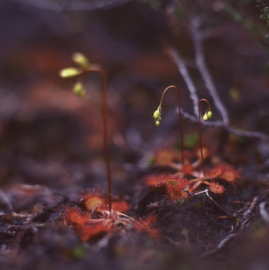
Fig. 19.27. Drosera rotundifolia, one of the frequent carnivorous species in undisturbed moorlands
Because many insects are not particularly sensitive to the colour red, it is doubtful whether red colouration functions primarily to attract prey, even though such effects have been reported. The role of colour has not yet been fully elucidated. Volatiles released from traps include components that are commonly found in flowers and fruits and may serve an attractive function. Based on such similarities in bouquets, it has been suggested that traps mimic flowers. This is a fascinating suggestion, but similarities can occur for a variety of reasons and are thus not necessarily caused by mimicry. So far, no compelling evidence has emerged to show that prey confuse flowers with traps. Indeed, it has been suggested that carnivorous plants have evolved mechanisms, such as temporal and spatial separation between flowers and traps, to reduce possible conflicts that would involve potential pollinators being preyed upon. For example, many species have elongated flower stalks that separate flowers from their traps, for example, in the genus Drosera (Fig. 19.27). Hence, it has not been conclusively shown that mimicry exists in carnivorous plants.
Date added: 2026-04-26; views: 217;