
Holy Sites Representations
The magnificent buildings and sanctuaries that were constructed to commemorate important biblical events and the tombs of apostles and saints after the Edict of Milan in 313 drew pilgrims from all parts of the late Roman Empire. The churches erected by Constantine and his family in the Holy Land were the most prominent, but the martyria of the apostles and saints—of Peter and Paul in Rome, Menas in Egypt, and Symeon Stylites in Syria, among others— attracted large crowds of worshipers. Spurred by religious fervor, Christians undertook the often arduous journeys in a spirit of adventure. Journals of their trips provide valuable records of the architecture, plans, and decoration of the sites they visited and their reactions to the services they attended at the various sanctuaries.
To satisfy the pilgrims' desire for souvenirs of the holy sites, a broad range of objects was mass-produced locally. This had already been the custom in the great centers of pagan cults. Of the Christian objects, the most widely preserved are small flasks, or ampullae, in lead (nos. 524, 526, 527) and terracotta (no. 515), which contained oil from the lamps of the sanctuary. The oil had special healing powers (see St. John Chrysostom In Martyres Homilia [Migne, PG 50, col. 664]), conferred a blessing (eulogia) on the owner, and assured his safe return journey. Many of the ampullae are decorated with reliefs of the event or saint commemorated at the site. In addition to these vessels, there have survived many other kinds of commemorative objects—silver and marble reliefs, painted wooden boxes (fig. 76), gold-glass bowls, and terracotta and bronze medallions—which were produced at the site or commissioned by the pilgrims on their return home. The images these objects bore had a significant effect on the development of Christian art and iconography.
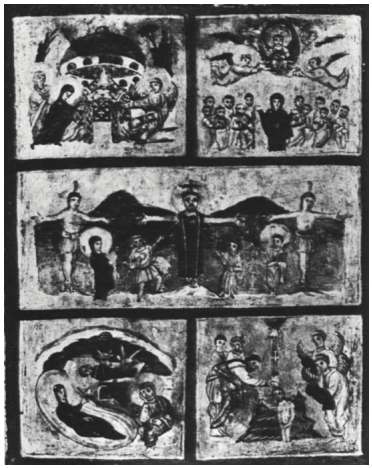
Fig. 76. Lid of reliquary box with scenes from life of Christ. Vatican City, Museo Sacro
The church of the Holy Sepulcher in Jerusalem was the most sacred of all pilgrimage sites. It comprised a number of buildings commissioned by Constantine and completed by his sons (see nos. 582, 523, 528). Egeria, a pilgrim who journeyed to the Holy Land from southern France or Spain in the early fifth century, wrote about the site as she visited its various parts during the services and processions of Holy Week and Easter. Several of the important landmarks she described are depicted on a series of ampullae from Jerusalem of the late sixth century (no. 524). They show the Crucifixion on one side depicted symbolically by the bust of Christ superimposed on the cross, flanked by the crucified thieves and two men (pilgrims ? soldiers ?) kneeling on the ground—perhaps a composition that decorated the apse of the church of the martyrium.
The neck of the ampulla is decorated with a cross enclosed within an arch, possibly a reference to a small building that stood on Golgotha and to the relic of the true cross. On the other side, the two Marys approach the tomb of the Resurrected Lord, which is shown as an abbreviated version of the aedicula that stood over Christ's tomb in the Rotunda of the Holy Sepulcher. A wooden pilgrim's box in the Vatican (fig. 76), which is filled with pebbles and earth from five sites marking Christ's Nativity, Baptism, Crucifixion, Resurrection, and Ascension, is painted on the lid with appropriate scenes forming the nucleus of the feast cycle. The Resurrection shows the inner aedicula sheltered by the clerestory and dome of the rotunda itself.
The imagery developed at the holy sites spread by means of pilgrimage art throughout the Early Christian world and was adapted to many different illustrations. The symbolic depiction of the bust of Christ over the cross as seen on the ampullae from Jerusalem, for example, is directly quoted on a gem in Vienna (no. 525) and a mosaic at S. Stefano Rotondo in Rome (fig. 77). The Holy Sepulcher, however, was only one of several holy sites that exercised a strong influence on Christian art. The grilled arched opening to the cave and the altar in the Church of the Nativity in Bethlehem and the staircase and altar marking the place of the Sacrifice of Isaac on Mt. Garazim in Samaria, for example, appear on a number of ivories (see nos. 518, 521). It has been suggested that, like the closely related box from the Sancta Sanctorum treasure (fig. 76), painted icons served as pilgrim's souvenirs and were important agents in the dissemination of holy sites iconography.
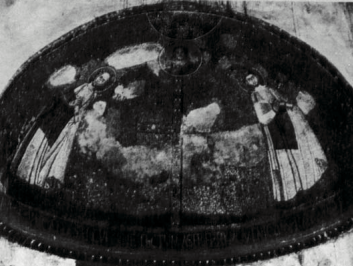
Fig. 77. Mosaic with bust of Christ over the cross, flanked by SS. Primo and Feliciano. Rome, S. Stefano Rotondo
On sixth-century lead ampullae from different sites in the Holy Land (nos. 524, 526, 527), a large range of subjects is represented. Some of these seem to reflect monumental precedents like the Ascension or the Virgin and Child enthroned with the Adoration of the Magi (fig. 78).
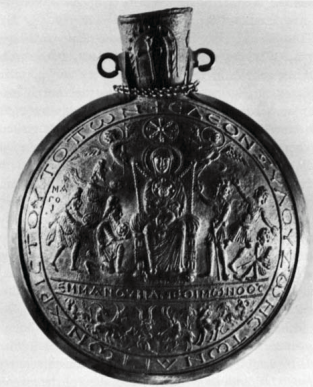
Fig. 78. Ampulla with Adoration of the Magi and annunciation to the shepherds. Monza, Cathedral Treasury
Others are decorated with a cycle of scenes from the life of Christ that is more extensive but similar to the cycle on the Vatican painted box. They represent a comprehensive pictorial "map" of the pilgrimage of its owner (fig. 79).
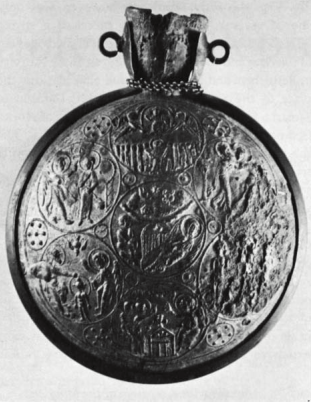
Fig. 79. Ampulla with scenes from the life of Christ. Monza, Cathedral Treasury
As may be seen from the mosaic map at Madaba (no. 523), many Old Testament sites outside the main urban centers in the Holy Land were also popular places of pilgrimage. According to the church historian Sozomenos [Hist. eccl. 2. 4), Constantine built a church at Mamre, where the three angels visited Abraham, to combat the pagan and Jewish "abuse" of the site. A terracotta mold showing the angels beneath the oak at Mamre and a female deity may still reflect, a century later, a mixture of cults at this sanctuary (no. 522). The mold is also important for its relatively early date, since so little survives that can be directly connected with sites in the Holy Land from before the second half of the sixth century.
Some of the earliest surviving objects from holy sites are connected with the Constantinian martyria of the princes of the apostles in Rome. Although scenes from the life of St. Peter decorated Roman sarcophagi from the beginning of the fourth century (no. 374), with Constantine's founding of the magnificent commemorative basilica over his tomb (no 581), the volume of Petrine art greatly increased. The mosaic in the apse of Old St. Peter's, for example, probably Christ giving the law to Peter, inspired numerous copies (nos. 502, 503), while smaller artifacts, terracotta and gold-glass bowls, and bronze medallions and statuettes (nos. 506-510), were produced in quantity to satisfy the demands of pilgrims and local worshipers. On most of these objects, Peter is accompanied by St. Paul—also martyred in Rome —whose feast day, 29 June, he shares. The objects are decorated with many subjects, from portraits of the two apostles to more active depictions of Peter preaching, or Peter and Paul guarding a column with Christ's monogram or praying for the salvation of souls.
Constantine built a basilica for St. Lawrence outside the walls of Rome, and a number of objects dated in the late fourth to early fifth century can be connected with his cult. A gold-glass fragment depicts the saint, like Peter, carrying the cross of Christ's Resurrection across his shoulder (no. 511). An intriguing late fourth-century medallion, originally bronze but known only in a lead copy, shows the martyrdom of Lawrence on the grill on one side and the ciborium over his tomb on the other (fig. 80).
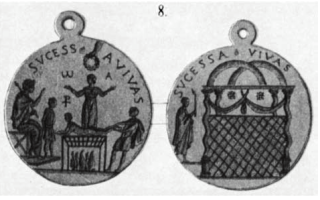
Fig. 80. Drawing of lead medallion with martyrdom of St. Lawrence and his tomb ciborium. Whereabouts unknown
The medallion was commissioned by a woman named Sucessa, and it most likely commemorates her worship at the saint's church. The actual furniture of a holy site is depicted for the first time on this commemorative object (cf. the Pola casket, fig. 83). As St. Lawrence's cult spread, his imagery—the cross over his shoulder and the fiery grill of his martyrdom—occurred outside of Rome. They appear, for example, in the fifth-century mosaic of the mausoleum of Galla Placidia at Ravenna (fig. 81).
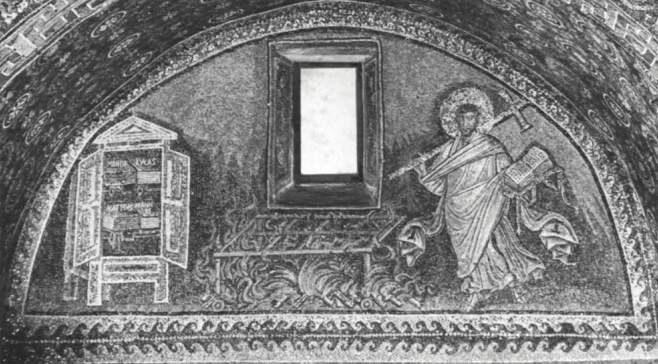
Fig. 81. Mosaic with St. Lawrence and the grill. Ravenna, Mausoleum of Galla Placidia
Only a few ampullae with St. Peter, among the Roman saints, survive, and they probably do not come from Rome. But the number of ampullae with St. Menas from his sanctuary at Abu Mena, near Alexandria in Egypt, is legion (no. 515). Found throughout the Mediterranean world, they testify to the extraordinary popularity of this saint. His early history is unknown, but as early as the fourth to early sixth centuries, his martyrium drew such large crowds that the church was rebuilt or enlarged three times (no. 591). The crypt where he was buried displayed a relief of the orant saint standing between two camels. The subject is found on almost all Menas commemorative objects, from the marble copies of the original relief (no. 512) to the crudest ampullae (no. 515). Occasionally, the orant saint is shown in a sanctuary niche, on objects that are not directly connected with Abu Mena, as on an ivory relief in Milan (no. 517) and a pyxis in London (no. 514). Other saints—like Thecla, a virgin martyr who died at Seleucia in Isauria and was popular in Egypt— were coupled with Menas on ampullae (no. 516). The popularity of Menas and the potency of the eulogia brought back from Abu Mena did much to spread his cult; churches were built in his honor in many parts of the empire.
Monasticism was a major component of Early Christian religious life. In addition to large and prosperous monastic communities, smaller enclaves were established in remote areas, where the monks followed rigorously their religious practices. Holy men became an important part of the life of local communities, especially in the countryside of the late Roman world. Sometimes, the fervor of the monk and the isolation in which he lived led to extremes of asceticism. A curious result of this cultural phenomenon was the Stylite saints. Symeon the Elder (d. 459) was the first of a number of monks whose self-inflicted trial of sitting on a column for many years appealed to Christians. Those who sought the counsel of Symeon the Elder visited his column, which, after his death, was enshrined in a large and complex building at Qal'at Sim'an in Syria (no. 590). The art commemorating St. Symeon, including stone reliefs, terracotta medallions, and a fine silver plaque (no. 529), shows him on his column performing miracles. Like St. Menas, he was enormously popular outside of Syria. As early as the late fifth century, for example, craftsmen in Rome, who probably never visited Qal'at Sim'an, tacked images of the saint to the porches of their shops (Theodoret Historia religiosa 16).
The widespread appeal of pilgrimages to the Holy Land and to the sanctuaries of popular local saints enriched the repertory of Christian art with symbolic depictions of Gospel scenes, a new category of portraits of saints, and illustrations of their lives and martyrdoms. So popular and potent were images of saints that they affected the compositions of scenes in narrative art by the intrusion of elements of the sanctuaries of the holy sites. Loca sancta art, serving as a documentary of a trip, contributed to the formation of the liturgical cycle of feast scenes that was to become a standard element in posticonoclastic Byzantine art.
bibliography: De Rossi, 1869; Geyer, 1898; Vincent and Abel, 1914, I; 1926, II; Grabar, 1943, I; 1946, II, and atlas; Grabar, 1958; Ainalov, 1961; Galavaris, 1970; Weitzmann, 1974; Krautheimer, 1975.
Date added: 2026-07-14; views: 327;