
Wave Dynamics in the Surf Zone: Breakers, Currents, and Energy
Surf Zone Definition. The surf zone is the shallow area along the coast in which the waves slow rapidly, steepen, break, and disappear in the turbulence and spray of expended energy. The width of this zone is variable and is related to both the length and height of the arriving waves and the changing depth pattern. Longer, higher waves, which feel the bottom before shorter waves, become unstable and break farther offshore, in deeper water. If shallow depths extend offshore for some distance, the surf zone is wider than it is over a sharply sloping shore.
Breaker Formation Dynamics. Breakers form in the surf zone because the water particle motion at depth is affected by the bottom. Orbital motion is slowed and compressed vertically, but the orbit speed of water particles near the crest of the wave is not slowed as much. The particles at the wave crest move faster toward the shore than the rest of the wave form, resulting in the curling of the crest and the eventual breaking of the wave. The two most common types of breakers are plungers and spillers; these are pictured in figure 9.19.
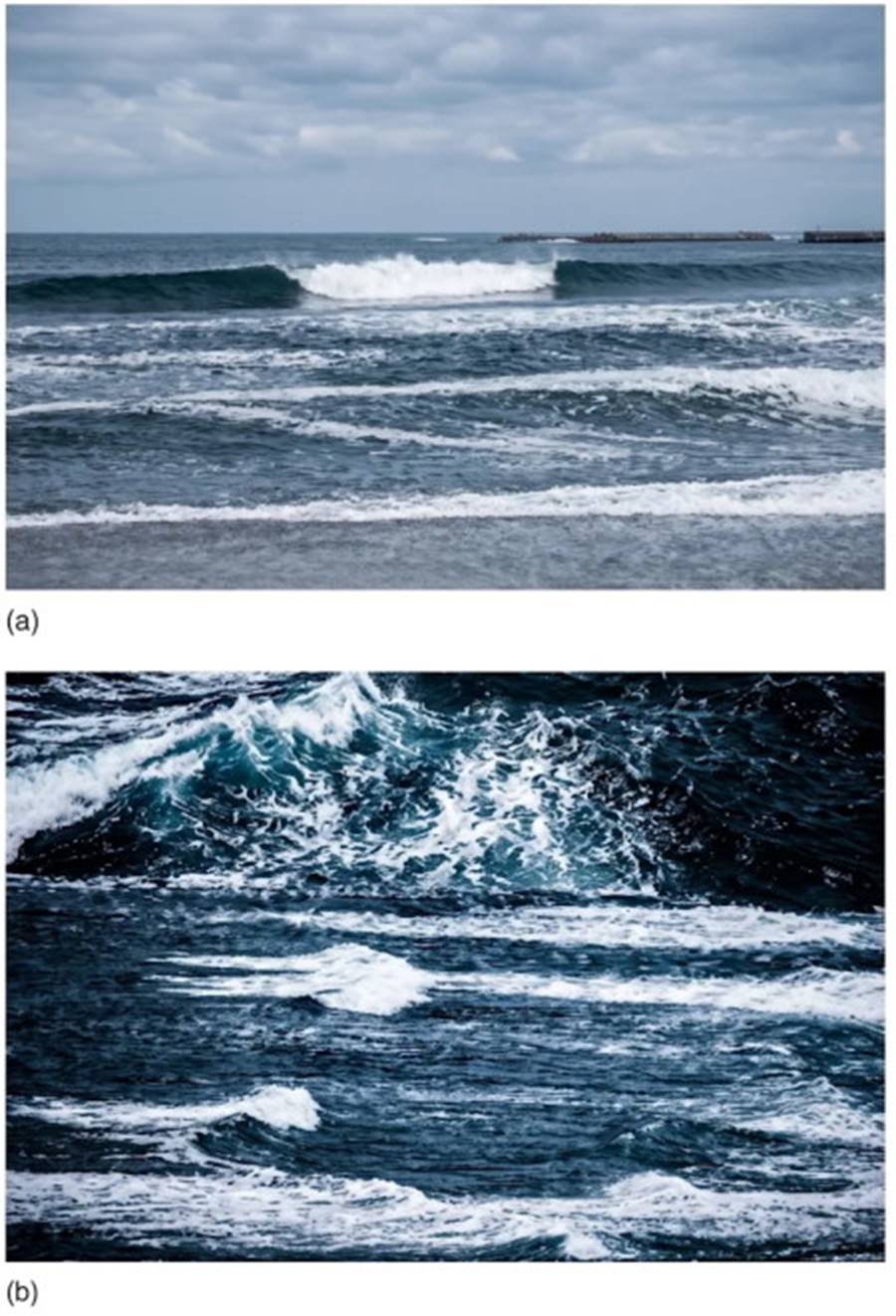
Fig. 9.19. Breaking waves. A plunger (a) loses energy more quickly than a spiller (b).
Plunging and Spilling Breakers. Plunging breakers form on narrow, steep beach slopes. The curling crest outruns the rest of the wave, curves over the air below it, and breaks with a sudden loss of energy and a splash. The more common spilling breaker is found over wider, flatter beaches, where the energy is extracted more gradually as the wave moves over the shallow bottom. This action results in the less dramatic wave form, consisting of turbulent water and bubbles flowing down the collapsing wave face. The spilling breakers last longer than the plungers because they lose energy more gradually. Therefore, spillers give surfers a longer ride, but plungers give them a more exciting one.
Crest Curling Mechanics. The slow curling over of the crest observed on some breakers begins at a point on the crest and then moves lengthwise along the wave crest as the wave approaches shore. This movement of the curl along the crest occurs because waves seldom are exactly parallel to a beach. The curl begins at the point on the crest that is in the shallowest water or the point at which the crest height is slightly greater, and it moves along the crest as the rest of the wave approaches the beach. The result is the “tube” so sought after by surfers (fig. 9.20).
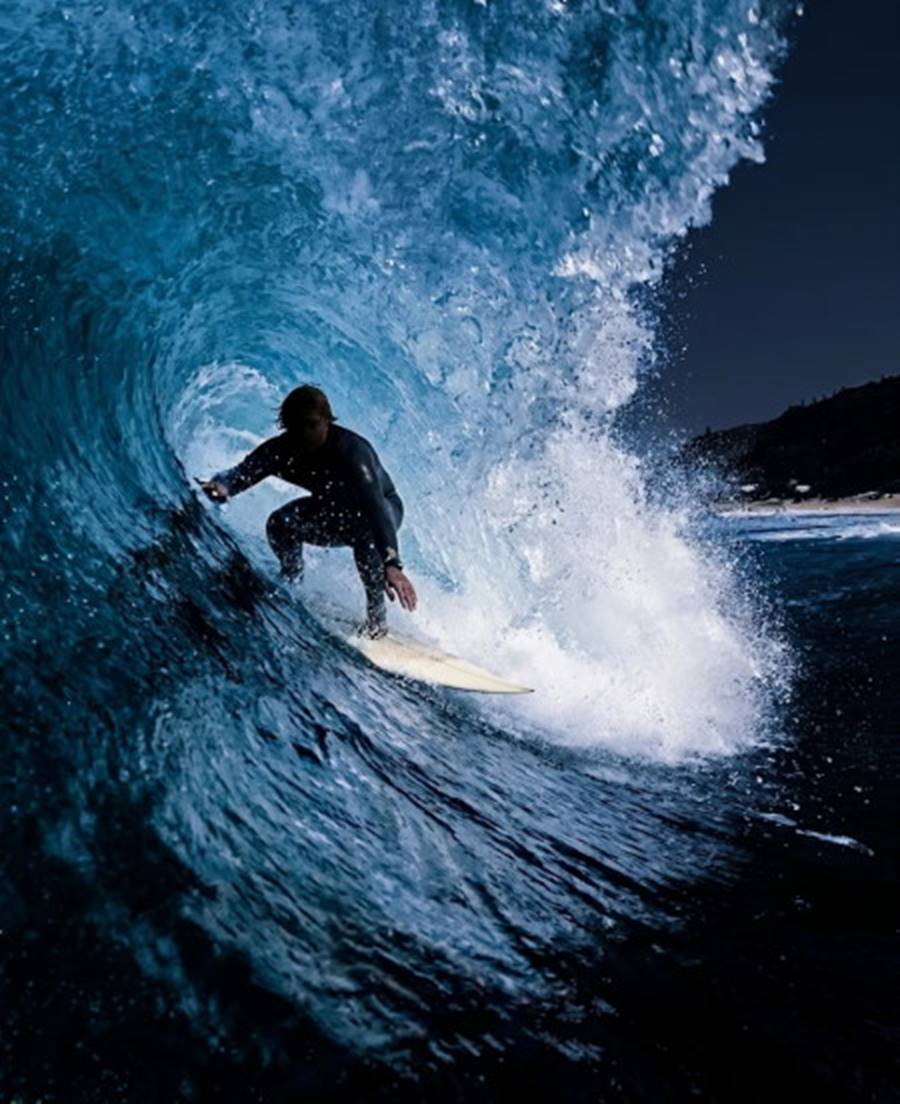
Fig. 9.20. A surfer rides the tube of a large curling wave in Hawaii.
If the waves approaching the beach are uniform in length, period, and height, they are the swells from some far-distant storm, which have had time and distance to sort into uniform groups. For example, the long surfing waves of the California beaches in summer begin their lives in the winter storms of the South Pacific and Antarctic oceans. If the waves are of different heights, lengths, and periods and break at varying distances from the beach, then unsorted waves have arrived and are probably the product of a nearby local storm superimposed on the swell.
Water Transport and Rip Currents. The small net drift of water in the direction the waves are traveling (refer to the previous discussion on the water particle orbits of real waves) is intensified in the surf zone, as the shoreward motion of the water particles at the crest becomes greater than the return particle motion at the trough. Because the crests usually approach the beach at an angle, the surf zone transport of water flows both toward the beach and along the beach. The result is that water accumulates against the beach and flows along the beach until it can flow seaward again and return to the area beyond the surf zone. This return flow generally occurs in quieter water with smaller wave heights, for example, in areas with troughs or depressions in the sea floor.
Because regions of seaward return flow may be narrow and some distance apart, the flow in these areas must be swift in order to carry enough water beyond the surf zone to balance the slower but more extensive flow toward the beach. These regions of rapid seaward flow are called rip currents. Rip currents can be a major hazard to surf swimmers. In the spring of 1994, five swimmers were drowned and six others were hurt in a single rip current system at American Beach, Florida, and in 1995 three more swimmers drowned in severe rip currents caused by storm waves from Hurricane Felix. Swimmers who unknowingly venture into a rip current will find themselves carried seaward and unable to swim back to shore against the flow; they must swim parallel to the beach, or across the rip current, and then return to shore.
Because of the danger associated with rip currents, swimmers should be on the lookout for indicators of these currents' presence, including:
1. Turbid water and floating debris moving seaward through the surf zone.
2. Areas of reduced wave heights in the surf zone.
3. Depressions in the beach running perpendicular to the shore.
Wave action on the beach stirs up the sand particles and keeps them suspended in the water. The sand is carried along the beach parallel to the shore until the rip current is reached, and the sand is transported seaward. Viewed from a height, such as a high cliff or a low-flying airplane, rip currents are seen as streaks of discolored turbid water extending seaward through the clearer water of the outer surf zone (fig. 9.21).
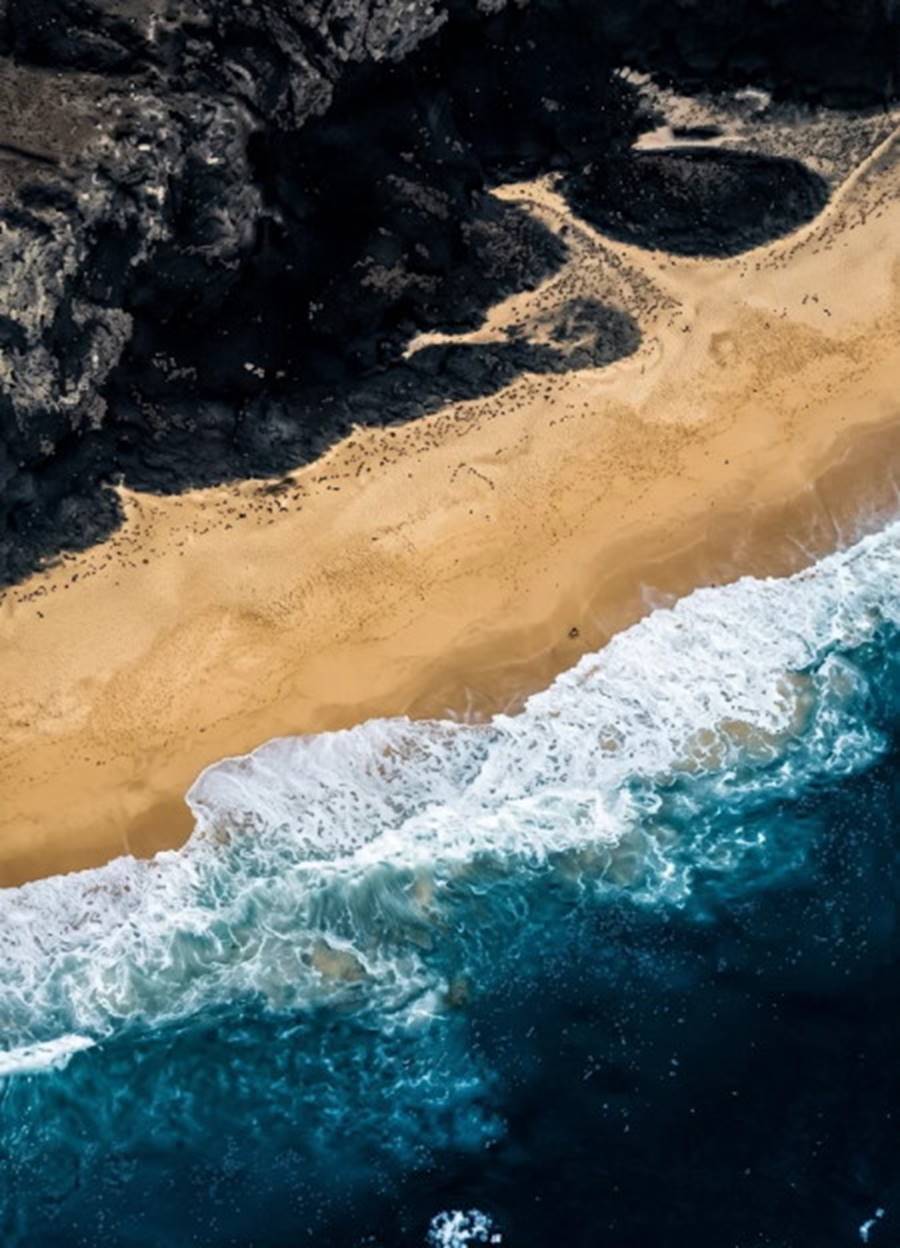
Fig. 9.21. Small rip currents carry turbid water seaward through the surf zone.
Explosive Energy Release. Watching the heavy surf pounding a beach from a safe vantage point is an exciting and exhilarating experience; the trick is to determine at what point one is safe. In a narrow surf zone during a period of very large waves, the wave energy must be expended rapidly over a short distance. Under these conditions, the height of the waves and the forward motion of the water particles combine to send the water high up on the beach. The accompanying release of energy is explosive and can result in rocks and debris from the water's edge being hurled high up on the beach by the force of the water.
Minot's Lighthouse on the south side of Massachusetts Bay is 30 m (100 ft) high, but it is regularly engulfed in spray. Lonely Tillamook Light off the Oregon coast had to have steel gratings installed to protect the glass that shields the light 40 m (130 ft) above sea level, after the glass had been broken several times by wave-thrown rocks. In every winter storm, waves displace boulders weighing many tons from breakwaters along the world's coasts.
Waves do not always expend their energy on the shore. Some break farther seaward on sandbars such as those associated with river mouths and estuaries. The famous bar at the mouth of the Columbia River is responsible for extremely hazardous conditions for both fishing and commercial vessels, and every winter it produces some casualties. On an ebbing (or falling) tide, waves approaching the bar against the current rise up and break at heights up to 20 m (66 ft). The Coast Guard uses the Columbia River entrance to train its crews to operate roll-over, or self-righting, rescue boats, which are used during storms and heavy surf conditions.
The great driftwood logs found stranded on some beaches may be set afloat again at high tide during severe winter storms and can become lethal battering rams when hurled shoreward by the surf. Even with less-severe waves, beach logs lying near the water's edge have a dangerous potential. The unsuspecting vacationer sits or plays on such a log, and when the occasional higher wave rolls it over, the person may become trapped under the log and crushed or drowned by the succeeding waves. Logs in or near the surf represent a great danger for the unwary. Where are you safe? You must be the judge.
Date added: 2026-11-09; views: 6;