
Soil Mesofauna Diversity: Proturans, Diplurans, and Other Euedaphic Arthropods
Beyond the dominant soil mesofauna groups of collembolans, mites, and enchytraeids, soils host a diverse array of other small arthropods. While often less abundant, these groups can be highly sensitive to environmental disturbances, making them valuable bioindicators of soil health. They are predominantly euedaphic, meaning they are true soil inhabitants dependent on stable subsurface conditions like high humidity, a narrow pH range, and consistent temperatures. This ecological specialization makes their presence and abundance informative about subterranean ecosystem integrity. These organisms primarily belong to primitive hexapod groups related to collembolans and to small euedaphic myriapods.
Proturans: Primitive and Specialized Hexapods. Proturans (order Protura) are primitive, wingless hexapods that lack both eyes and antennae. Their elongated, cylindrical bodies are tapered at both ends, typically appearing colorless or whitish, and range from 0.5 to 2 mm in length (Fig. XII.I, Fig. XII.II). They functionally replace missing antennae by using their enlarged front legs as sensory organs, the distal segments of which are covered in numerous receptors. Commonly found in moist, organic-rich forest and grassland soils with moderate pH, their exact diet remains partially unclear but likely involves fluid-feeding, potentially on mycorrhizae and other microflora. As soft-bodied prey, they are important in soil food webs for predators like mites and spiders.
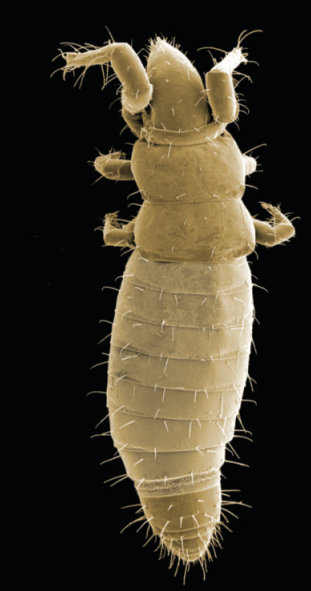
Fig. XII.I: A scanning electron micrograph (SEM) showing an individual Acerentomid proturan of the genus Parajapygidae

Fig. XII.II: An SEM showing a individual of the species Acerentomon gallicum, a proturan
Diplurans: Predatory Relatives in the Soil. Diplurans (order Diplura) are another group of primitive, eyeless hexapods, generally ranging from 1 to 5 mm (Fig. XII.III). They possess elongated bodies, long antennae, and distinctive paired abdominal appendages called cerci. These cerci can be either long, filamentous sensory structures or pincer-like tools used for capturing prey. As euedaphic inhabitants of deeper soil and litter layers, they are primarily predators of small arthropods, nematodes, and enchytraeids, aided by biting mandibles, though they also consume fungi and detritus. They prefer stable, moist soils but never achieve high densities, usually not exceeding 50 individuals per square meter.
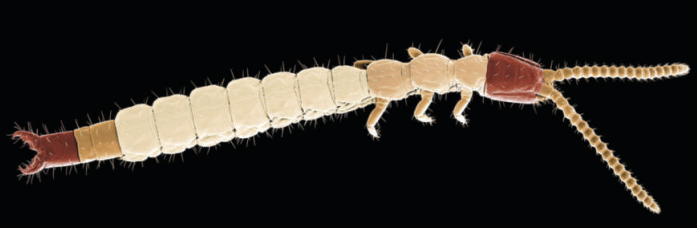
Fig. XII.III: An SEM (with post production colour added) showing an individual dipluran Parajapyx Sp.
Symphyla and Pauropoda: Small but Significant Myriapods. Among small soil myriapods, Symphyla, or garden centipedes, are translucent, millimetre-sized organisms with 12 leg pairs and long antennae (Fig. XII.V, Fig. XII.VI). They feed on decaying matter and microbes but can become agricultural pests by damaging roots and seeds. Remarkably, their reproduction involves males depositing spermatophores for females to collect. Densities can be very high, up to 20,000 individuals m⁻² in greenhouse soils. Conversely, Pauropoda are minute (0.5–2 mm), soft-bodied myriapods with nine leg pairs and unique, branched antennae bearing sensory organs called pseudoculi and a globulus (Fig. XII.VII). They feed mainly on fungi and dead plant material, but due to their low densities (typically under 100 m⁻²), their direct impact on soil processes is considered limited.
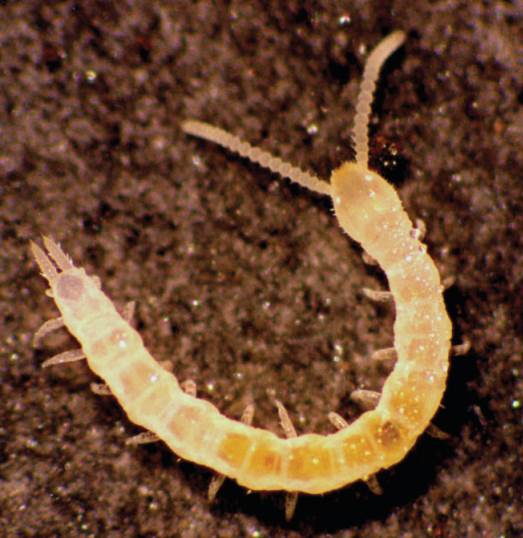
Fig. XII.V: Symphylella major, a representative of the symphylans. This group of myriapod is closely relatede to centipedes, but has smaller and pale body, a lower number of leg pairs, and typical silk glands in two flattened appendages at the posterior body segment
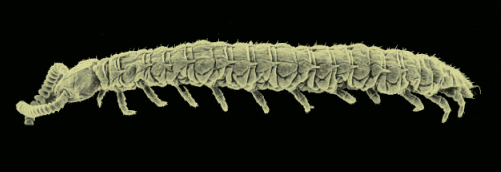
Fig. XII.VI: An SEM of a symphylan of the species Scolopendrellopsis microcolpa.
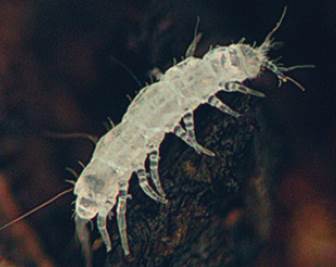
Fig. XII.VII: A pauropod of unknown species
Other Insect Representatives: Beetles and Thrips. The soil mesofauna also includes minute, euedaphic insects exhibiting evolutionary convergence for subsurface life. Certain beetle families, like some Staphylinidae (rove beetles) in the subfamily Leptotyphlinae, are eyeless, wingless, and have shortened elytra. Thrips (order Thysanoptera) are another group, with fringed wings and bodies often around 1 mm long (Fig. XII.VIII). Soil-dwelling thrips feed by piercing and sucking contents from plant material, fungi, algae, or prey, with some species acting as significant crop pests and disease vectors. Their populations can fluctuate dramatically under favorable conditions.
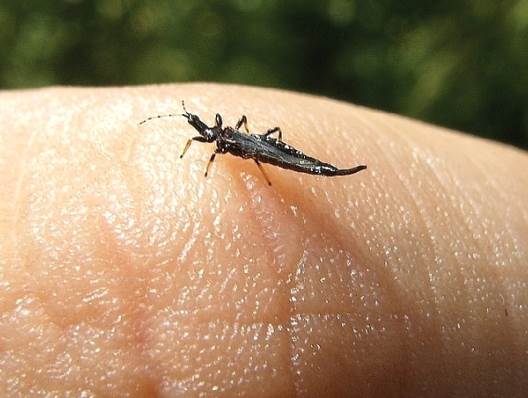
Fig. XII.VIII: A Thrip of the species Ponticulothrips diospyrosi
Ecological Context and Phylum Overview. All these organisms belong to the phylum Arthropoda, characterized by a segmented body, jointed appendages, and a rigid exoskeleton made of chitin, which is periodically shed through moulting. Their sensitivity to habitat conditions, coupled with their roles as micropredators, detritivores, and prey, contributes to the complexity of the soil ecosystem. Though individually small and often overlooked, collectively, these groups enhance biodiversity and provide critical insights into the health and functioning of the soil environment, complementing the roles of larger soil fauna.
Date added: 2025-12-15; views: 498;